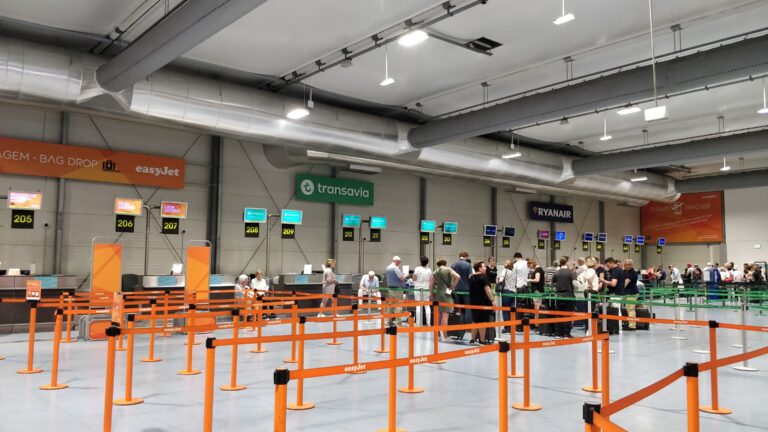
How to use public transport in Lisbon is very important when visiting this Portuguese capital.
Navigating through the enchanting Lisbon doesn’t have to be a puzzle whether you’re here for the historic trams, vibrant Bairro Alto, or the scenic routes along the Tagus River.
Understanding how to use public transport in Lisbon is your ticket to exploring every nook and cranny of this European gem. Let’s embark on this informative journey! Luckily, I have embarked on this journey, often visiting a magical city.
My comprehensive guide will walk you through the essentials, from Single Tickets to major Train Stations to explore any tourist attraction in the city.
Understanding the Basics: How to Use Public Transport in Lisbon
Lisbon offers a diverse public transportation network, ensuring that tourists and locals can easily traverse the city. Let’s delve into the specifics.
The transportation you use depends largely on which neighborhood you’re staying in.
Tip: Did you know Lisbon is a very walkable city to see attractions? Yes, I have a comprehensive guide and tips for exploring the city on foot.
How to Use The Metro in Lisbon
The Lisbon Metro is a testament to modernity and convenience in the heart of the Portuguese capital.
With its efficient public transportation system, the metro offers a refreshing escape from the city’s hustle. Not only does it boast air conditioning, but it’s also renowned as the swiftest mode of transport to navigate the city’s diverse locales.
Many stations are thoughtfully designed with elevators, ensuring seamless access to train platforms for all passengers. You can also find ticket offices or ticket machines available to buy tickets.
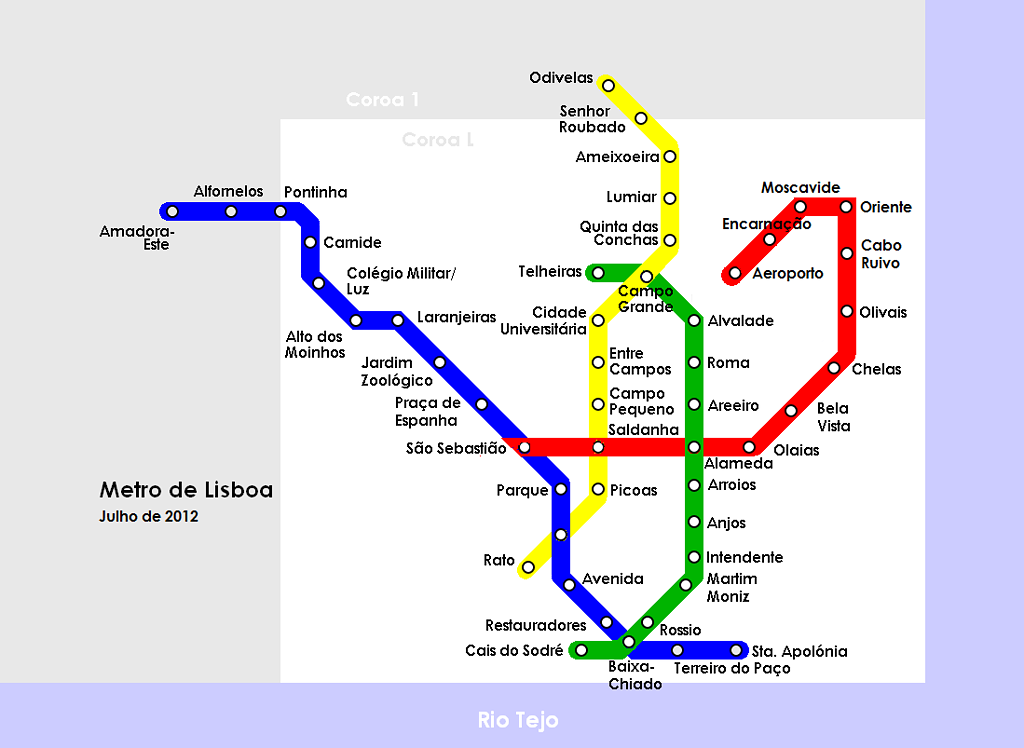
The metro network is segmented into four distinct lines, each identifiable by its unique color and terminal stations, aiding passengers in orienting themselves:
- Green Line (Telheiras – Cais do Sodré)
- Blue Line (Reboleira – Santa Apolónia)
- Yellow Line (Odivelas – Rato)
- Red Line (Aeroporto – São Sebastião)
Should you find yourself on a train heading in the wrong direction, fret not. Disembark at the subsequent station and transition to the opposite side of the platform, typically accessible via stairs.
The metro map is essential to pinpoint your destination and potential line transfers. For instance, a journey from the airport to a hotel in the Baixa/Chiado area necessitates a switch from the red line to the green line at Alameda station.
Ensure you adhere to the ticket prices and transfer guidelines to avoid unintended exits. To access metro services, travelers can use a Navegante card (formerly the Viagem card) or a contactless bank card.
For a deeper dive into routes, ticket types, and tips, check out my complete Lisbon Metro guide.
Alternatively, you can also use a Lisboa Card. Delve into our dedicated section below for more insights. Each metro entrance is distinctly marked by an “M,” simplifying station identification.
Hours of Operation:
The metro operates daily, commencing at 6:30 am and concluding at 1 am. Yet, special occasions such as the Feast of St. Anthony and New Year’s Eve witnessed extended operating hours, with trains pausing at selected stations.
Accessibility:
While the Lisbon Metro prides itself on efficiency, it’s pertinent to note that only specific stations feature full accessibility, complete with elevators to train platforms.
These stations are prominently highlighted on the metro map with wheelchair accessibility symbols.
Furthermore, the metro emphasizes inclusivity by allocating priority seats for expectant mothers, passengers accompanied by young children, older people, and individuals with disabilities.
As a gesture of mutual respect, always offer your seat to those in need.
Tip: Did you know you can reach Cascais, the beach town, in 40 minutes? There are other ways to travel, so check them out today.
How to Use The Trams, Funiculars, and Lifts in Lisbon

Thus far you can see how using public transport in Lisbon is not too difficult, but there is more.
Tram 28 and Its Legacy
Originating from Martim Moniz, the iconic Tram 28 is a living testament to Lisbon’s rich public transportation heritage.
Although Lisbon’s early 19th-century tramway system has largely evolved, giving way to advancements like the metro, a cherished collection of six trams, three funiculars, and a historic lift remain operational. These treasures primarily navigate the city’s charming, hilly terrains, untouched by the metro’s reach.
Operated under Carris, the same umbrella that orchestrates Lisbon’s bustling buses, these trams and funiculars resonate deeply with the local populace, often defining their daily commutes.
Nonetheless, it’s important to distinguish between the iconic red trams tailored for the Hills Tramcar Tour—a popular “hop on, hop off” tourist experience—and the conventional yellow trams emblematic of the city’s regular public transport.
While acquiring a ticket directly from the tram driver remains an option, it tends to be pricier than the convenience of the Navegante occasional card.
Or, use your Lisboa card instead. Explore our detailed section below for further insights.
Tram Routes and Experiences:
- Tram 28: Celebrated as Lisbon’s crown jewel among tram lines, Tram 28 promises a nostalgic journey through historic Lisbon. Yet, its popularity often translates to extended queues at Martim Moniz’s inception point. Hence, you end up with crowded trams.
- Tram 15 to Belém: Contrasting the vintage tram, Tram 15 transports passengers to the picturesque plains of Belém in a modern tram experience unique to Lisbon’s tram repertoire.
I’ve written a full Lisbon tram guide with a map covering all routes, prices, and tips for avoiding the crowds.

Safety First:
Amid the charm and convenience, it’s essential to remain vigilant, especially on bustling trams like 15 and 28, known hotspots for pickpocketing incidents. As you embark on these memorable journeys, safeguarding your belongings remains paramount—ensuring a pleasant experience from start to finish.
Planning On Going To Lisbon?
I’ve created a trip planner where you enter the number of days you’re going and what activities you want to do.
Based on your input, you then get an entire vacation planned with ideas.

How to Use The Bus in Lisbon

How to use public transport in Lisbon becomes more accessible by using a bus.
The Lisbon bus unveils a captivating tapestry of the city, weaving through its scenic routes with the added luxuries of air-conditioning and Wi-Fi.
Beyond the metros and trams, buses serve as lifelines, bridging gaps and reaching corners untouched by other modes of public transport. With an expansive network encompassing 172 routes, buses offer a diverse palette of destinations, some overlapping with metro and tram routes.
It’s worth noting that while buses provide comprehensive coverage, their journey durations might exceed that of the metro.
Distinctively painted in a cheerful yellow hue, Lisbon’s buses prominently display their routes, featuring the line number and the terminal stop on their fronts.
Throughout the city, bus stops dot the landscape, often adorned with maps, timetables, and sometimes cutting-edge electronic systems predicting the next bus’s arrival.
Dedicated apps further streamline the experience for the tech-savvy traveler, offering real-time bus tracking.
Boarding and Fare:
A unique charm of Lisbon’s buses is the customary wave to flag one down for those opting for onboard ticket purchases, a gentle reminder that cash remains the sole mode of payment.
Nevertheless, the Navegante card is a cost-effective alternative that ensures seamless transactions.
You can also use your Lisboa card instead. Upon boarding, you should use the front door and tap your card on the yellow readers adjacent to the driver.
A quick tap and you’re set for your journey—remembering to press the stop button in advance for your intended disembarkation.
Alight gracefully through the center door, and you’ve completed your bus voyage!
Operating Hours:
Lisbon’s major bus routes maintain a consistent rhythm from 5 am to 11 pm, orchestrating their services at intervals spanning 15 to 30 minutes. Night owls needn’t fret; dedicated night buses crisscross the primary city precincts, ensuring round-the-clock connectivity.
Accessibility and Inclusivity:
Lisbon’s commitment to inclusivity shines brightly within its bus services. Carris offers a dedicated reduced mobility page for passengers requiring special assistance, spotlighting lines tailored for passengers with reduced mobility.
Furthermore, buses earmark priority seats, extending courtesies to expectant mothers, families with young children, older people, and individuals with disabilities, embodying the spirit of community and care.
Tip: Public transportation can save you loads of money, but there are many other ways to visit Lisbon on a budget. Check it out today.
Here are the best things to do in Lisbon in March 2026
I’ll send you a list of the best things to do in March and every month thereafter.
It’s based on my personal experience of living and traveling around Lisbon for years. I’m sharing many hidden gems.
Looking for weekly Lisbon tips? Check out my Lisbon Newsletter.
How to Use the Train System in Lisbon
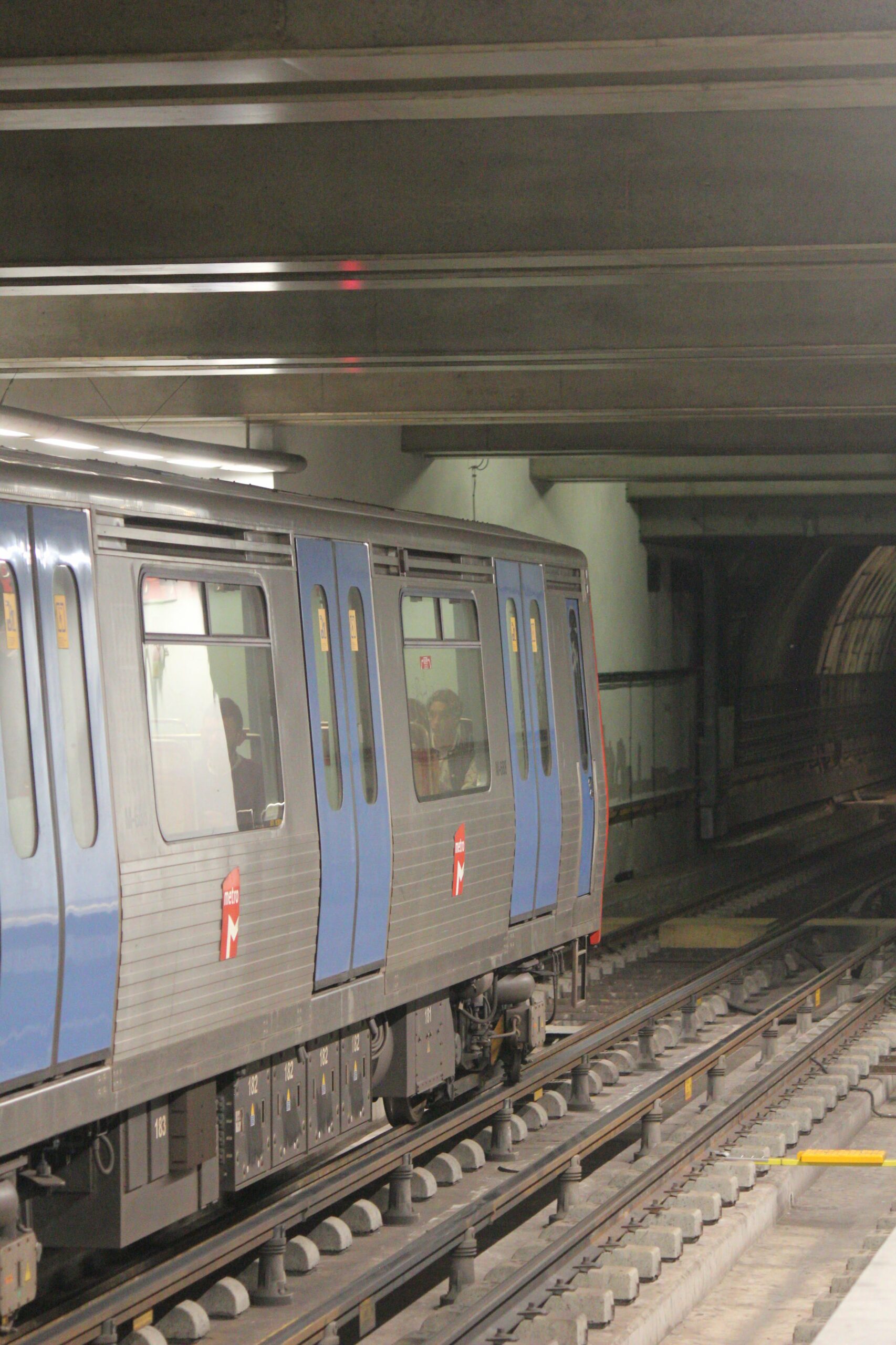
Lisbon’s intricate tapestry of public transportation is beautifully complemented by its commuter train system, a network of five distinct lines that meander through the scenic expanses of greater Lisbon:
- Sintra Line: Operated by CP
- Cascais Line: Operated by CP
- Azambuja Line: Operated by CP
- Sado Line: Operated by CP
- Setúbal Line (North/South Railroad): Operated by Fertagus
Among these, the Sintra and Cascais lines unfurl as enchanting journeys for tourists, offering a unique glimpse into Lisbon’s picturesque surroundings.
Notably, the Setúbal line presents an enticing route for travelers keen on exploring the coastal allure of Setúbal or embarking on a ferry ride to the famed Tróia Peninsula, celebrated for its pristine beaches stretching over 25 kilometers (16 miles).
Sintra and Cascais: Tourist’s Delight
- Sintra Line: Commencing its journey from Rossio station, this line orchestrates a seamless commute to Sintra, with trains whisking passengers away every 15-20 minutes. The approximately 45-minute voyage culminates amidst Sintra’s verdant landscapes, detailed in our comprehensive guide: How to Get from Lisbon to Sintra.
- Cascais Line: From Cais do Sodré station, the Cascais-bound trains promise a visual feast, tracing the mesmerizing coastline. Frequencies oscillate between 10-30 minutes, with the entire escapade spanning roughly 40 minutes. Dive deeper into this journey with our dedicated guide: How to Get from Lisbon to Cascais.
Operational Cadence:
While the operating hours vary across lines, a general framework sets train services in motion between 6 a.m. and 1 a.m., ensuring commuters and tourists can easily traverse Lisbon’s landscapes.
Accessibility and Safety:
- Accessibility: Lisbon’s commitment to inclusivity is palpable within its train services. CP and Fertagus have curated dedicated resources spotlighting accessibility initiatives, ensuring every passenger can navigate the system seamlessly, irrespective of their needs.
- Safety: By and large, train journeys during daylight hours unfold as safe and pleasant experiences, allowing passengers to immerse themselves in the journey’s charm without apprehensions.
As you navigate Lisbon’s expansive train network, Rossio station stands as a testament to the city’s rich transportation legacy, inviting you to embark on memorable journeys and explore the myriad facets of greater Lisbon.
Ensure that you have your Navegante card or Lisboa card on hand.
How to Use The Ferry in Lisbon
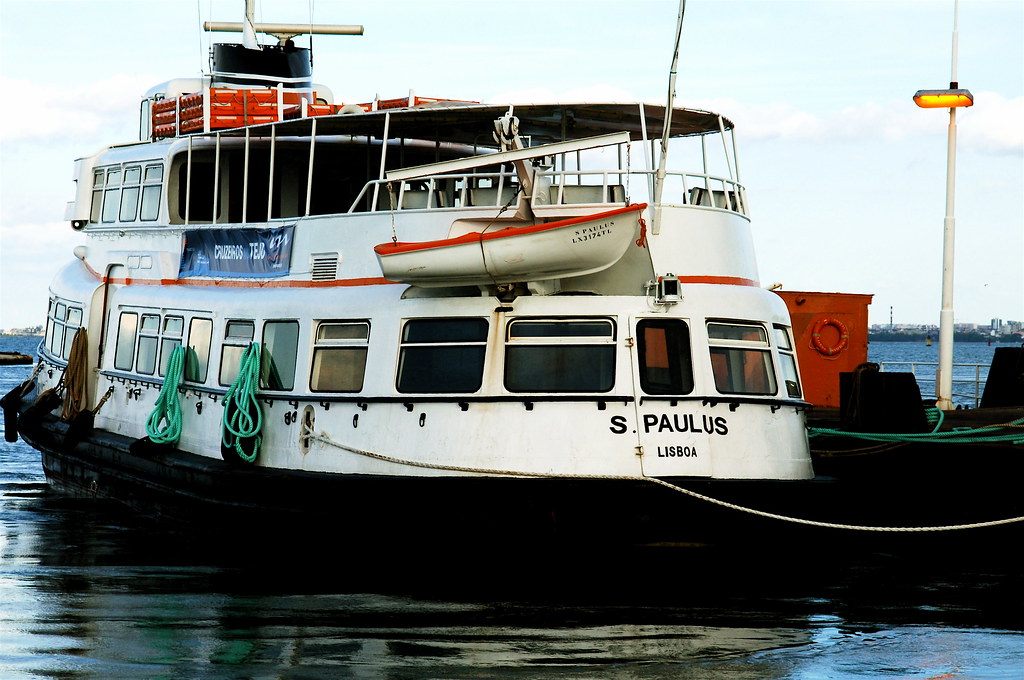
With its myriad modes of public transportation, Lisbon offers yet another delightful experience with its ferry system, a serene and scenic way to traverse the iconic Tejo River. Operated with finesse by Transtejo, these ferries crisscross the waters, connecting Lisbon to the charming locales of the Tejo south bank.
Connectivity and Routes
Embarking on a ferry adventure, you’ll find a range of routes catering to diverse destinations:
- Cais do Sodré Terminal: A bustling hub offering connections to Cacilhas (15 minutes), Montijo (30 minutes), and Seixal (30 minutes). Notably, the journey to Cacilhas captivates travelers with its proximity to the revered statue of Christ, a voyage elucidated in our guide: How to Visit Cristo Rei, Lisbon’s Statue of Christ.
- Terreiro do Paço Terminal: This terminal extends routes to Barreiro. The voyage unfolds over a leisurely 30 minutes, offering a refreshing perspective of the river’s expanse.
- Belém Terminal: This terminal is a gateway to Trafaria and Porto Brandão (20 minutes) and provides convenient bus connections to the sun-kissed beaches of Costa da Caparica, an idyllic retreat for beach enthusiasts.
Journey Highlights and Tips
- Scenic Delights: As the ferry glides over the Tagus, passengers are treated to panoramic vistas of Lisbon’s skyline, the shimmering waters, and the bustling riverfront, making every journey a visual delight.
- Costa da Caparica Excursion: Travelers bound for Costa da Caparica’s pristine beaches can seamlessly transition from the Trafaria terminal, hopping onto a bus that completes the journey to these sandy shores.
Operational Insights
With several connections pulsating throughout the day, the ferry system ensures timely and efficient commutes, enabling locals and tourists to explore Lisbon’s multifaceted offerings and its environs.
Embark on a Memorable Voyage
As you step aboard a Transtejo ferry, you’re not just embarking on a mode of transport; you’re diving into an experience, a tranquil journey that encapsulates the essence of Lisbon’s maritime spirit.
Whether it’s the daily commute or a leisurely exploration, Lisbon’s ferry system stands ready to ferry you across its historic waterways, weaving tales of the city’s rich tapestry with every voyage.
Other Ways to Get Around Lisbon
When considering how to use public transport in Lisbon, not only the train, metro, or bus will get you from point A to point B. You can find other options, but many are not recommended, while others are. Let’s look at them a bit more.
Taxi: Lisbon taxis are often outdated and might not use GPS, leading to potential fare disputes. Furthermore, it can become expensive compared to other means of transport.
Uber: Using Uber is highly recommended as it offers an affordable and convenient mode of transport for late-night journeys.
By Bike: Lisbon’s historic center is cyclist-friendly, with numerous bike rental options for eco-conscious travelers.
By Electric Scooter: The mode of transport is fun and a great way to explore Lisbon. Yet, always park responsibly to avoid fines.
Hop-On/Hop-Off Tour: Perfect for first-timers, these tours cover major attractions like the Jerónimos Monastery and Belém Tower, complete with audio guides.
Tuk Tuk: For a more personalized experience, TukTuks offers tailored tours, providing insights into Lisbon’s rich history and culture.
Rent a Car: It is a great way to get around Lisbon and other parts of Portugal. Yet, it is not recommended as Lisbon has limited parking and challenging navigation. Renting a car is also more expensive than other modes of transportation.
If you decide to drive, read my guide to driving in Lisbon first—the one-way streets and narrow roads can be challenging if you’re not prepared.
The Navegante Card Explained
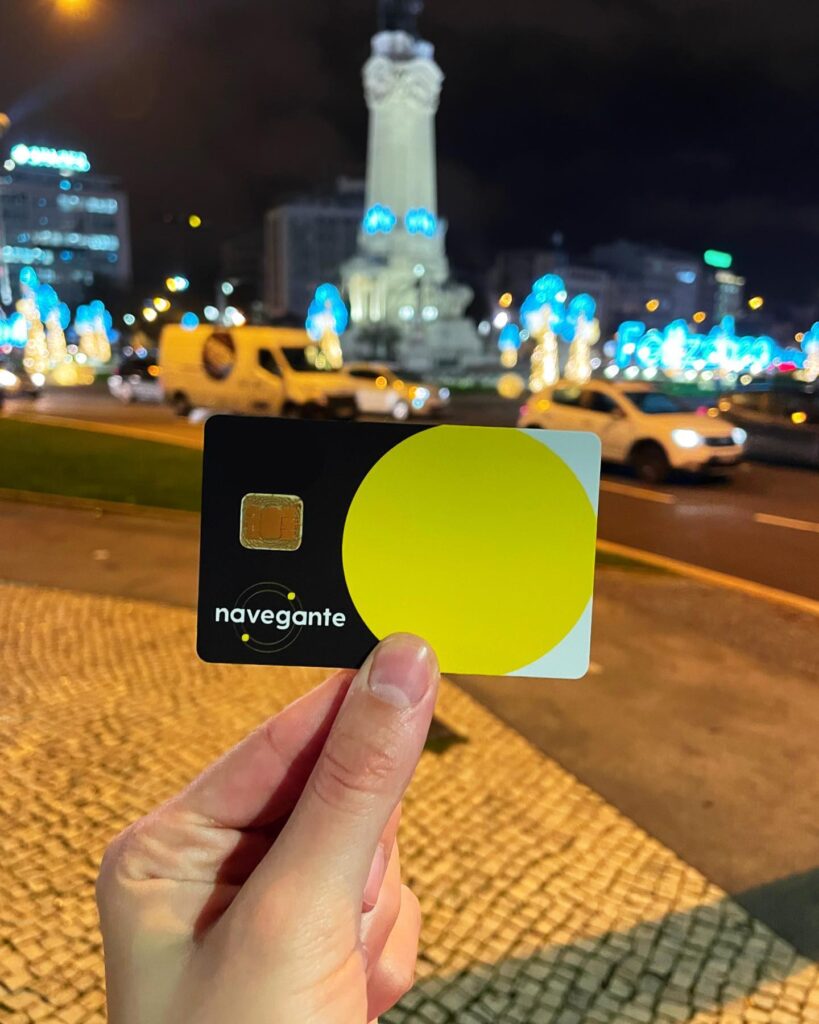
In the heart of Lisbon’s bustling public transportation system lies the Navegante Card. This smart card is your gateway to effortless travel across Lisbon’s metro, bus, tram, ferry, and train network. Let’s delve into the intricacies of this indispensable travel companion.
Acquisition and Loading
To kickstart your Lisbon adventure, acquire the Navegante Card for a nominal fee of €0.50. You can procure this card at metro stations, commuter train stations, and various citywide selling points.
Loading your card is a breeze, with options ranging from cash transactions to debit and credit card payments facilitated by leading providers like Visa, MasterCard, and Maestro.
Ticketing Options
Using the Navegante Card, you can either buy single tickets, 24-hour tickets, or my preferred way: Zap your way through:
- Single Tickets: These tickets are ideal for solitary journeys, such as a metro or bus ride from the airport to your lodging. However, they limit you to a singular mode of transport for the day.
- 24-Hour Tickets: Crafted for the avid explorer, these tickets offer flexibility and unlimited access within Lisbon’s transport network, including select commuter trains and ferries. Whether you’re hopping onto trams, funiculars, or buses, these tickets eradicate the hassle of individual fare calculations.
- Zapping: Embrace a pay-as-you-go approach with Zapping, a flexible monetary system that allows seamless transitions across various transport modes. While residual amounts remain post-ride, managing this balance can be intricate. Consider acquiring a new Navegante Card for streamlined usage if you frequently opt for Zapping.
Card Dynamics and Considerations
- Ticket Cohesion: It’s pivotal to note that the Navegante Card exclusively accommodates one ticket type at a given time. Therefore, judiciously select your ticket based on the duration of your stay and anticipated travel frequency.
- Zapping Nuances: With Zapping, residual balances persist post-transit, presenting challenges for subsequent ticket acquisitions. While non-refundable, these balances can be transferred to another Navegante Card at designated ticket offices.
Stay Informed
My official page on the Navegante Card provides comprehensive insights into current fares, ticketing specifics, and card management guidelines.
Alternatively, you can consider using the Lisboa Card. Also, remember to get a temporary SIM when traveling to Lisbon.
Wrap-Up: How to Use Public Transport in Lisbon
Mastering Lisbon’s mode of transportation unlocks a world of possibilities, from the historic streets of Bairro Alto to the scenic vistas along the Tagus River.
Whether you’re using public transport services such as trams, buses, or metro, the key is understanding ticketing systems, routes, and transfer points.
With options like the Navegante card and modern alternatives like Uber and electric scooters, Lisbon ensures that every journey is as memorable as the destination.
So, embrace the Portuguese charm, hop on that tram, and let Lisbon’s vibrant tapestry unfold!
Frequently Asked Questions
How accessible is public transport for people with reduced mobility?
Lisbon’s public transport is becoming more accessible, with many metro stations equipped with elevators, ramps, and accessible buses. Yet, it’s advisable to check specific routes and stations for accessibility.
How do I get to and from the Lisbon Airport using public transport?
The metro’s red line connects the airport to the city center. Buses also operate to and from the airport, providing convenient options.
What is the best ticket option for tourists?
A 24-hour or 72-hour unlimited travel pass is a good option for tourists. These can be used on metro, buses, trams, and trains.
Can I use the same ticket for different modes of transport?
Yes, the same ticket or rechargeable card (like the Navegante Card) can be used for buses, trams, and the metro within a specified time frame.
How does the Lisbon metro system work?
The Lisbon metro is a rapid transit system with four lines identified by color. Tickets can be purchased at the stations or through rechargeable cards for convenience.