Portugal has one of the best public transportation systems, including the Lisbon Metro, which you can use often.
The Lisbon Metro is inexpensive, safe, and the fastest mode of transport to get around the city.
It is also one of Europe’s cleanest and most well-kept subway systems. So once you land in Lisbon, it is also the fastest way to reach the city center from the airport.
If you are wondering how the best way to get around Lisbon is with the metro, I have covered it here. Keep reading for the time, routes, tickets, and more.
How Much Does The Lisbon Metro Cost?
The metro works with two fare zones, but the airport and most tourist areas fall within Zone 1. Here are the metro fair prices:
- Single Ticket €1.80
- 24-Hour Ticket €6.80 and includes all Lisbon trams and busses
- Pre-loaded Zapping Ticket €1.47
The metro does not have return tickets, but you can buy multiple tickets for a return journey from a ticket machine.
You can also buy the reusable Navegante Card, which costs €0.50. You can then add credit to store single faires, zapping credit, and a 24-hour ticket.
Note: You must buy a Navegante card for each passenger.
As of 2024, you can pay the fares directly at the subway lines barrier using your contactless card. Hence, it eliminates the need for a separate ticket.
The contactless fare costs the same as a single ticket, €1.80. Still, it is more expensive than using the zapping fare.
To use your contactless bank card, you can approach the metro gate, hold your card over the panel, and make a payment. Once the payment is processed, the gate will open.
Lisbon Metro Map
The Lisbon subway comprises a blue line, red line, yellow line, and green line.
The oldest lines are green and blue, following the two main avenues out of the city center.
The yellow line serves the northern side of Lisbon, while the red metro line connects Lisbon Airport and the Parque das Nações area to the other three lines.
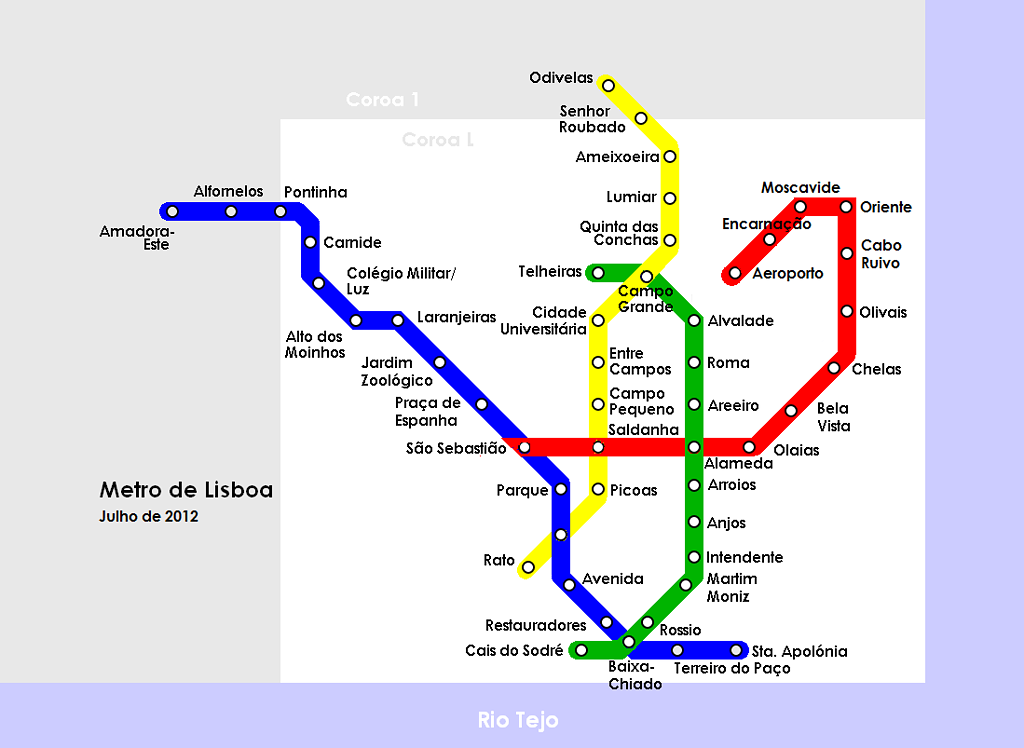
As per the image, you will notice there are areas of the city not covered by the Lisbon Metro, and these include:
Hence, you will use the metro to reach the airport and Parque das Nações train station.
Tip: Using the metro is a budget-friendly way to spend time in Lisbon. But there are many other ways to visit Lisbon on a budget to save even more. Check it out today.
How Do Lisbon Metro Tickets Work?
- Lisbon Metro tickets can be purchased from ticket vending machines or customer service counters at the metro stations.
- Different types of tickets are available, depending on the duration of your stay and travel needs, such as single tickets, 24-hour tickets, and 72-hour tickets.
- Single tickets are valid for a single journey on the metro network, while 24-hour and 72-hour tickets offer unlimited travel within the specified period.
- Upon purchasing a ticket, it must be validated at the metro station before starting the journey using the validation machines near the entrance gates.
- Keep the ticket with you throughout the journey, as it may need to be presented for inspection by metro staff.
Planning On Going To Lisbon?
I’ve created a trip planner where you enter the number of days you’re going and what activities you want to do.
Based on your input, you then get an entire vacation planned with ideas.

Types of Metro Tickets
1. The Lisbon Zapping Metro Ticket
A pre-loaded ‘Zapping’ ticket, a tourist passport ticket, is helpful for Lisbon public transport and is highly recommended.
With the Navegante, you can charge the card with credit for most public transport systems within Lisbon. These include ferries, trams, buses, trains to Cascais and Sintra, and the metro.
The Zapping ticket comes with huge benefits:
- It provides cheaper fares than buying a ticket of €1.80, which costs €1.47 for the metro.
- It will cost €1.35 instead of paying €3 to use the bus or tram.
- Furthermore, it removes the hassle of paying cash for bus and tram tickets, and most buses and trams do not accept bank card payments.
You can load the Zapping ticket with money between €3 and €40, and the credit will remain valid for up to a year.
Still, you can only buy the ticket from the metro station ticket machine. To check the remaining balance, insert it into the ticket machine.
Tip: I recommend investing in the Navegante card and loading it with €15 Zapping credit when you start your trip in Lisbon. The metro ticket machines accept cards, notes, and coins.
2. The 24-Hour Ticket For Tourists
The other option for tickets if you plan to travel a lot in one day is the 24-hour public transport ticket. The ticket costs €6.80, covering Lisbon’s public transport needs.
Still, the ticket does not include train tickets to Cascais or Sintra, but it can provide value when you visit Belem, do sightseeing on the Tram 28 route, or ride the funiculars.
You can only purchase the ticket from ticket machines at the metro station and then charge it onto your Navegante card.
Tip: Another option is to invest in the Lisboa Card. The Lisboa Card provides public transport use and free access to some museums and sights.
Using the Lisbon Metro to The Airport
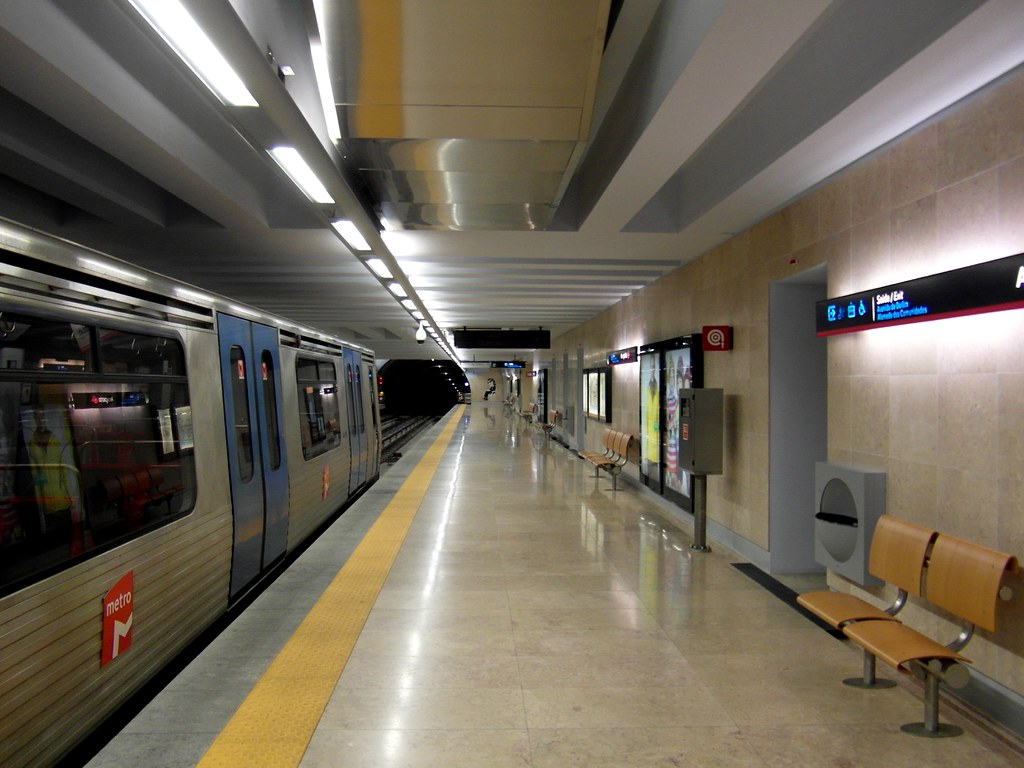
Your first journey using the Lisbon subway will most likely be from Lisbon Airport. You will find the airport seven kilometers north of the city center.
The airport connects with the red line; the station is outside the arrivals terminal. You can easily reach the Baixa and Alfama districts if you live there.
Tip: While exploring Alfma, head to the Roman Amphitheater. It is free. Check out my tourist guide on this amazing place here.
But you will need to change over to the green or blue line.
Here are the best things to do in Lisbon in March 2026
I’ll send you a list of the best things to do in March and every month thereafter.
It’s based on my personal experience of living and traveling around Lisbon for years. I’m sharing many hidden gems.
Looking for weekly Lisbon tips? Check out my Lisbon Newsletter.
Other Lisbon Stations
While the metro is an underground network, Lisbon also has other major train stations to go almost anywhere, as follows:
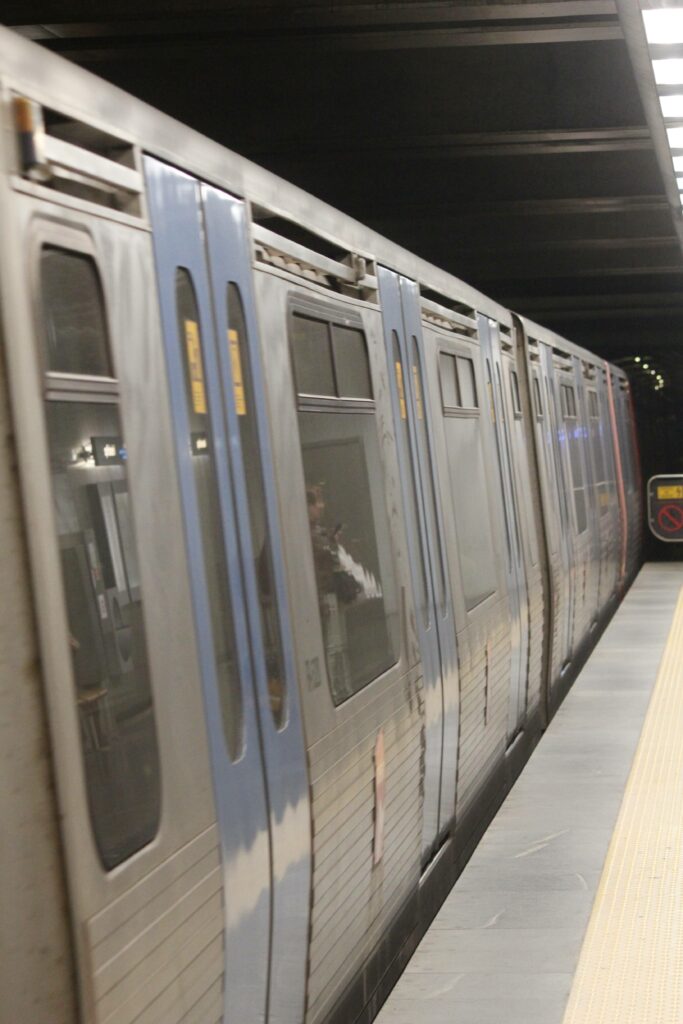
- Gare do Oriente is the central Lisbon railway hub in the city center. It serves domestic and international routes, including the Porto high-speed train. Here, you can find a bus/subway station and shopping center.
- The Santa Apolonia Station is the oldest, serving international routes to northern Portugal, France, and Spain.
- Entrecampos Station is the starting point for all trains leaving for Faro and handles the local lines.
- Rossio Train Station is the most important Lisbon station and has a long history. Here, you can travel on the Azumbuja and Sintra lines.
Access For Disabled People
The Lisbon Metro also has access if you have reduced mobility. Still, it helps to check the network map in advance to ensure both arrival and departure stations are fully accessible.
Special wide access gates are available for people with reduced mobility, using a baby stroller or large objects, and traveling with children under four.
These gates are usually set for exit mode only and should be used with staff assistance.
To reach Metro staff for help, use the Help Points at the access gates or ticket machines.
4 Tips For Using the Lisbon Metro
- When you buy a ticket at the ticket machine, we recommend printing the receipt if you encounter an issue with the Navegante card.
- You can use the Navegante contactless card twice. The first is to swipe into the station, and the second time is when exiting the station. Place the card on the sensor on the right-hand side to open the barrier.
- Always be aware of your surroundings to prevent thieves from getting the opportunity to steal from you.
- I recommend sitting in a busy carriage if you travel late at night.
Lisbon Metro History
Construction of the metro in Lisbon started in August 1955, and the first service took place on 29 December 1959.
The initial metro line was only 6.5 km long, from Baixa to Jardim Zoologico. In the 1980s, a loop of central Lisbon was constructed and split into two lines, 1995 comprising the yellow and blue lines.
A third line, the red line, was constructed in 1998 to connect Alameda station to the Expo 98 exhibition grounds. In 2004, the green, blue, and yellow lines were extended.
The extension to Portela Airport opened in 2023, connecting the red line to other lines. Fifty-five stations now serve the Lisbon Metro.
Wrap-Up: Lisbon Metro
The Lisbon Metro is an efficient, safe, and cost-effective way to navigate the city.
With its extensive coverage and affordable ticket options, including the convenient Zapping ticket and 24-hour pass.
The metro provides easy access to major attractions and facilitates seamless travel within Lisbon.
Whether you’re a visitor or a resident, the Lisbon Metro is undoubtedly a valuable transportation resource for exploring and commuting around the beautiful city of Lisbon.