

Key Takeaways
Show more- Rossio Square dates back to the 13th century and features iconic Baroque fountains installed in 1889, plus the neoclassical Dona Maria II National Theater built in 1846.
- The square is easily accessible via Rossio Metro Station, built in 1887 with stunning neo-Manueline architecture, or by walking 5-25 minutes from central Lisbon.
- Try Ginjinha, a traditional cherry liqueur served in chocolate cups for around 1.50 euros, at nearby Praça de São Domingos next to the metro station.
- Rossio Square connects to major attractions including Rua Augusta shopping street, Praça do Comércio, Santa Justa Lift, and the historic Baixa and Chiado neighborhoods.
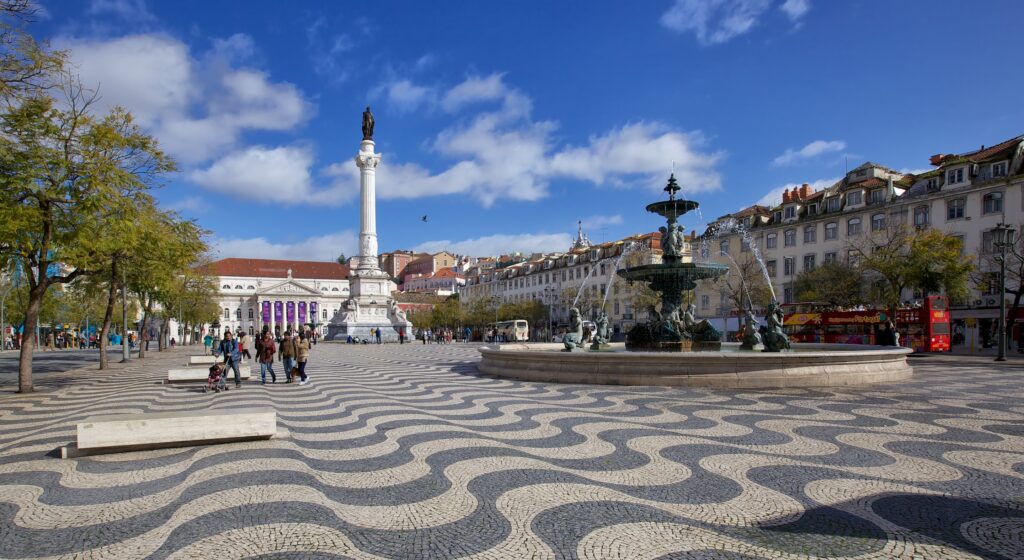
Rossio Square (Praça do Rossio in Portuguese), officially named Praça de D. Pedro IV, sits in the heart of Lisbon and is probably my favorite square.
There is almost always something happening at Rossio Square. During Christmas and summer, they have a market; other times, they have small festivities, and the fountain nearby is just beautiful.
When I’m in the Baixa area, I always have to stop and look to see what’s going on at Rossio Square. A metro station is right next to the square, so it’s easy to get to.
Rossio Square History

Praça Dom Pedro IV is a historic square and vibrant space in central Lisbon, in Baixa, close to everything.
Like the city, Rossio Square has a rich yet colorful history. Its history dates back to the 13th century and is one of Lisbon’s oldest squares.
During this time, the square hosted public shows, bullfights, royal proclamations, and later served as a public execution ground. (Thank god it’s not anymore)
The square was originally named after King Afonso IV but has undergone several developments and transformations.
In the 19th century, it changed its name to honor Pedro IV, also known as Pedro I of Brazil. Magnificent buildings surround Rossio Square, showing Lisbon’s architectural diversity.
During the 19th century, the square received a makeover with beautiful wave-patterned pavements.
Would you like to see more nearby attractions? Then check out my interactive Lisbon map.
The Two Baroque Fountains With Dom Pedro IV Statue

In the center of Rossio Square, two Baroque fountains were installed in 1889 on both sides of the Pedro IV monument.
Both are identical and were originally cast at the Val d’Osne boundary in France. Mathurin Moreau and Michel Lienard created the embellished sculptures around the fountains, depicting mythical figures.
The fountains in the central square were installed years after King Pedro IV’s bronze statue, the Soldier King, was placed on its column.
In the center of the fountains is a marble pedestal monument depicting the parables of Justice, Wisdom, Strength, and Moderation.
Dona Maria II National Theater

The National Theater Dona Maria II, opened in 1846, is on the north side of the historic square.
The Teatro Nacional Dona Maria II is a prominent building in the square. It replaced the old Estaus Palace from the mid-fifteenth century.
The neoclassical building was built in the mid-nineteenth century after a design by Italian architect Fortunato Lodi. A 1964 fire destroyed the theater’s interior, but it was restored and reopened in 1978. The theater closed in 2023 for renovation, so check tndm.pt for the current opening.
The facade features a statue of playwright Gil Vicente, the father of Portuguese theater.
Six massive iconic columns decorated with Apollo sculptures and muses support the pediment.
Rossio Metro Station

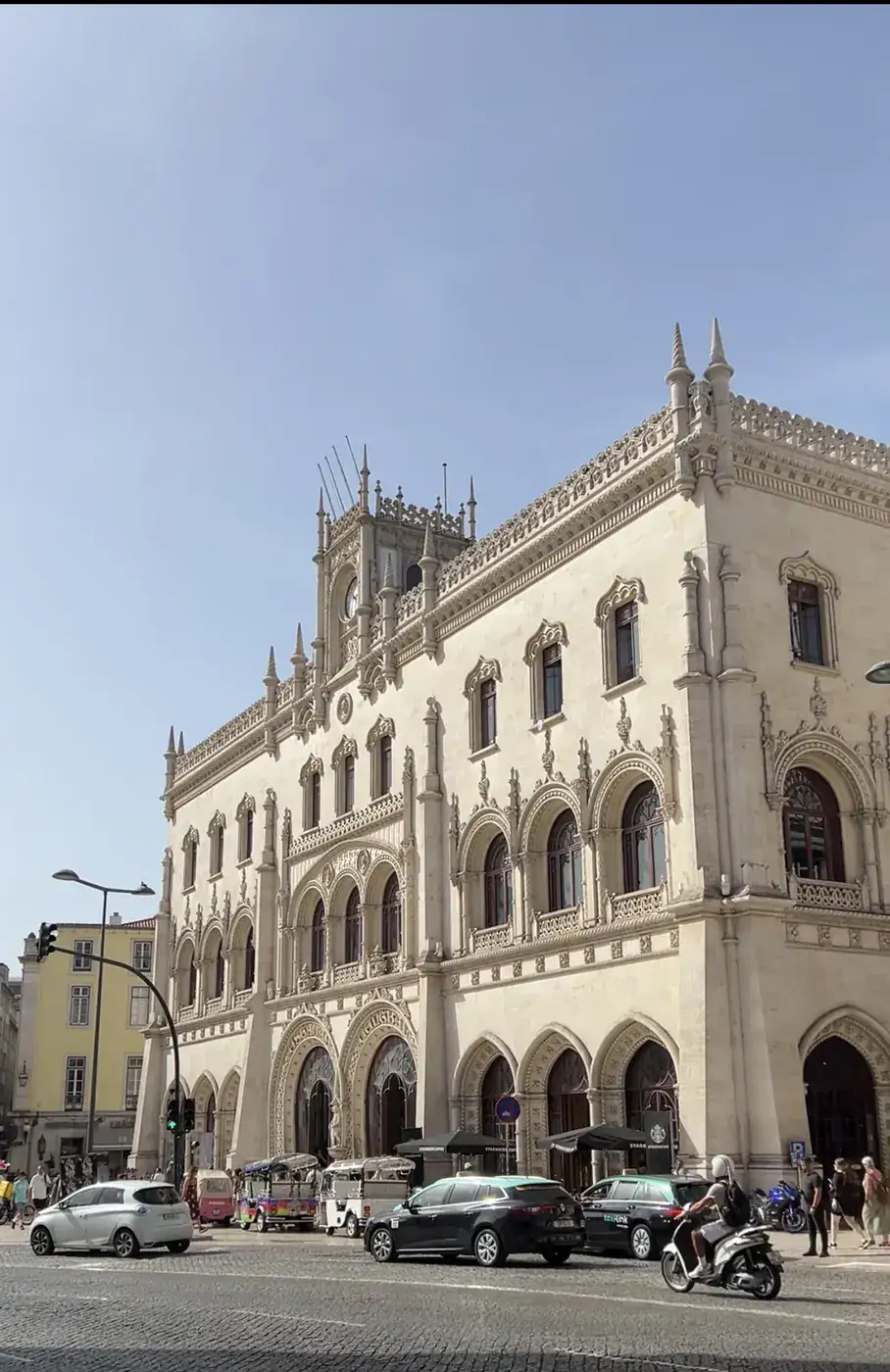
On the left side of the iconic square, you find Rossio Train Station, built in 1887. The trains to Sintra leave from here, and you can read how to buy tickets in my guide to trains in Portugal.
The stunning metro station has a neo-Manueline style, and its facade has intricate carvings with azulejos (ceramic tiles depicting Portugal’s history).
Ginjinha – A Cherry liqueur drink
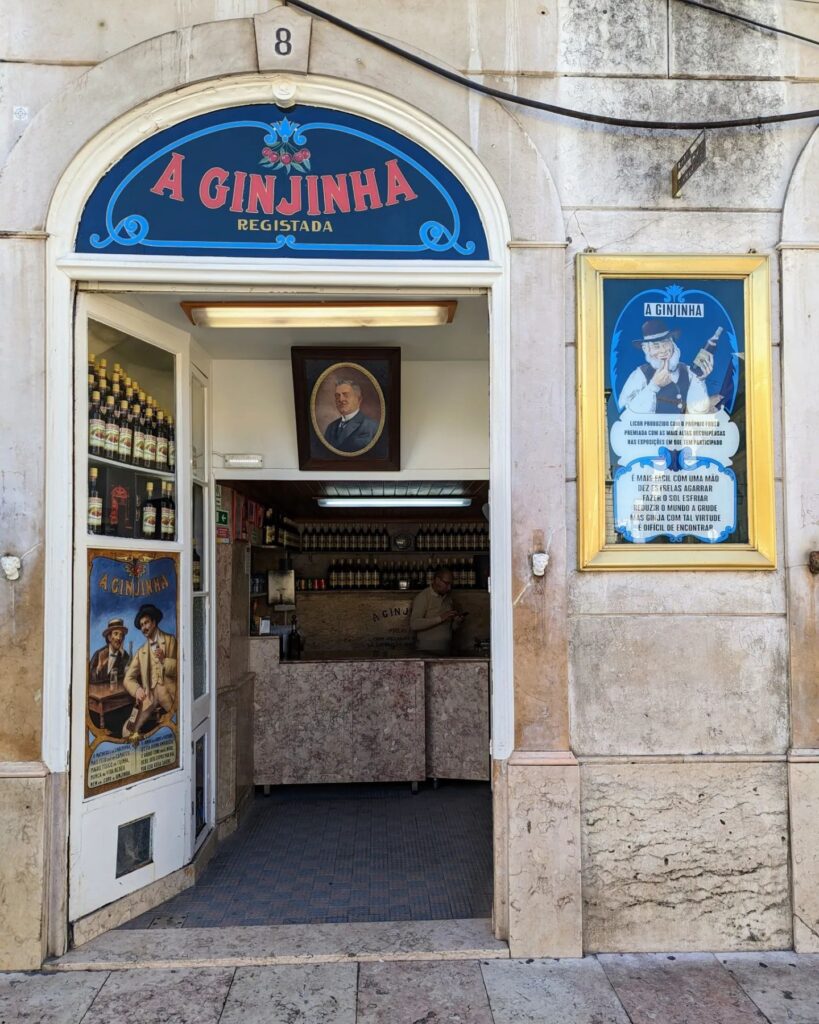
Another must-try is a Ginjinha, a traditional cherry liqueur made from Morello berries. It has a sweet, intense taste and is often served in a dark chocolate cup.
The first ginjinha was developed by a Galician friar of the Santo António Francisco Espinheira church.
Try Ginjinha in Praça de São Domingos, next to the metro station. It is a popular place to serve ginjinha, sold in small shot glasses or chocolate cups that you can eat afterward.
A small shot glass costs around €1.50.
Praça Da Figueira

Close to Pedro IV Square is Praça da Figueira, which means Square of the Fig Tree. Marquês de Pombal created it.
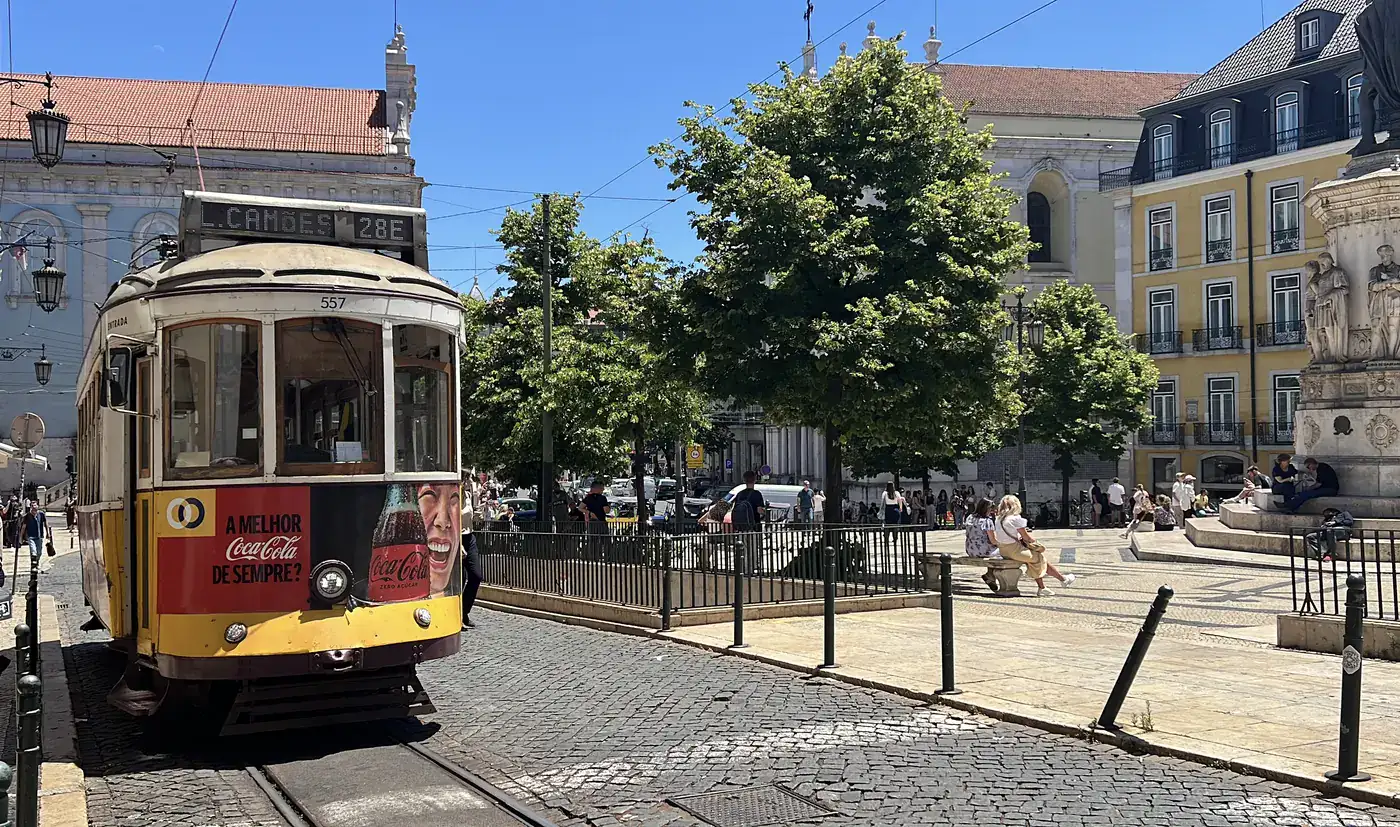
It replaced the Lisbon main hospital, which was destroyed during the 1755 earthquake. It was originally a market and still is today, but it’s also used as a hub for buses and trams.
Here, you will find a massive statue of King John I, designed by Leopoldo de Almeida and installed in 1971. It was relocated to the corner in 1999 and is visible from Praça do Comércio.
Attractions Near Rossio Square
Walking from the heart of downtown, you can find other attractions for history enthusiasts.
- Visit the main shopping street, Rua Augusta.
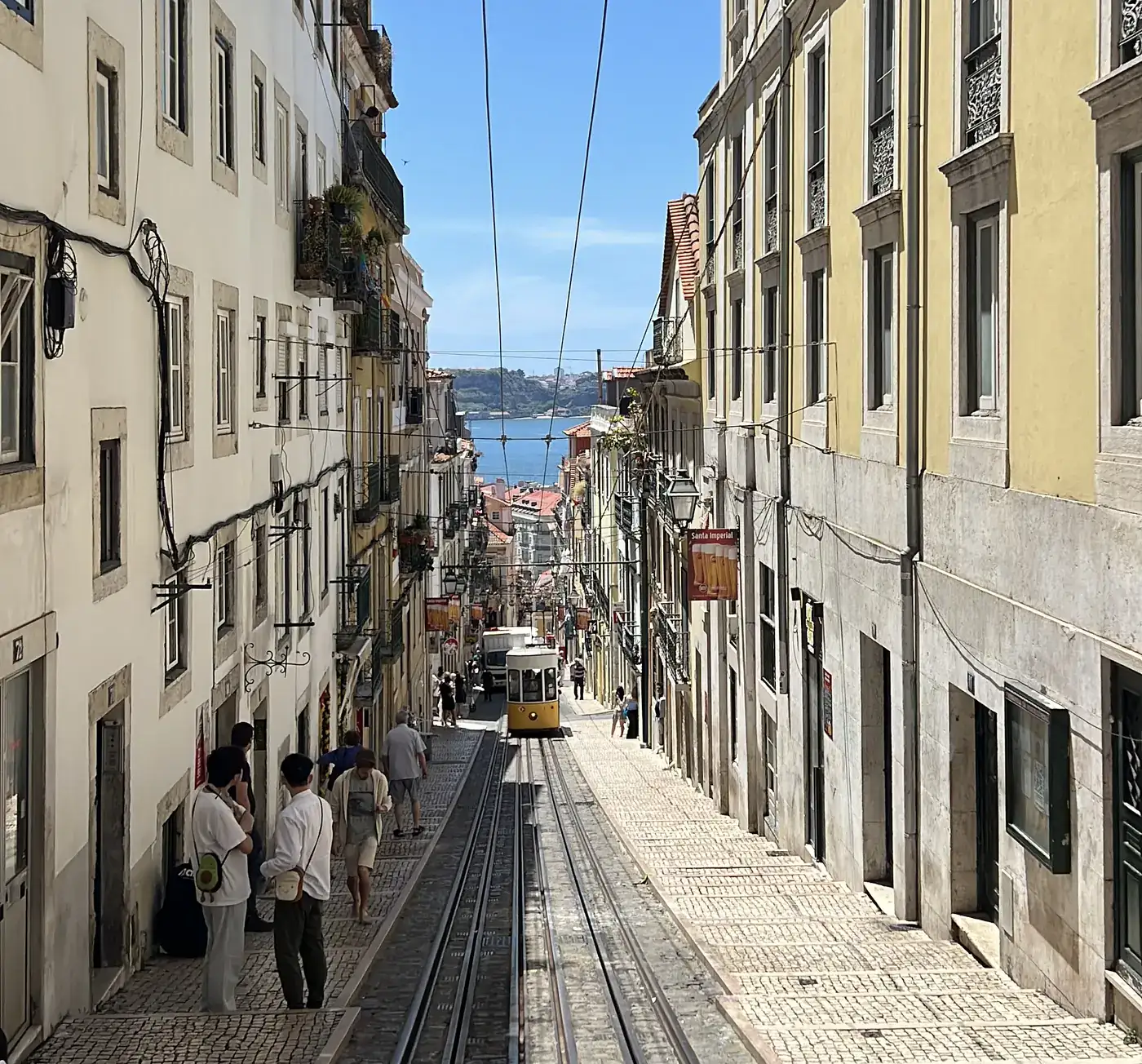
- Head to the large Restauradores Square, where the Elevador da Glória starts (closed at the moment).
- Visit the São Domingo Church, which is marked by tragedy.
- See the City Hall Palace at Municipal Square.
- Check out the Conceição Velha Church that survived the earthquake.
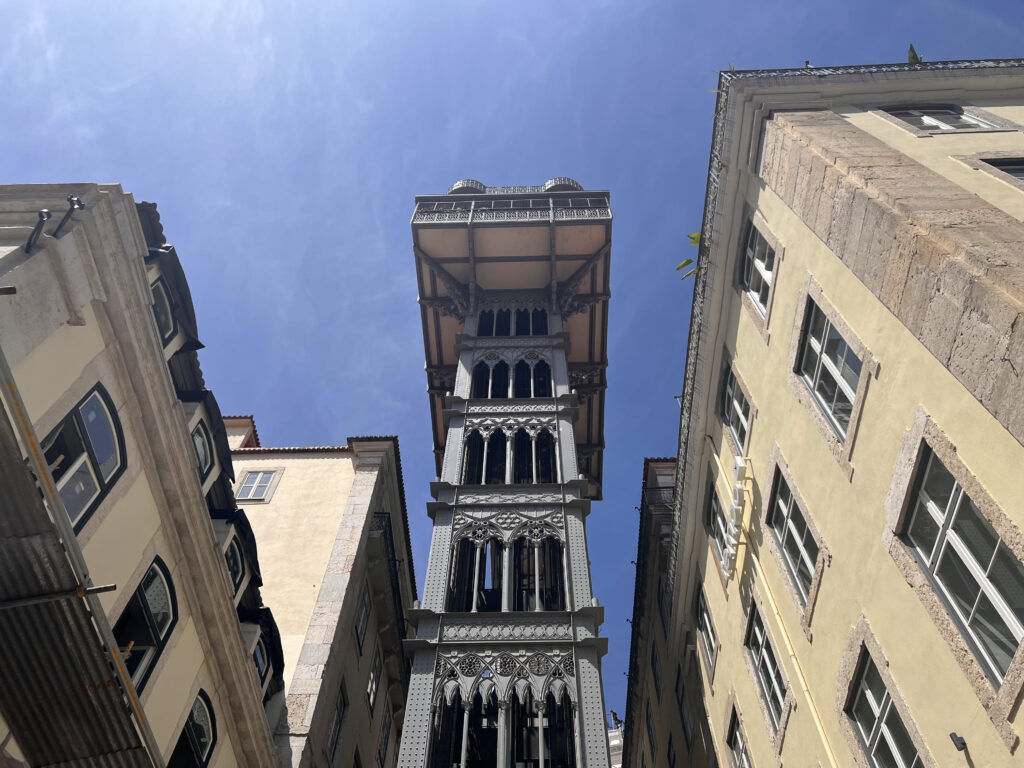
- Take a ride on the Santa Justa Lift, a prominent Lisbon landmark (temporarily closed at the moment, so check before you go).
- Enjoy some seafood at the pedestrian street Rua das Portas de Santo Antão.
- Walk down the main avenue, Avenida da Liberdade.
How To Get to Rossio Square
I always walk to Rossio Square and recommend you do the same unless you stay outside the center. Walking from the center can take 5 to 25 minutes, and walking in Lisbon is always beautiful.
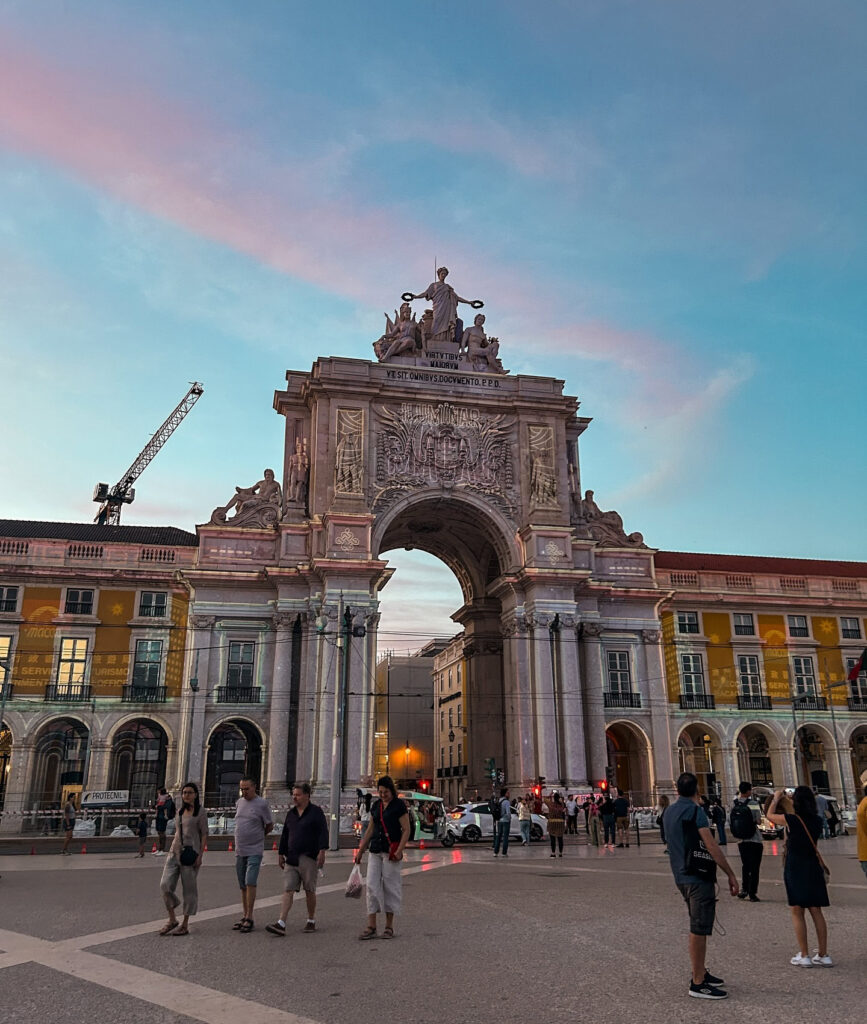
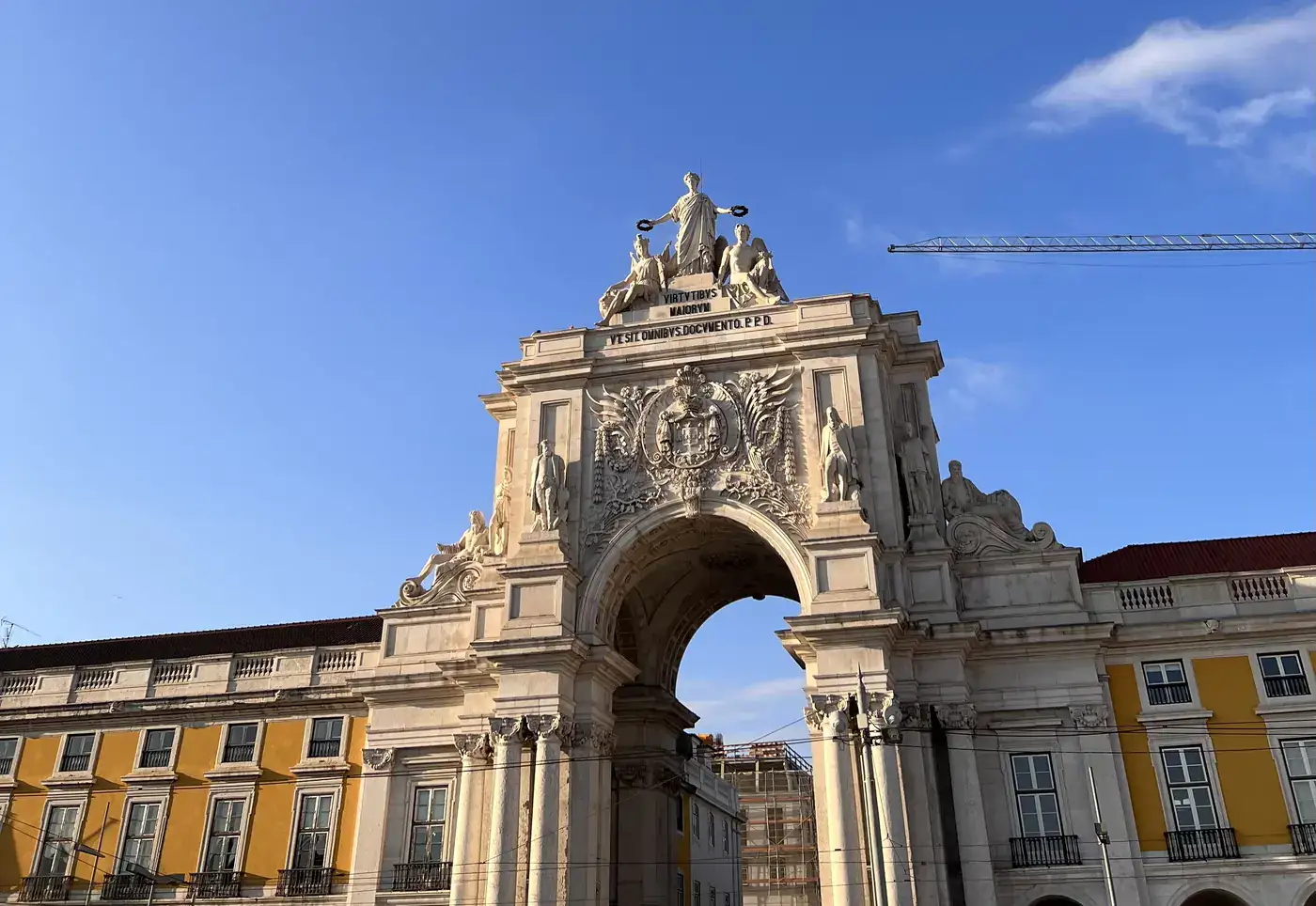
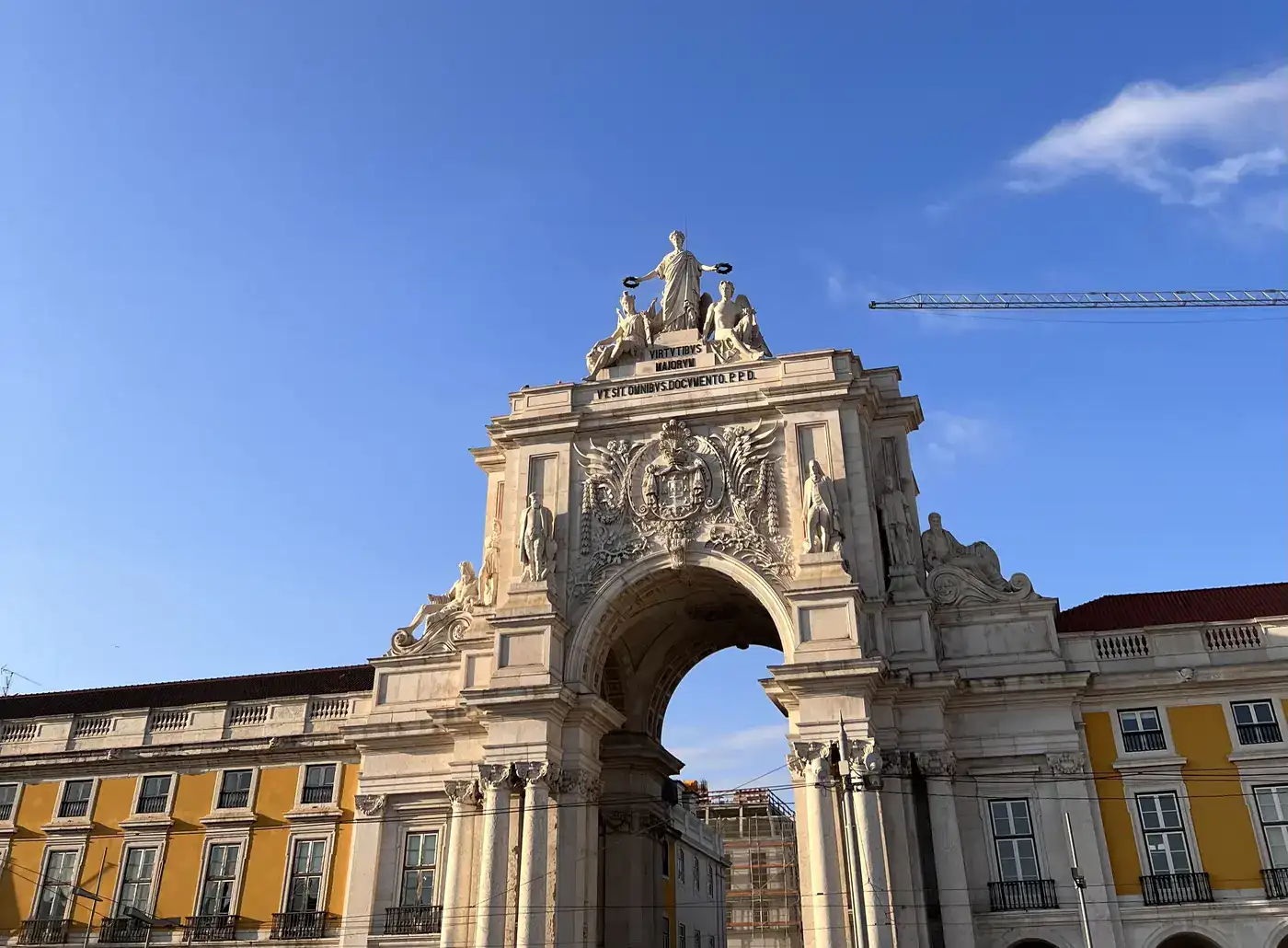
From Rossio Square, you can walk down Rua Augusta, the main pedestrian street in Baixa, to the Rua Augusta Arch and Praça do Comércio.
If so, take the Green Metro Line to Rossio Station, or the Blue or Green Metro Line to Baixa–Chiado. The metro is the most straightforward way. Restauradores on the Blue Line is also a short walk away. Rossio and Baixa-Chiado stations are both accessible by elevators.
Alternatively, you can take an Uber, which will probably only cost a couple of euros, depending on how far away you are.
Here are the best things to do in Lisbon in November 2026
I’ll send you a list of the best things to do in November and every month thereafter.
It’s based on my personal experience of living and traveling around Lisbon for years. I’m sharing many hidden gems.
Looking for weekly Lisbon tips? Check out my Lisbon Newsletter.
Final Thoughts on Rossio Square
Whether you’ve seen Rossio Square or not, I recommend you visit it on your next Lisbon trip. Something is always happening, whether it’s a market, a public show, or something else.
While you’re there, you’re in the center of Lisbon anyway, so you can explore Chiado and Baixa to shop or visit the many monuments.
Rossio Square is a central meeting point in Lisbon, and you’re close to everything happening in Lisbon, even Alfama.
Rossio Square FAQ
What is Rossio Square known for?
Rossio Square is known for its lively atmosphere, historical significance, and iconic wave-patterned pavement. It serves as a hub for local culture, with nearby cafes, shops, and landmarks such as the National Theatre D. Maria II.
What does Rossio mean in Portugal?
In Portugal, “Rossio” refers to a large public square or open space commonly used for gatherings and markets.
Planning On Going To Lisbon?
I’ve created a trip planner where you enter how many days you’re going and what activities you want to do.
Based on your input, you’ll get a complete vacation plan with ideas.



Leave a Reply