

Key Takeaways
Show more- The Elevador da Glória remains closed since the fatal accident on 3 September 2025 that killed 16 people; Carris plans a completely new lift targeting 2029.
- Walk the steep Calçada da Glória route free in about 10 minutes; it covers 275 metres with 17% gradient, so wear grippy shoes and take breaks as needed.
- An uncertified cable that gave way caused the accident; investigations found similar cable defects on all four of Lisbon's historic lifts, with final reports due March 2027.
- While waiting for the new lift, use the 51E mini-bus, metro to Baixa-Chiado, or Uber as alternatives to reach Bairro Alto from Praça dos Restauradores.
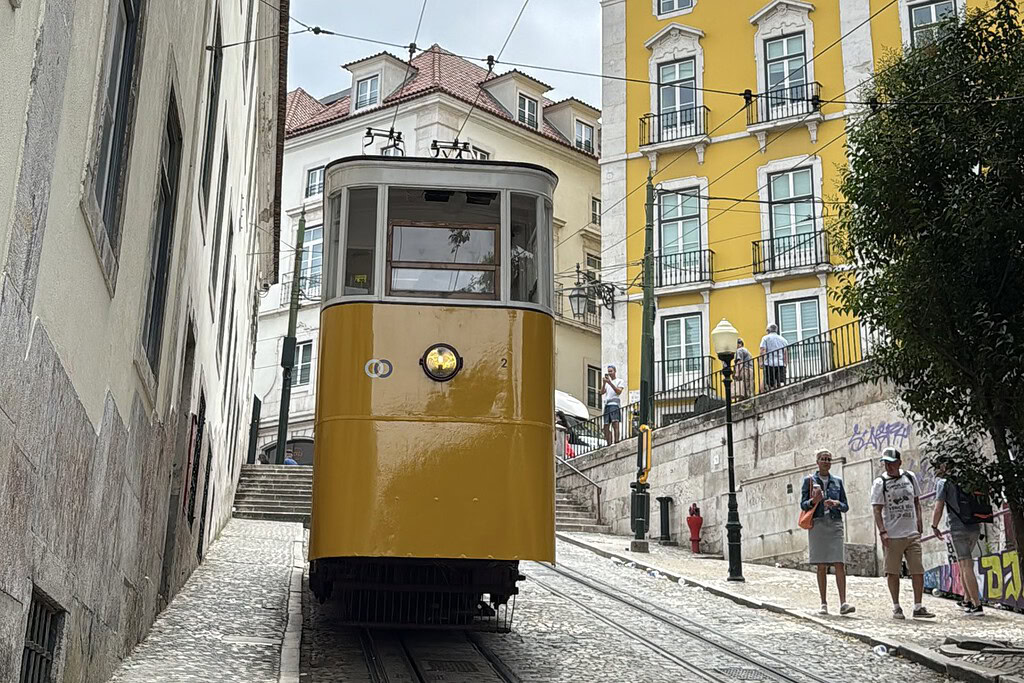
The Elevador da Glória is closed. It has not run since 3 September 2025, when one of its two yellow cars lost control, derailed and crashed into a building. 16 people died.
I have written this guide for everyone who wants to know where things stand now: if it is open, what happened, when it will come back and how to get up the hill without it.
I went to the site shortly after the accident, and I will tell you about that below. I also tell you how to walk the route, which I do often.
Obs.: The Elevador da Glória has been closed since 3 September 2025. Carris plans a completely new lift, and the target is 2029. You can still walk the route, and I show you how below. I checked all of this on November 24, 2026.
Is the Elevador da Glória Open?
No. The Elevador da Glória has been closed since the accident on 3 September 2025, and Carris has not announced a date when it will run again. The plan is not to repair the old lift but to build a completely new one, which Carris says should be ready in 2029.
Most of Lisbon’s historic lifts are closed right now. Here is where they stand:
| Lift | Status on 24 November 2026 |
| Elevador da Glória | Closed since 3 September 2025. A new lift is planned, target 2029 |
| Elevador da Bica | Closed, no reopening date |
| Elevador do Lavra | Closed, no reopening date |
| Santa Justa Lift | Closed, no reopening date |
| Graça funicular | Reopened on 30 April 2026. It has had short temporary closures, so check carris.pt before you go |
Carris says none of the lifts will reopen before they meet the recommendations of an independent technical commission. That commission includes the Order of Engineers, LNEC, IST, the city and Carris.
Elevador da Glória Facts: Route, Length, Opening Year and Fare
| Elevador da Glória | Facts |
| Status | Closed since 3 September 2025 |
| Route | Praça dos Restauradores (bottom) to the Miradouro de São Pedro de Alcântara (top, Bairro Alto) |
| Length | About 275 metres (sources say between 260 and 275) |
| Gradient | About 17% |
| Ride time | About 3 minutes |
| Opened | 24 October 1885 |
| Engineer | Raoul Mesnier de Ponsard |
| Cars | Two yellow cars joined by a cable, so one goes up while the other comes down |
| Fare before the closure | €4.30 for a return ticket (up to two trips) in 2026 |
| Operator | Carris |
| Heritage | National Monument |
Elevador da Glória Accident: What Happened on 3 September 2025
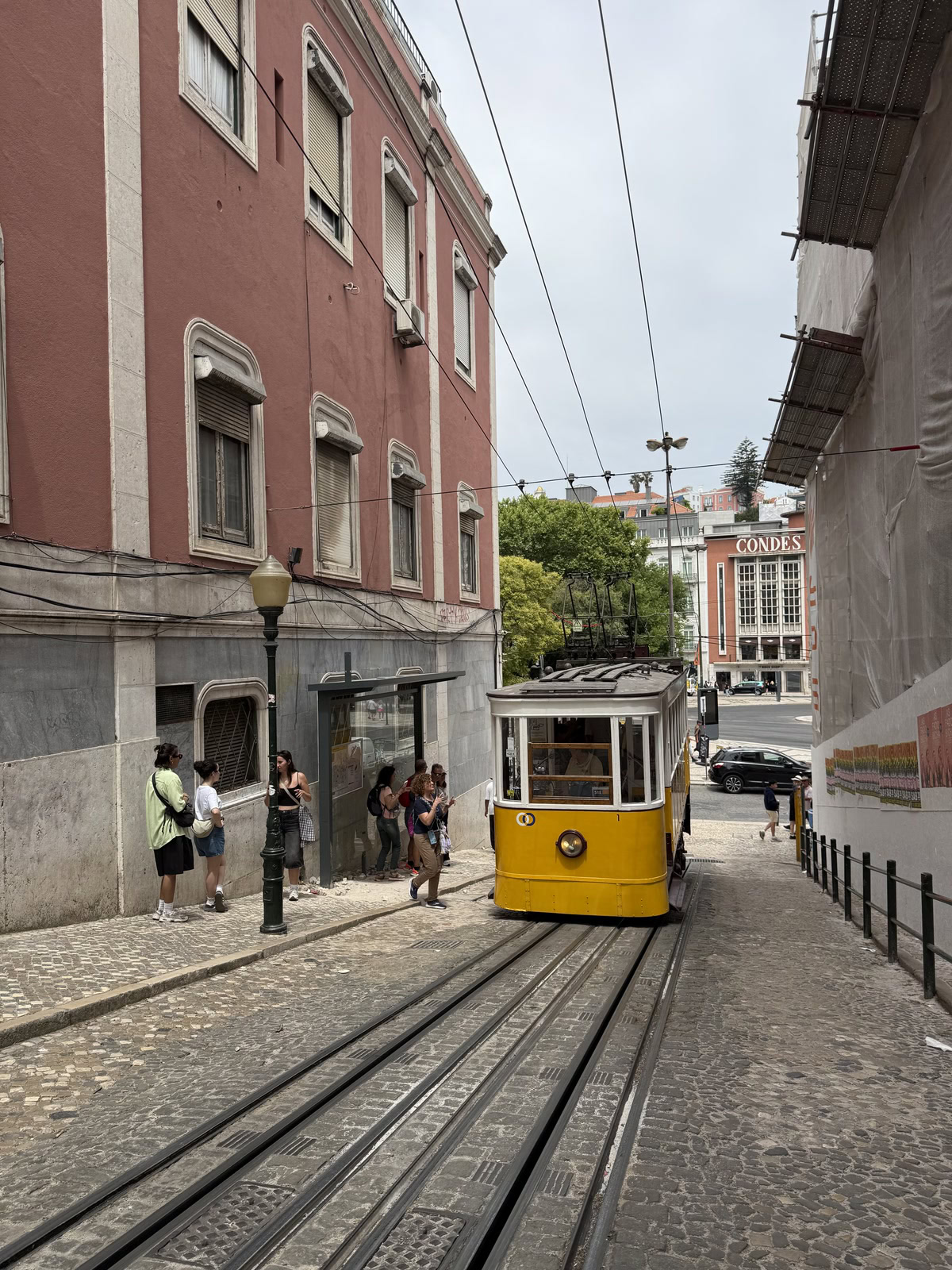
On Wednesday 3 September 2025, at around 18:00, one of the two cars lost control while going down the hill. It reached about 60 km/h in less than a minute, derailed at a bend and hit a building.
16 people died and 24 were injured, nine of them seriously. The brake operator on board was among the dead. Eleven of the 16 who died were visitors from other countries: 3 British, 2 South Korean, 2 Canadian and one each from Switzerland, Ukraine, the USA and France. The other 5 were Portuguese.
In the first days the numbers changed, with reports of 15, 16 and 17 dead and 21 to 24 injured. The final figures are 16 dead and 24 injured. The second car stopped a short distance away, and nobody died in it.
I went to the site shortly after the accident, and it was terrible to see what had happened. I had always seen the Elevador da Glória run without problems, so it was a shock for me to see it like this.
What Caused the Elevador da Glória Accident?
The Portuguese accident investigation agency, GPIAAF, is still working on its final report. Here is what we know so far.
- 6 September 2025, first report: The cable that joins the two cars gave way at its fixing point inside car 1. The cars are balanced against each other, and the brakes depend on that balance. Without it, the brakes could not hold the car.
- 20 October 2025, second report: The cable was not certified for carrying passengers. The agency also pointed to failures in maintenance, supervision and training, and made six safety recommendations to Carris and to the national transport regulator.
- 18 November 2026, audits: External audits ordered after the accident found cables that did not meet the requirements on all four of Lisbon’s old lifts. The reports became public on that date.
- Final report: It was first expected in September 2026 and is now expected by the end of March 2027.
The public prosecutor’s office is investigating too. It is waiting for expert tests, and a decision is expected by the end of March 2027. As of 23 November 2026, no indictment has been announced.
I keep this part of the page factual, and I update it when the final report comes out.
Elevador da Glória Memorial at Largo da Oliveirinha
On 3 September 2026, one year after the accident, the city opened a memorial for the 16 victims at Largo da Oliveirinha, next to the Calçada da Glória. It has an olive tree that is around 150 years old, 16 limestone blocks with the victims’ names, and a stone bench.
It is a quiet place for remembrance, and it is not a photo spot. If you walk past it, please be respectful.
When Will the Elevador da Glória Reopen?
Not before 2029. On 31 August 2026, Carris presented its plan: a completely new, certified lift instead of a repair of the old one.
- Tender: An international design and build tender is planned by the end of March 2027.
- Opening: The new lift is targeted for 2029. Some reports say the first half of 2029.
- Design: It will still have two cars linked by a cable, plus detection for people entering the track, real-time monitoring and a brake attendant on board. Carris says it keeps the look and the link to the Calçada da Glória.
- Old car: The car that was less damaged is expected to become a museum piece.
The cost and the final design have not been announced. So do not plan a trip around riding it before 2029. I will update this page when something changes.
Alternatives to the Elevador da Glória: How to Get Up the Hill
The Elevador da Glória used to connect Praça dos Restauradores with Bairro Alto in 3 minutes. Here are your options now:
- Walk the route. This is what I do. It is free, it is the shortest way, and it is hard. Read my tips below.
- Take the Carris mini-bus 51E. After the accident, Carris started this small bus line as an alternative. It runs in a circle from Praça dos Restauradores and passes Largo do Carmo and Rua da Misericórdia. It launched in September 2025, so check carris.pt for the current route and times before you go.
- Take the metro. Go from Restauradores to Baixa-Chiado on the Blue Line, which is one stop, and walk up through Chiado to Bairro Alto. Read more in my metro guide.
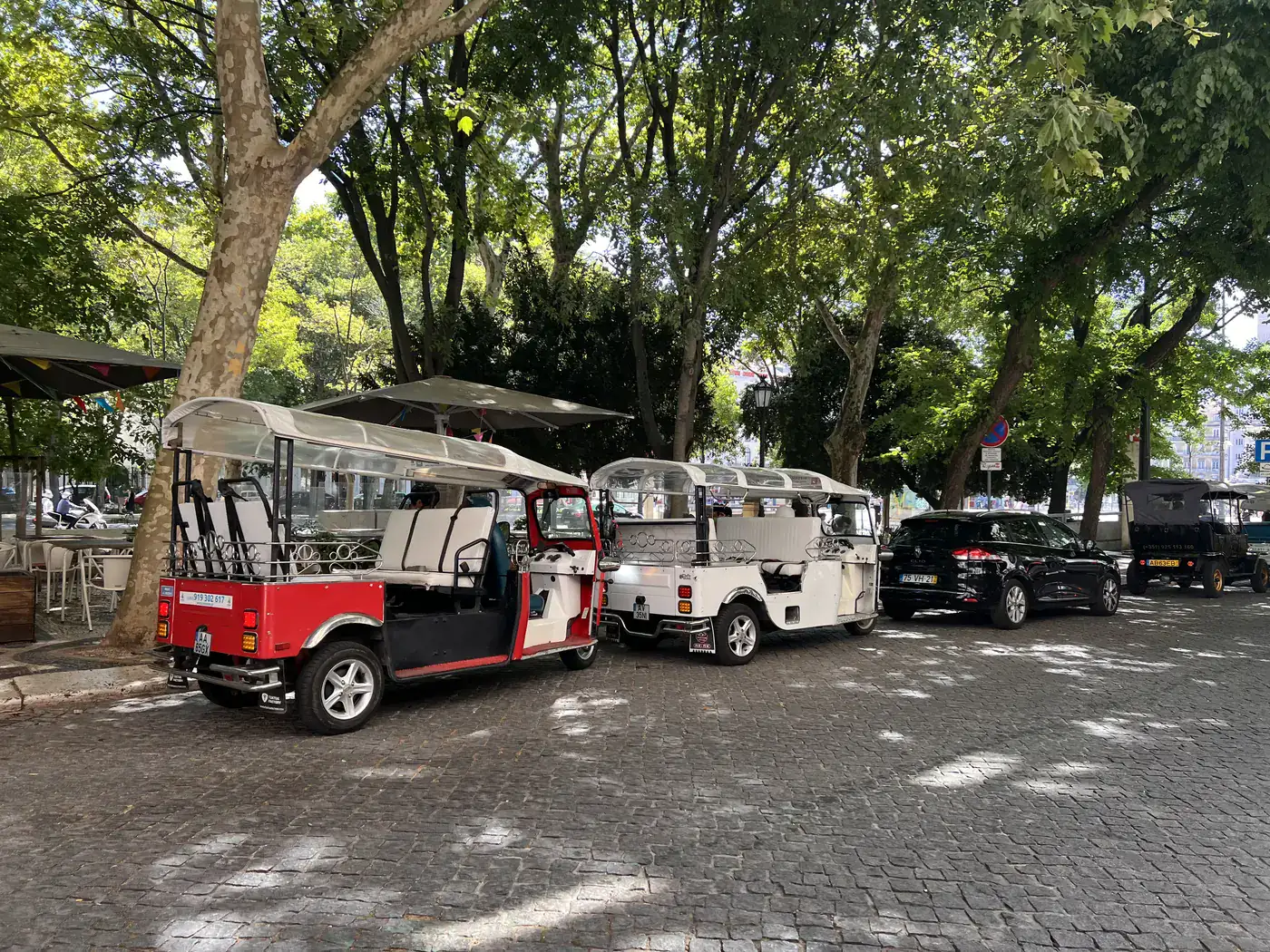
- Take an Uber. It is a short ride, and it is the best option if you have limited mobility, a stroller or heavy bags. Check the price in the app.
The other lifts do not help you at the moment. The Bica, Lavra and Santa Justa are closed, and the Graça funicular is in a different part of town. For all your options, see my guide to getting around Lisbon.
How to Walk the Calçada da Glória: The Elevador da Glória Route
You can still walk the route up or down between Avenida da Liberdade and Príncipe Real or Chiado, and I do it often. It is a hard route, though, so here is a heads up.
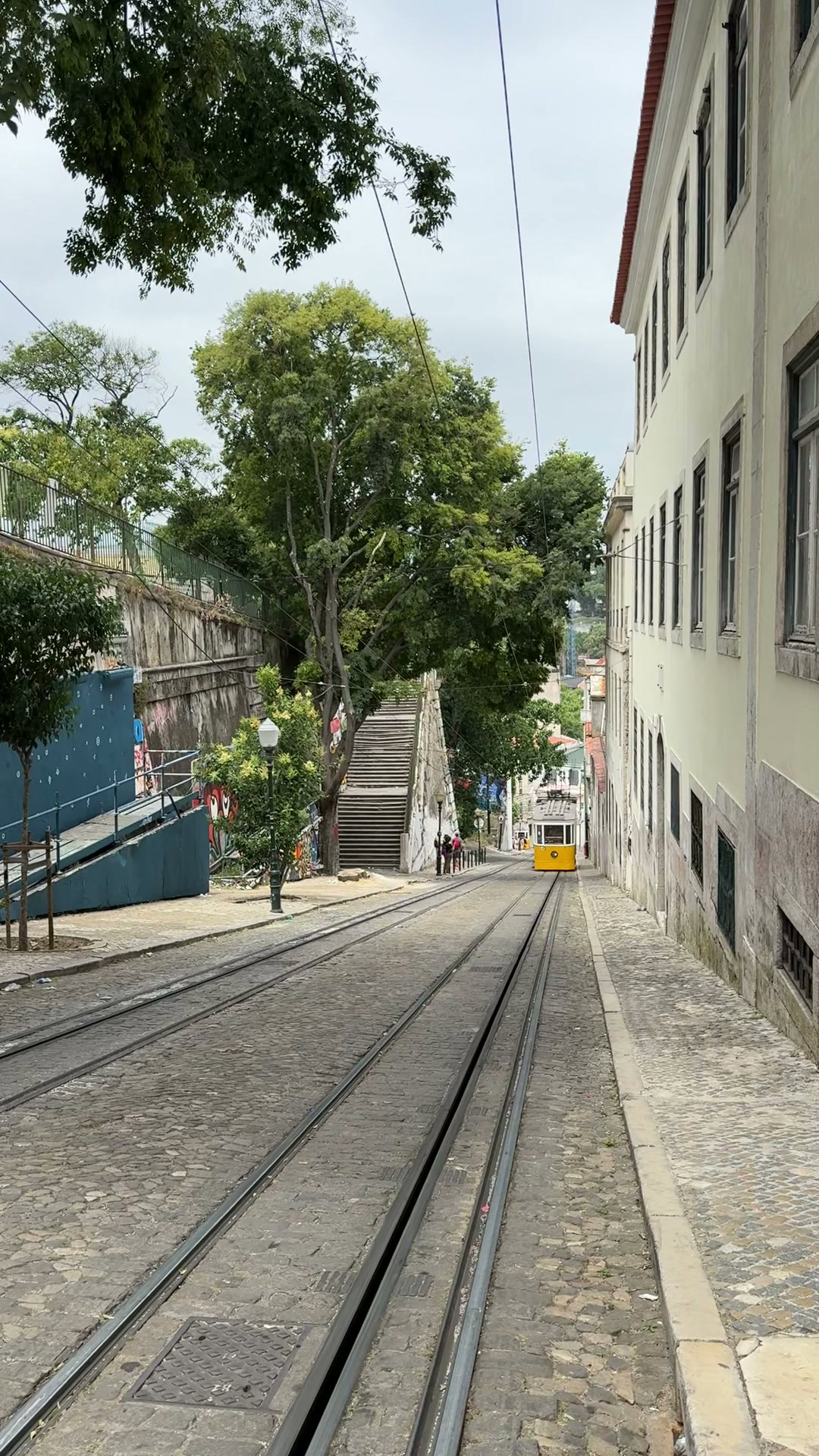
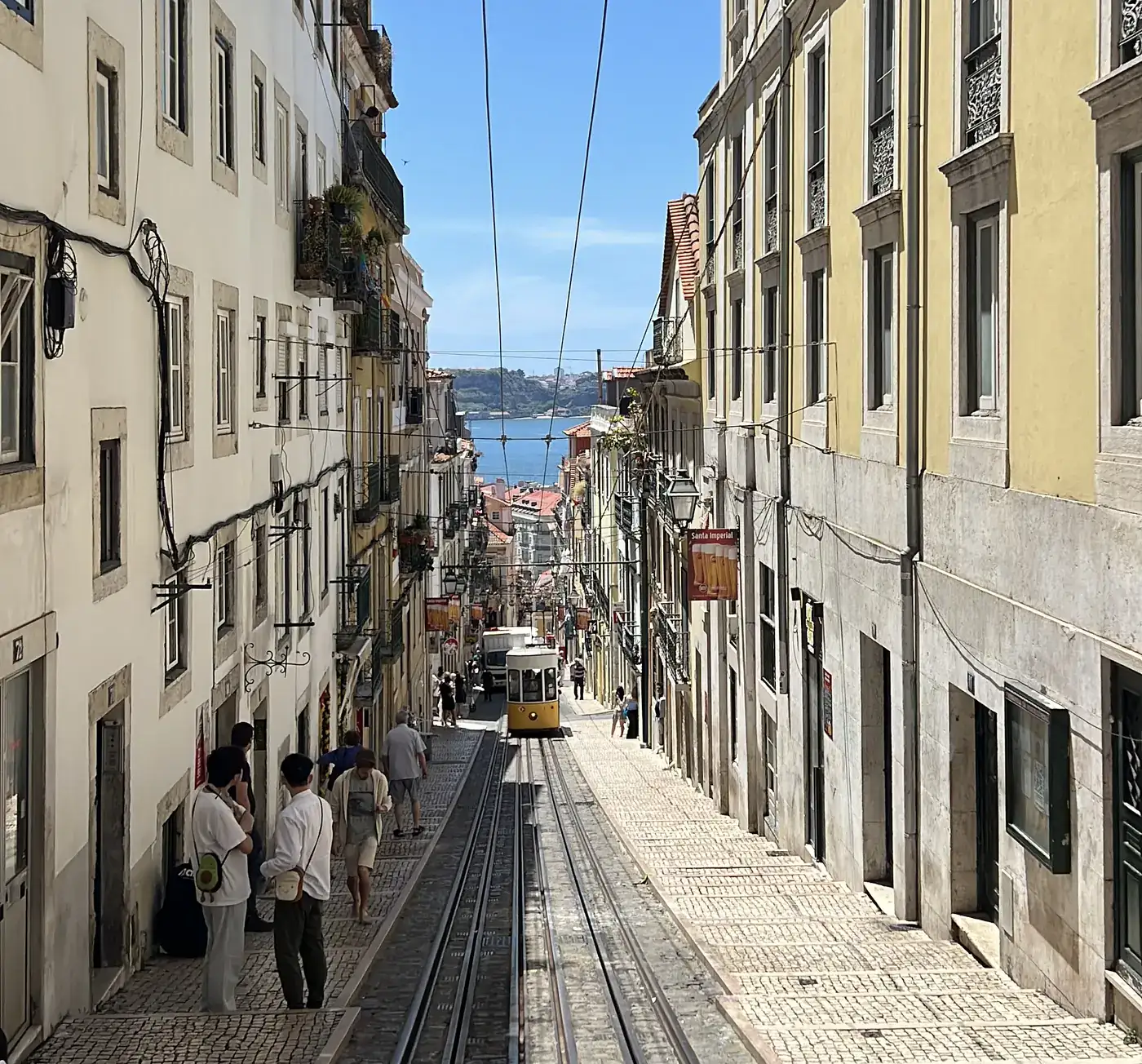
- Where it starts: The route follows the Calçada da Glória, the street the lift ran on. At the bottom, it starts by Avenida da Liberdade and Praça dos Restauradores. At the top, you reach the Miradouro de São Pedro de Alcântara.
- How steep it is: It is about 275 metres with a gradient of around 17%. It is steep the whole way, so take it slowly and stop when you need to.
- How long it takes: Google Maps shows about 10 minutes and 500 metres from Praça dos Restauradores to the top, with a climb of around 54 metres. Plan more time if you stop for photos or the view.
- What to wear: Wear shoes with good grip. The cobbles and stone can be slippery when it rains.
- Mobility: I would not try it with a stroller or wheelchair. Take an Uber instead.
The map shows the walking route from the bottom to the top.
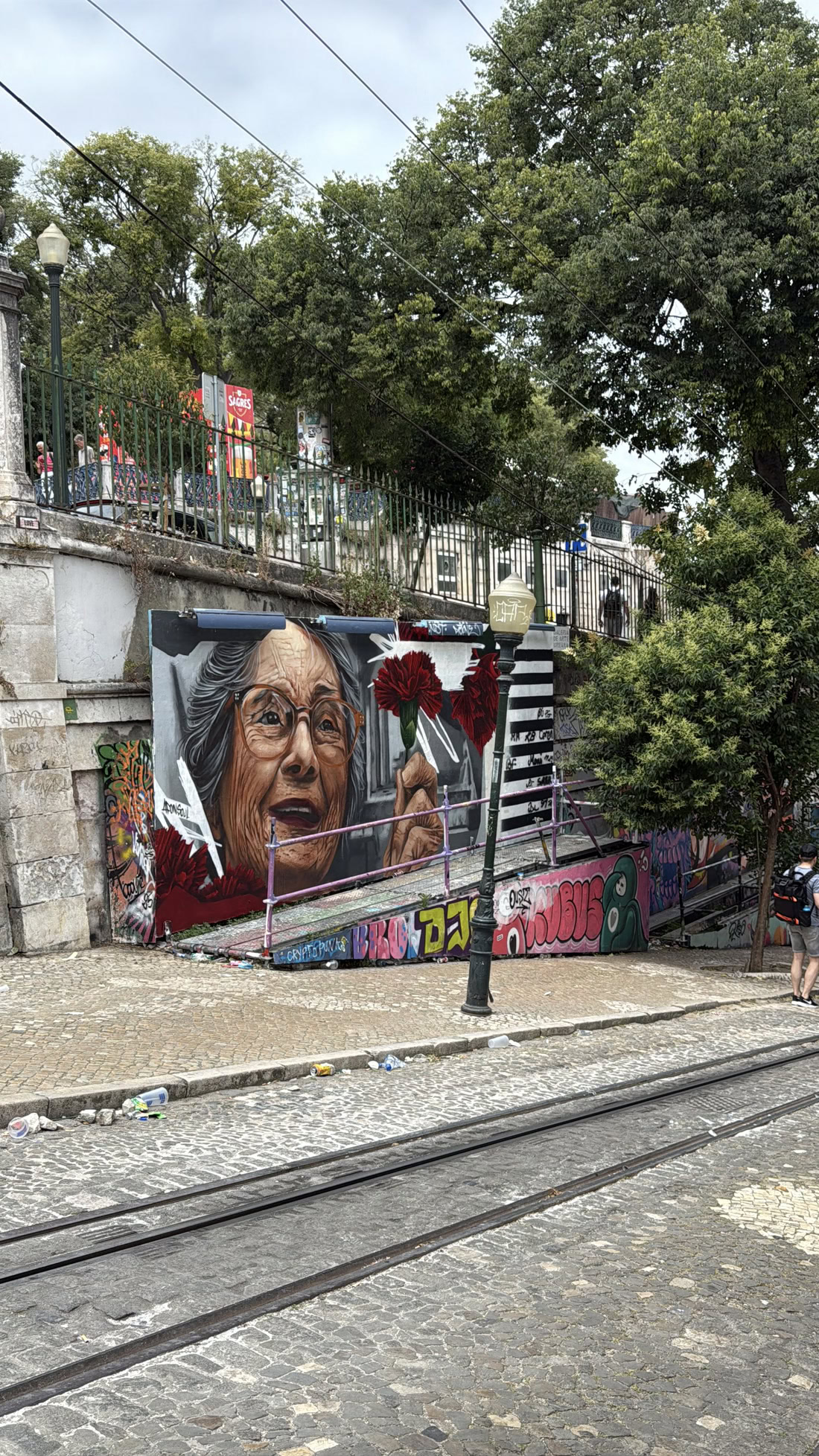
There is beautiful graffiti on the way, so it is worth looking around. Along the route, you also pass the memorial at Largo da Oliveirinha. If you like street art, read my guide to street art in Lisbon.
Tip: Walk it up in the morning or late afternoon. At the top, you get the view at the Miradouro de São Pedro de Alcântara, and from there it is a short walk to Príncipe Real and Bairro Alto.
History of the Elevador da Glória (1885 to Today)
The Elevador da Glória opened on 24 October 1885. It was built to help people up one of Lisbon’s steepest hills, between Praça dos Restauradores and the Bairro Alto area.
It was designed by the engineer Raoul Mesnier de Ponsard, who also designed the Santa Justa Lift. The lift first used a water counterweight, then steam, and it was electrified in 1914 to 1915.
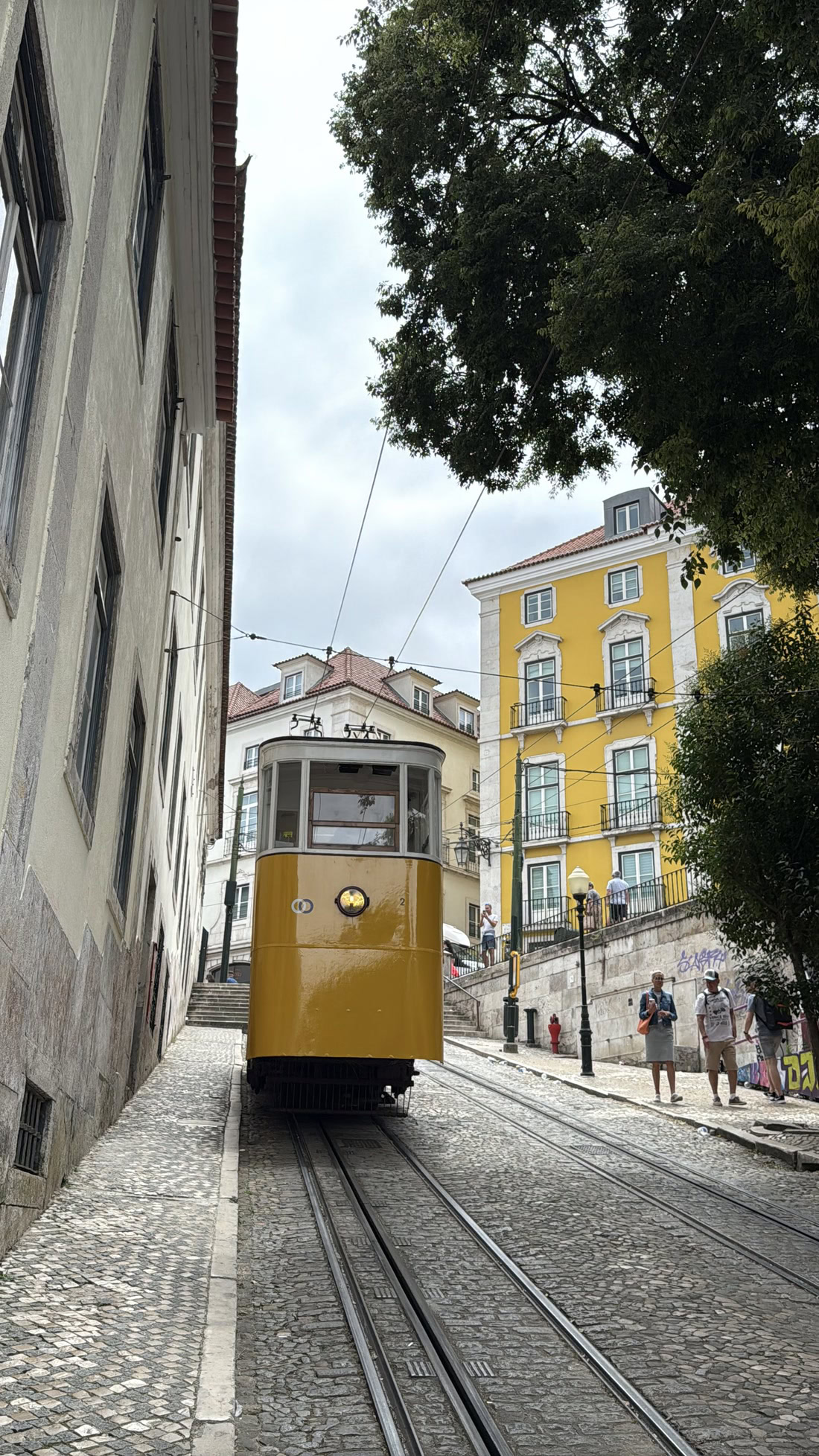
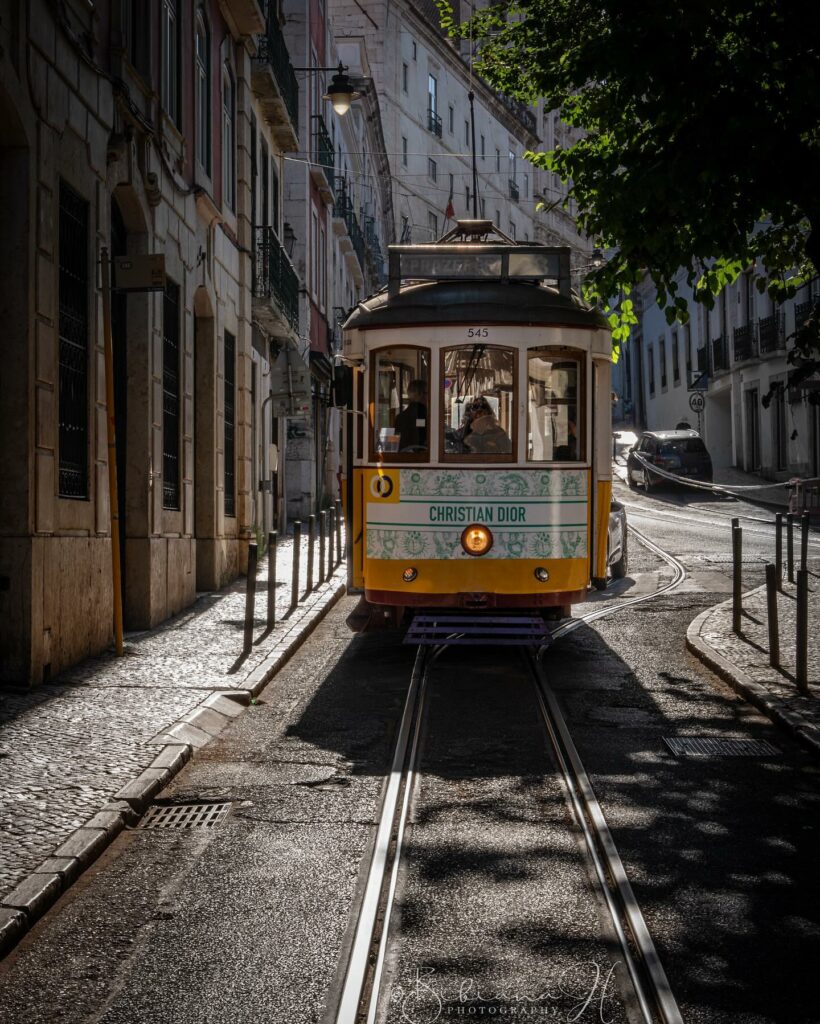
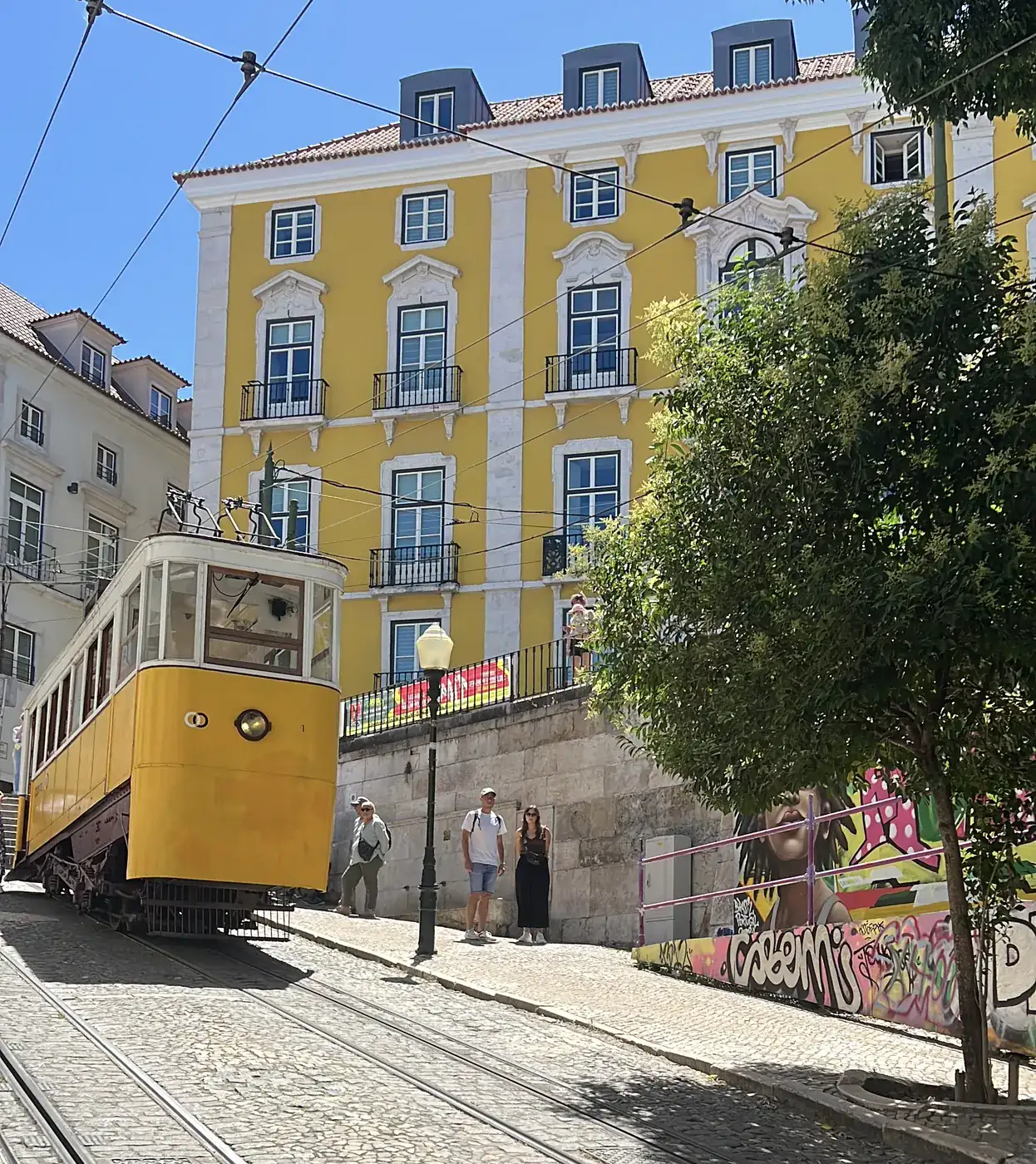
The two yellow cars were joined by a cable, so when one went up the other came down. Over the years, the cars became covered in graffiti, and many photos of Lisbon show them like that. It is classified as a National Monument.
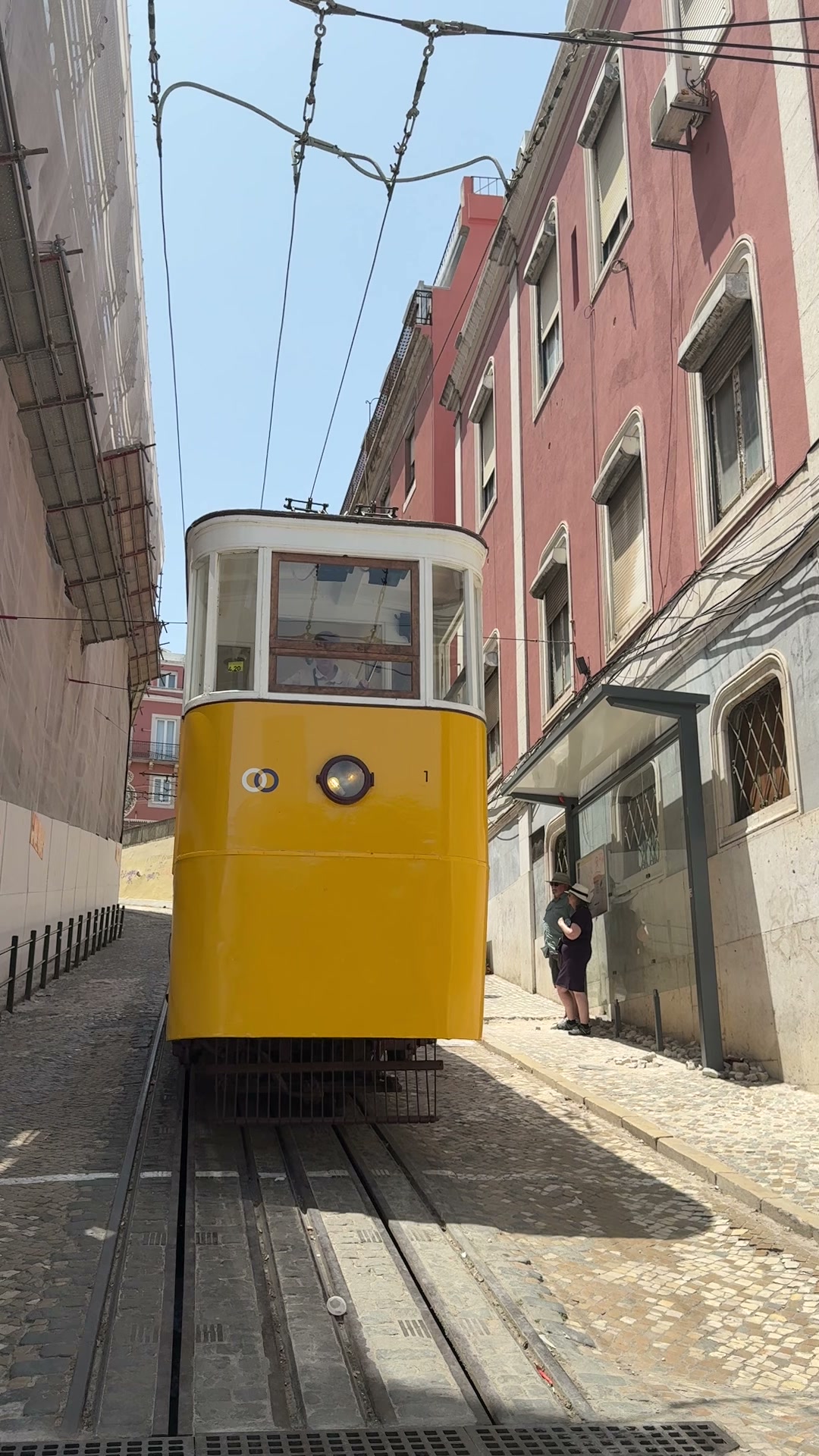
It had an earlier problem too. Time Out reports that a minor derailment in 2018 closed it for around a month.
Things to See Near the Elevador da Glória
- Praça dos Restauradores and Avenida da Liberdade: The bottom of the route, with the big square, the obelisk and the start of Lisbon’s main avenue.
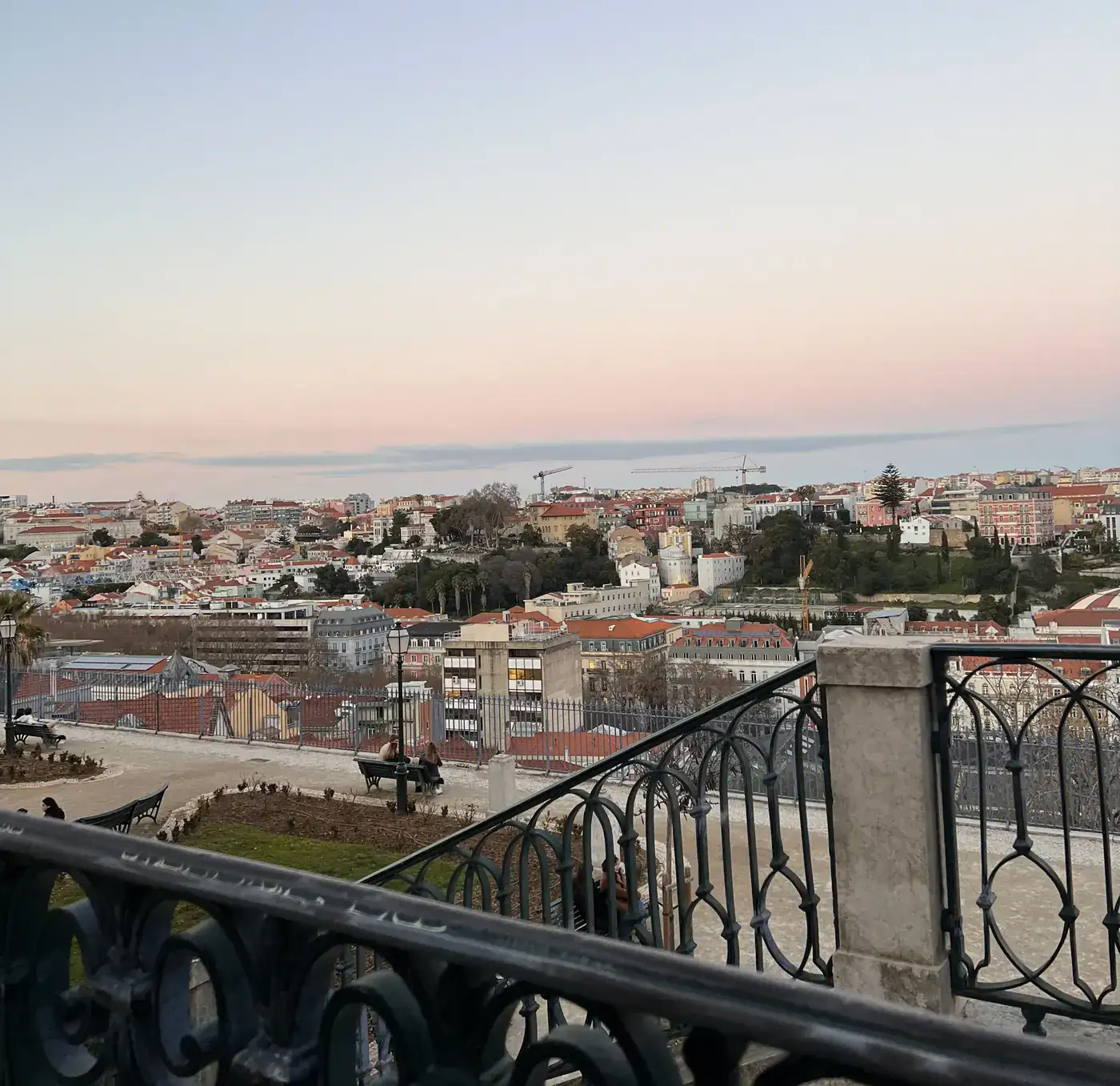
- Miradouro de São Pedro de Alcântara: The top of the route, with a wide view over the city.
- Bairro Alto, Príncipe Real and Chiado: The neighbourhoods you reach at the top.
- Elevador da Bica and the Santa Justa Lift: Both are closed, but you can still go and see them.
- More miradouros: My guide to the best viewpoints in Lisbon.
Visiting Lisbon While the Elevador da Glória Is Closed
The Elevador da Glória was one of the symbols of Lisbon, and it is hard to see it gone. It is closed now, and a new lift is targeted for 2029.
You can still walk the route, and I think it is worth it if you are in good shape and take your time. If you are not, take an Uber or the metro and enjoy the view from the top.
I will keep this page up to date as the investigation and the plans for the new lift move forward. For everything else about getting around, check my public transport guide and my Navegante card guide.
Elevador da Glória FAQ
Is the Lisbon funicular still running?
Not the Glória. The Elevador da Glória has been closed since 3 September 2025, and so are the Bica, the Lavra and the Santa Justa Lift. The Graça funicular reopened on 30 April 2026, so it is the only historic lift you can ride, and it has had short closures. Check carris.pt before you go.
Has the Lisbon funicular reopened yet?
No. The Elevador da Glória has not reopened. Carris plans a completely new lift and targets 2029. The Bica, Lavra and Santa Justa also have no reopening dates.
Where in Lisbon did the funicular crash?
On the Calçada da Glória, the street between Praça dos Restauradores and the Miradouro de São Pedro de Alcântara. The car derailed at a bend on the lower part of the route and hit a building.
How many people died in the Lisbon funicular accident?
16 people died and 24 were injured. Eleven of the 16 who died were visitors from other countries, and 5 were Portuguese. Early reports gave different numbers, but these are the final figures.
What caused the Glória funicular accident?
The first report from the investigation agency GPIAAF said the cable between the two cars gave way at its fixing point, so the brakes could not hold the car. A later report said the cable was not certified for passengers and pointed to maintenance failures. The final report is expected by the end of March 2027.
When will the Glória funicular reopen?
Carris plans a completely new lift, with an international tender by the end of March 2027 and a target of 2029. The old lift will not be repaired.
Can you walk the Elevador da Glória route?
Yes. You can walk the Calçada da Glória between Avenida da Liberdade and the Miradouro de São Pedro de Alcântara. It is about 275 metres with a gradient of around 17%, so it is a hard walk. Plan around 10 minutes uphill and wear shoes with good grip.
How much did it cost to ride the funicular in Lisbon?
A return ticket cost €4.30 in 2026, which covers up to two trips. The Glória is closed now, so you cannot ride it.
Which funicular in Lisbon is the best?
The Elevador da Glória was the most famous, and the Elevador da Bica is often called the prettiest. Today none of those two run, so the Graça funicular is the only one you can ride.
Planning On Going To Lisbon?
I’ve created a trip planner where you enter how many days you’re going and what activities you want to do.
Based on your input, you’ll get a complete vacation plan with ideas.





Leave a Reply