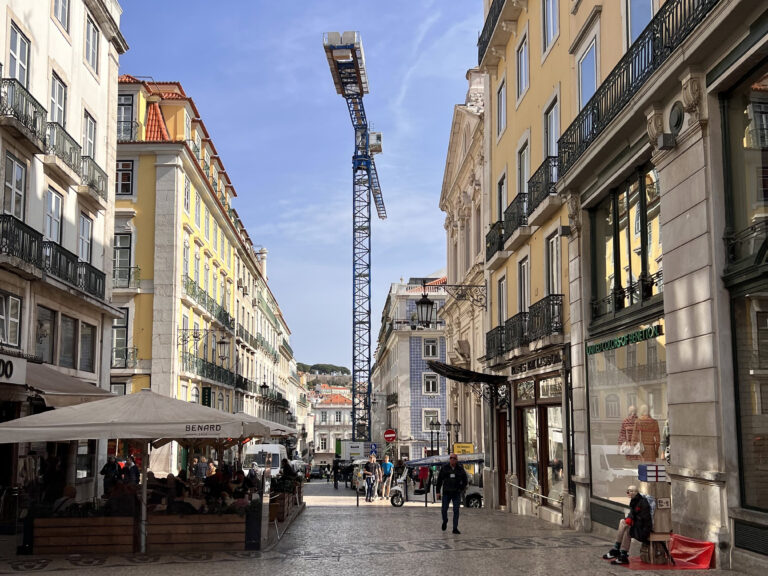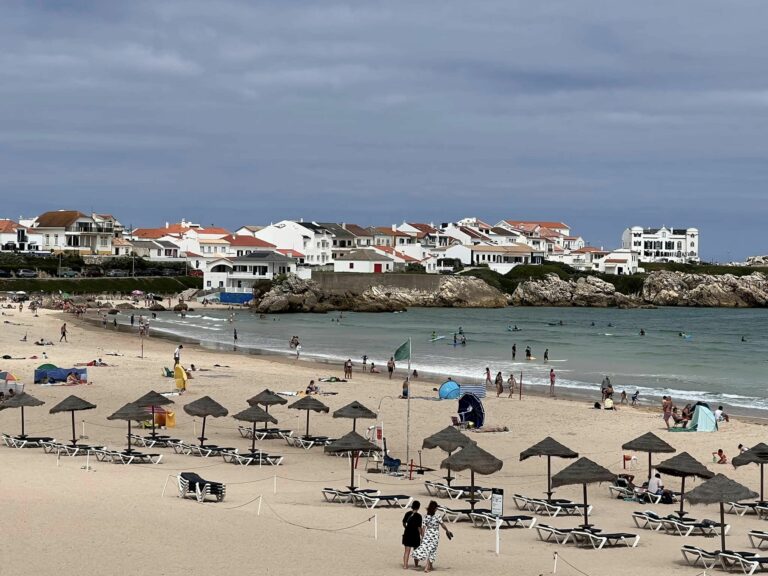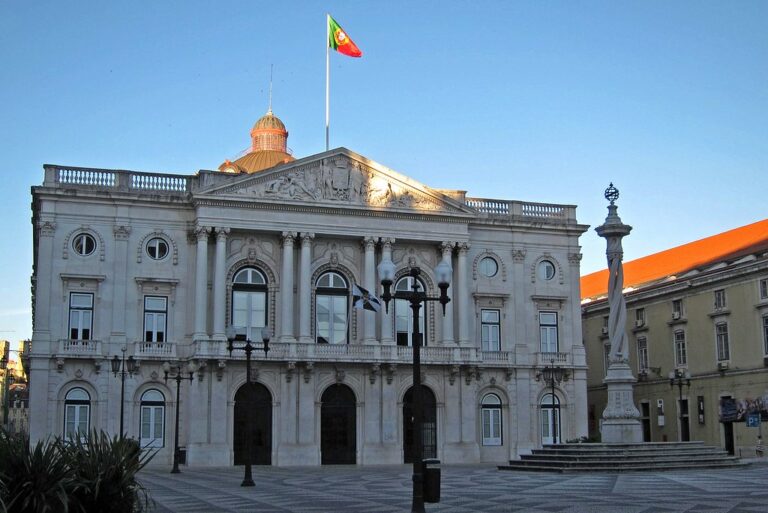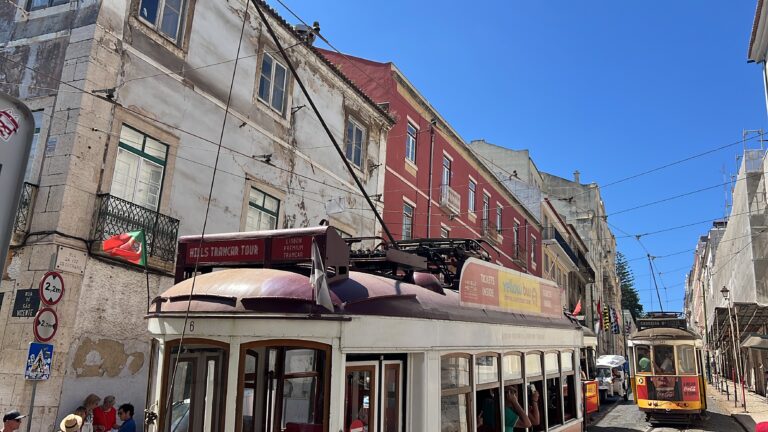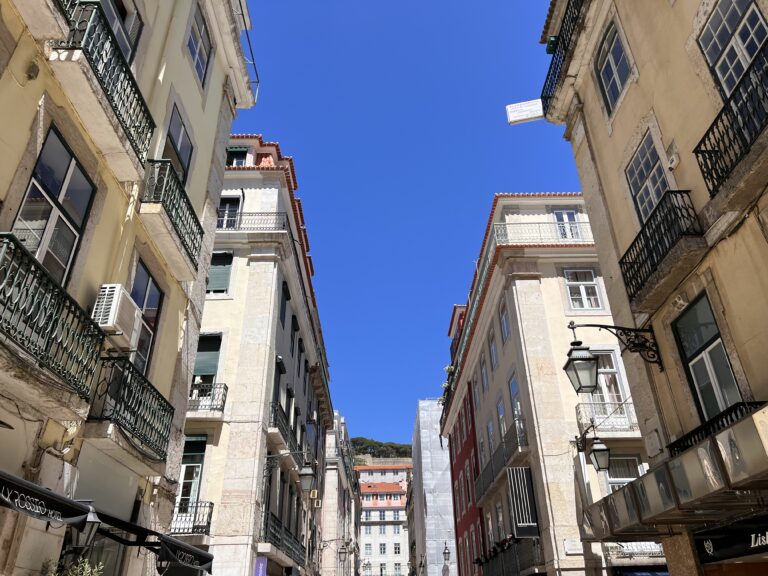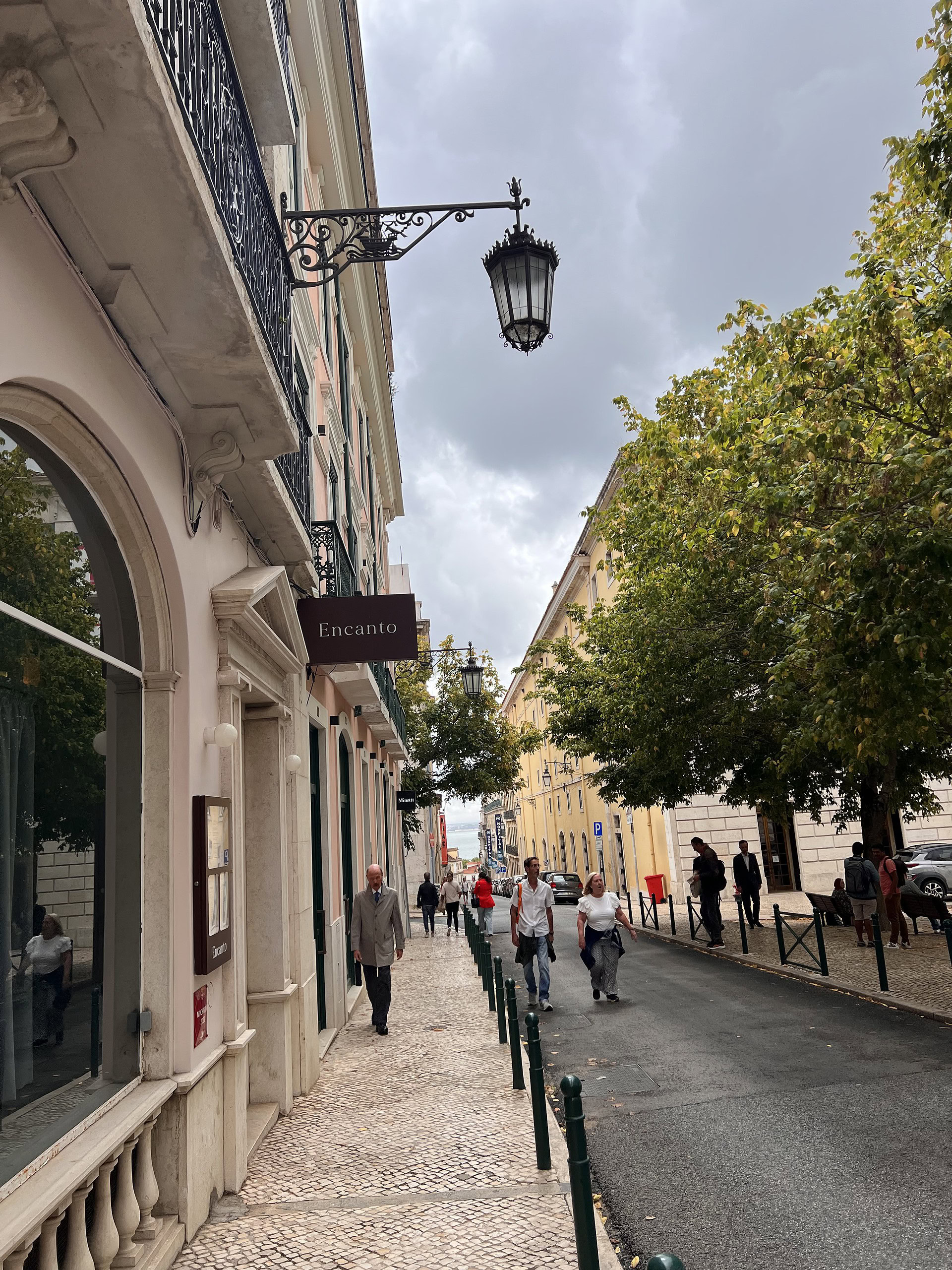
Three days in Lisbon gives you enough time to explore the city’s main neighborhoods, experience authentic Portuguese culture, and maybe even squeeze in a day trip to nearby Sintra or Cascais.
You’ll cover the historic center and the waterfront district of Belém, and you’ll have the flexibility to choose between more city exploration or a scenic escape outside the capital.
I’ve lived in and traveled around Lisbon for years, and I’ve structured this itinerary to minimize walking between areas while maximizing what you’ll see and experience.
Quick 3-Day Lisbon Overview
Here’s how I recommend breaking down your three days:
- Day 1: Central Lisbon – Baixa, Alfama, and Chiado neighborhoods, São Jorge Castle, viewpoints, and Tram 28
- Day 2: Belém District – Jerónimos Monastery, Belém Tower, pastéis de nata, Monument to the Discoveries
- Day 3: Choose Your Adventure – Day trip to Sintra OR explore Bairro Alto, Príncipe Real, and LX Factory
Before we dive in, I highly recommend checking out my complete Lisbon itineraries guide for additional planning tips.
Planning on spending a different amount of days in Lisbon? I have multiple guide for you.
Should You Get the Lisboa Card?
The Lisboa Card costs €31 for 24 hours, €51 for 48 hours, or €62 for 72 hours as of 2026.
It includes free entry to over 50 attractions plus unlimited public transport.
For this 3-day itinerary, I’d recommend purchasing the 48-hour card for Days 1 and 2, when you’ll visit the most popular attractions. On Day 3, you can pay as you go.
Let me break down the math: São Jorge Castle is €15, Jerónimos Monastery is around €18, and you’ll use public transport multiple times daily at €1.70 per ride.
The card pays for itself quickly if you’re visiting multiple attractions.
Day 1: Historic Lisbon (Baixa, Alfama, Chiado)
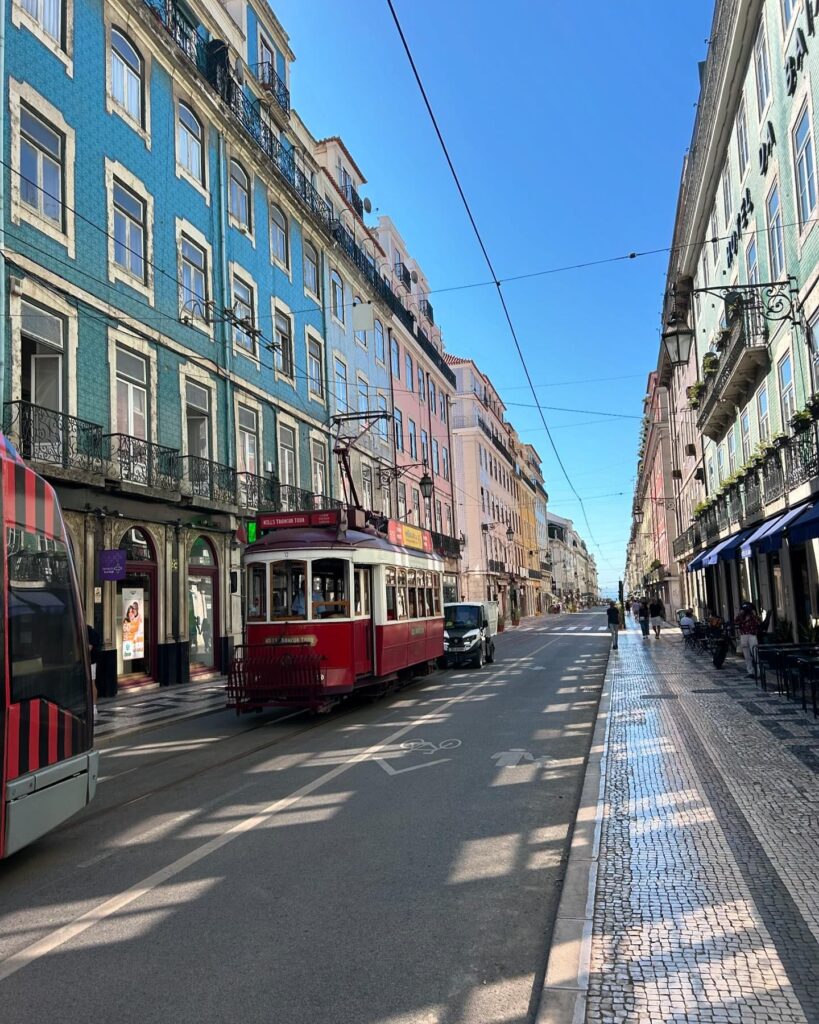
Start your first day in the heart of Lisbon, exploring the historic center and the oldest neighborhood in the city.
These areas are walkable and close together, so you won’t waste time retracing your steps.
Morning: Baixa and Rossio
Begin at Rossio Square (officially Praça Dom Pedro IV), Lisbon’s main plaza.
Grab breakfast at a traditional pastelaria – I love the atmosphere at Pastelaria Suíça right on the square, though it’s touristy.
From Rossio, walk down Rua Augusta, the main pedestrian shopping street through Baixa.
This grid of streets was rebuilt after the 1755 earthquake and is a perfect example of 18th-century urban planning.
Stop at the Augusta Street Arch at the end of Rua Augusta for excellent views over Praça do Comércio. The ticket is €4.5 as of 2026, and you can climb to the top for panoramic views.
Walk through Praça do Comércio, one of Europe’s largest waterfront squares.
The yellow buildings and the Tagus River backdrop make this incredibly photogenic.
Mid-Morning: Alfama
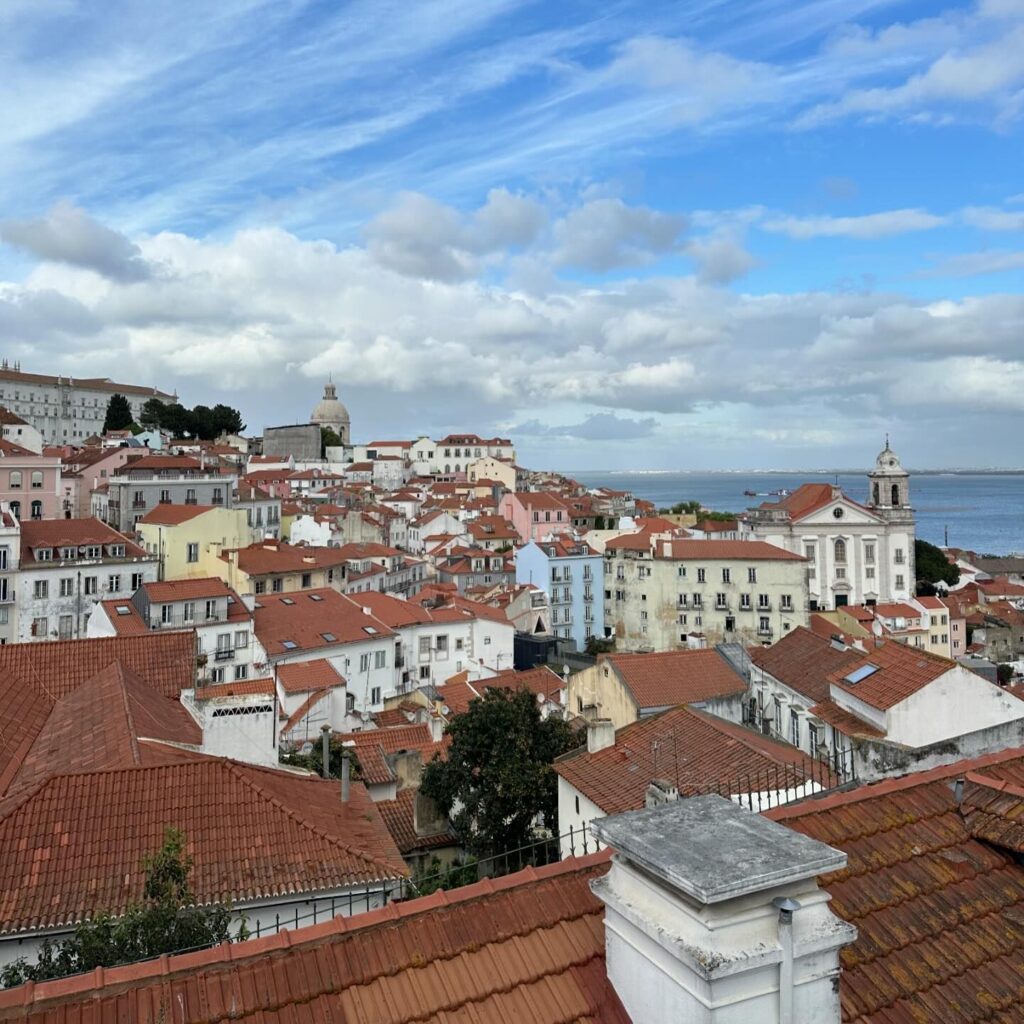
From Praça do Comércio, head up the hill towards Alfama, Lisbon’s oldest neighborhood.
You can take Tram 28 from nearby or walk up through the winding medieval streets.
Honestly, I prefer walking because you discover hidden corners that the tram whizzes past.
Stop at the Lisbon Cathedral (Sé de Lisboa), the city’s oldest church, dating back to 1147. Entry to the main church is free.
Continue uphill to Miradouro de Santa Luzia, one of Lisbon’s most beautiful viewpoints.
The terrace features azulejo tiles, bougainvillea, and sweeping views of Alfama’s terracotta rooftops.
Right next door is Miradouro das Portas do Sol, another stunning viewpoint with a café where you can grab a coffee.
I’ve spent a couple of afternoons here just watching the city.
Lunch in Alfama
For lunch, stay in Alfama and eat at a traditional tasca (tavern).
Tasca do Chico is excellent for petiscos (Portuguese tapas) and offers a local atmosphere, though it can get busy.
Another solid choice is Pois Café, a quirky spot with good sandwiches and salads in a relaxed bohemian setting.
Afternoon: São Jorge Castle
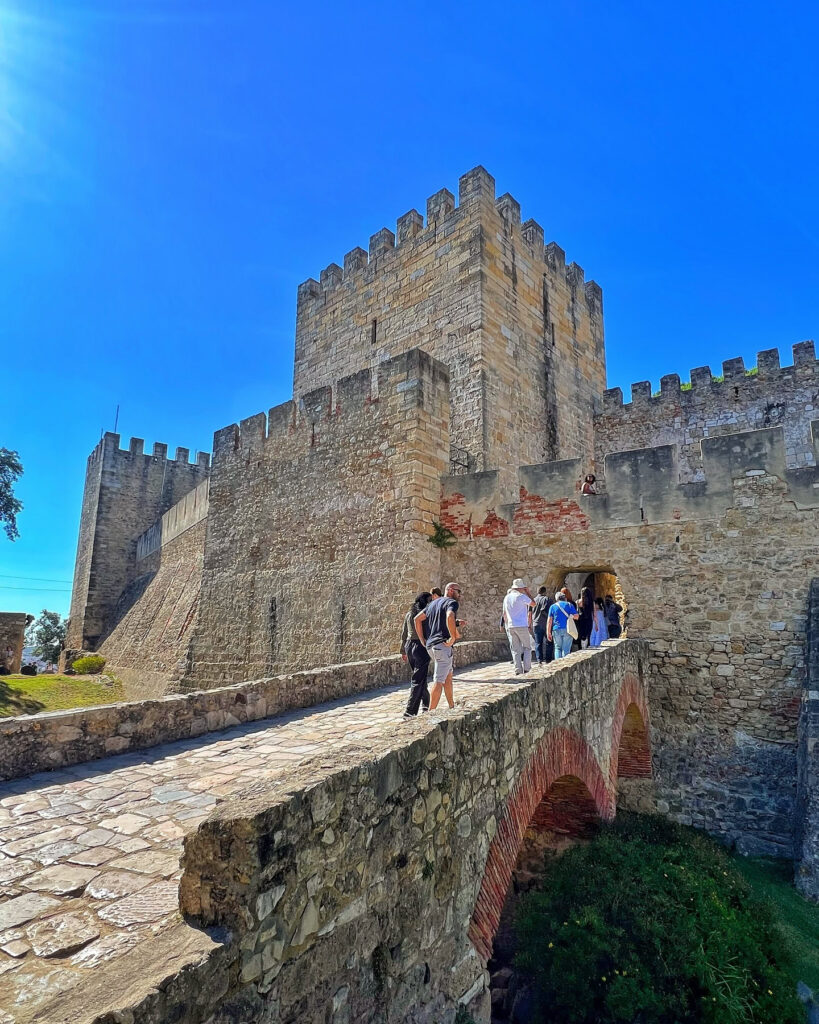
After lunch, head up to São Jorge Castle, right on Lisbon’s highest hill.
Entry costs €15 as of 2026 (free with the Lisboa Card).
The castle offers one of the best 360-degree views of Lisbon and houses archaeological ruins, peacocks wandering the grounds, and medieval towers you can climb.
I recommend spending at least 90 minutes here exploring the ramparts and taking in the views.
The Camera Obscura experience inside one of the towers is included with your ticket and shows a live 360-degree view of the city.
From the castle, walk back down through Alfama’s narrow streets, getting deliberately lost in the maze of alleys.
Evening: Chiado and Dinner
Make your way to Chiado, Lisbon’s elegant shopping and cultural district.
Stop at A Brasileira café on Rua Garrett, a historic coffee house dating back to 1905.
For dinner, I have a few favorite spots depending on your budget. Time Out Market in nearby Cais do Sodré has dozens of food stalls from Lisbon’s top chefs all under one roof.
If you want a dinner on the go, try As Bifanas do Afonso for incredible pork sandwiches (bifanas).
Both are casual and affordable spots I return to again and again.
After dinner, if you have energy, explore Bairro Alto for drinks. This hilltop neighborhood transforms at night with dozens of small bars spilling onto the cobblestone streets.
Day 2: Belém
Dedicate your second day to Belém, the waterfront district 6km west of central Lisbon.
This is where Portugal’s Age of Discoveries began, and it’s home to some of Lisbon’s most iconic monuments.
Important note: As of early 2026, Belém Tower is closed for renovation until spring 2026. Check the official website for reopening updates before your visit.
Getting to Belém
Take Tram 15E from Praça da Figueira, or Praça do Comércio, directly to Belém.
The ride takes about 25-30 minutes and is free with the Lisboa Card, or €1.70 with a Navegante card.
Alternatively, take the train from Cais do Sodré station to Belém station – it’s faster (8 minutes), but you’ll have a 20-minute walk to the monuments.
Morning: Jerónimos Monastery and Pastéis de Nata
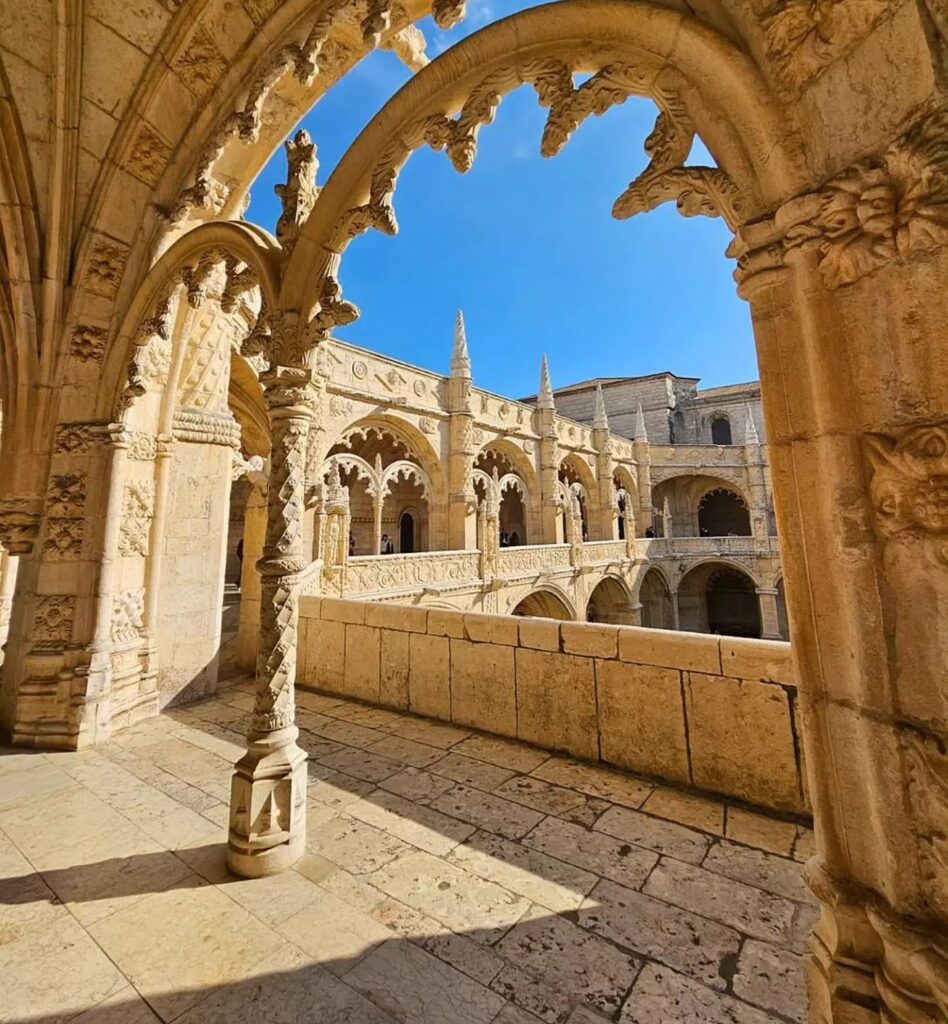
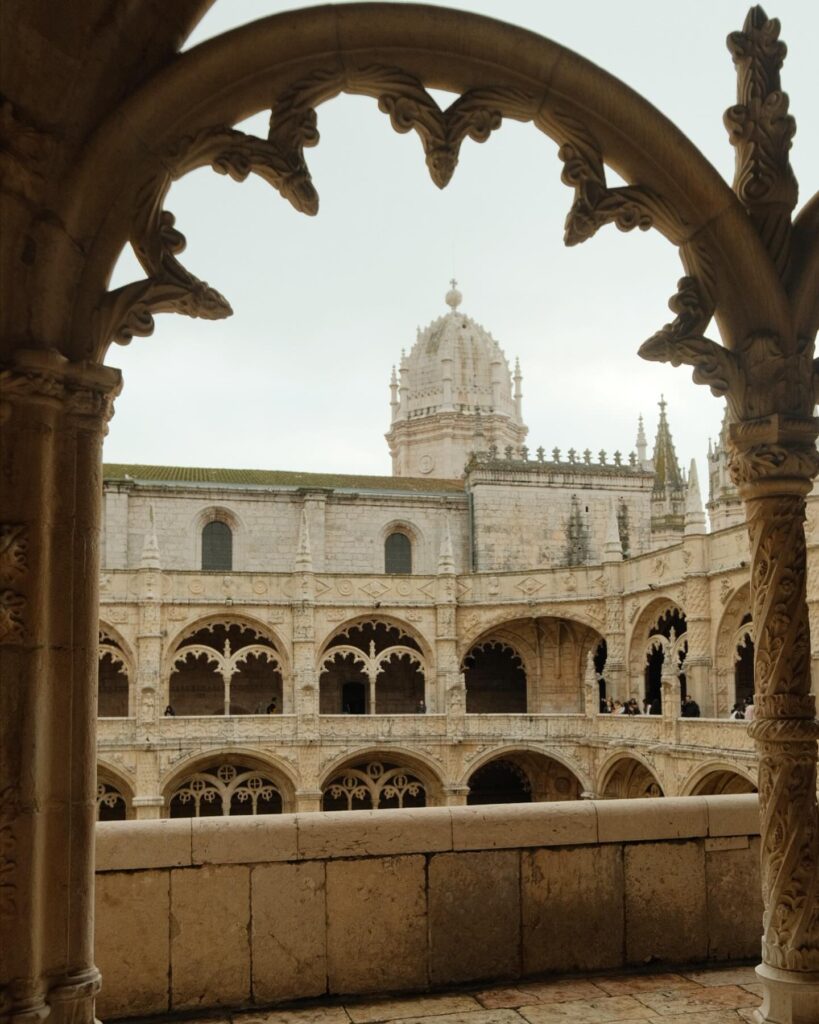
Start at Jerónimos Monastery, a UNESCO World Heritage site and masterpiece of Manueline architecture.
Entry costs around €18 as of 2026 (free with Lisboa Card).
The monastery was built in the 16th century to commemorate Vasco da Gama’s voyage to India.
Inside, you’ll find elaborate cloisters with intricate stone carvings featuring maritime motifs, the tomb of Vasco da Gama, and stunning vaulted ceilings.
Lines can be long midday, so arriving when it opens at 10am is smart.
After the monastery, walk two minutes to Pastéis de Belém, the legendary bakery that’s been making pastéis de nata since 1837.
The monks from Jerónimos Monastery created the original recipe, and this bakery still uses it today.
Yes, there’s usually a line, but it moves quickly. Get a box of six to take with you, plus one to eat immediately with cinnamon and powdered sugar.
I can’t get enough of these – the custard filling is perfectly creamy, and the pastry shatters when you bite into it.
Mid-Morning: Belém Tower (if open) and Monument to the Discoveries
Walk along the waterfront promenade to Belém Tower, assuming it has reopened from renovations.
This 16th-century fortress sits right on the Tagus River and served as both a defensive structure and a ceremonial gateway.
The exterior alone is worth seeing, with its Manueline details and riverside location.
If you can enter (tickets around €8), you can climb the narrow spiral staircase to the top for river views.
Next, visit the Monument to the Discoveries (Padrão dos Descobrimentos), a 52-meter-tall monument shaped like a caravel ship.
You can take the elevator to the top for €6, offering panoramic views of Belém and the 25 de Abril Bridge.
Lunch in Belém
For lunch, I suggest either staying in Belém at a waterfront restaurant or heading back toward the city.
In Belém, Darwin’s Café, near the Berardo Collection Museum, offers good sandwiches and salads, with outdoor seating.
Afternoon: Museums or LX Factory
You have a few options for your afternoon depending on your interests.
If you love modern art, visit the Berardo Collection Museum (free entry) in the Cultural Center of Belém. It has works by Warhol, Picasso, and Dalí.
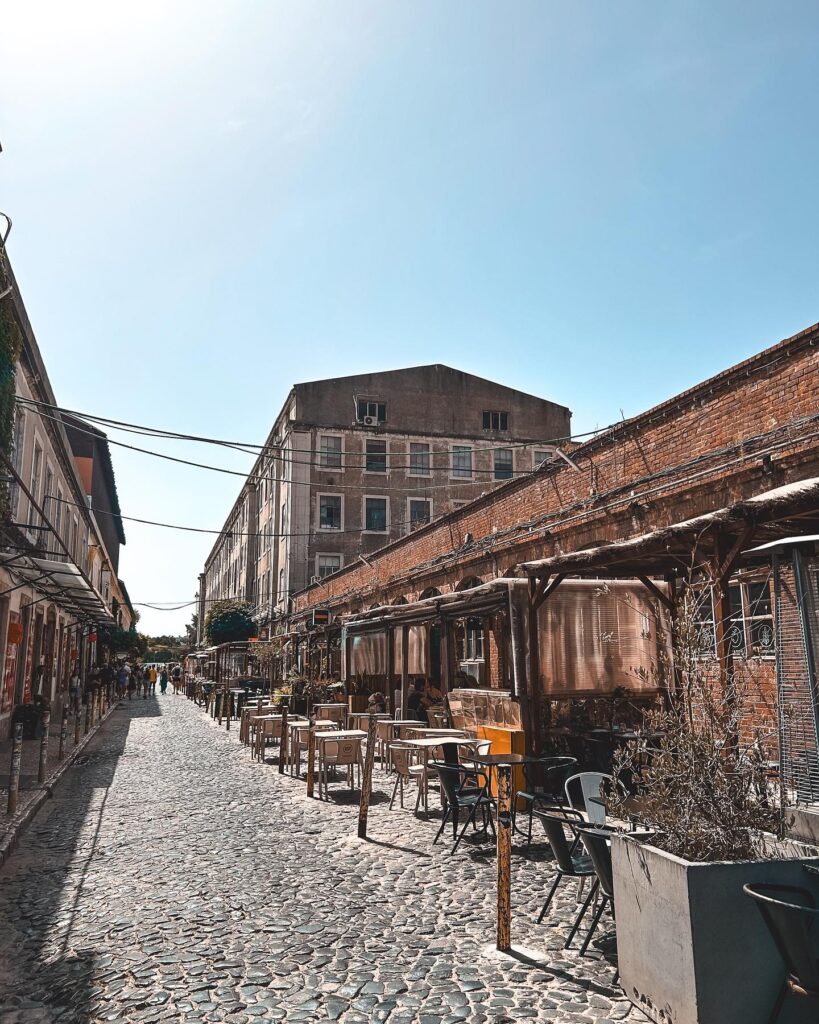
For a completely different vibe, take Tram 15 or a short Uber to LX Factory, a creative hub in a converted industrial complex under the 25 de Abril Bridge.
It’s filled with street art, boutique shops, cafes, and restaurants.
The bookstore Ler Devagar is stunning, with books stacked to the ceiling and a café inside.
I love spending a few hours wandering LX Factory, it feels worlds apart from traditional Lisbon.
Evening: Dinner and Fado
For your second evening, I highly recommend experiencing fado, Portugal’s traditional music genre.
Head back to Alfama or Bairro Alto for dinner with a fado performance.
In Alfama, Tasca do Chico offers authentic fado with no minimum spend – just buy drinks and enjoy the music. It’s intimate and genuine.
For a more formal fado dinner, try A Baiuca in Alfama or Adega Machado in Bairro Alto.
Expect to pay €25-40 per person for dinner with fado included.
The music is haunting and emotional – even if you don’t understand Portuguese, you’ll feel the saudade (a uniquely Portuguese feeling of melancholic longing).
Day 3: Option A – Day Trip to Sintra
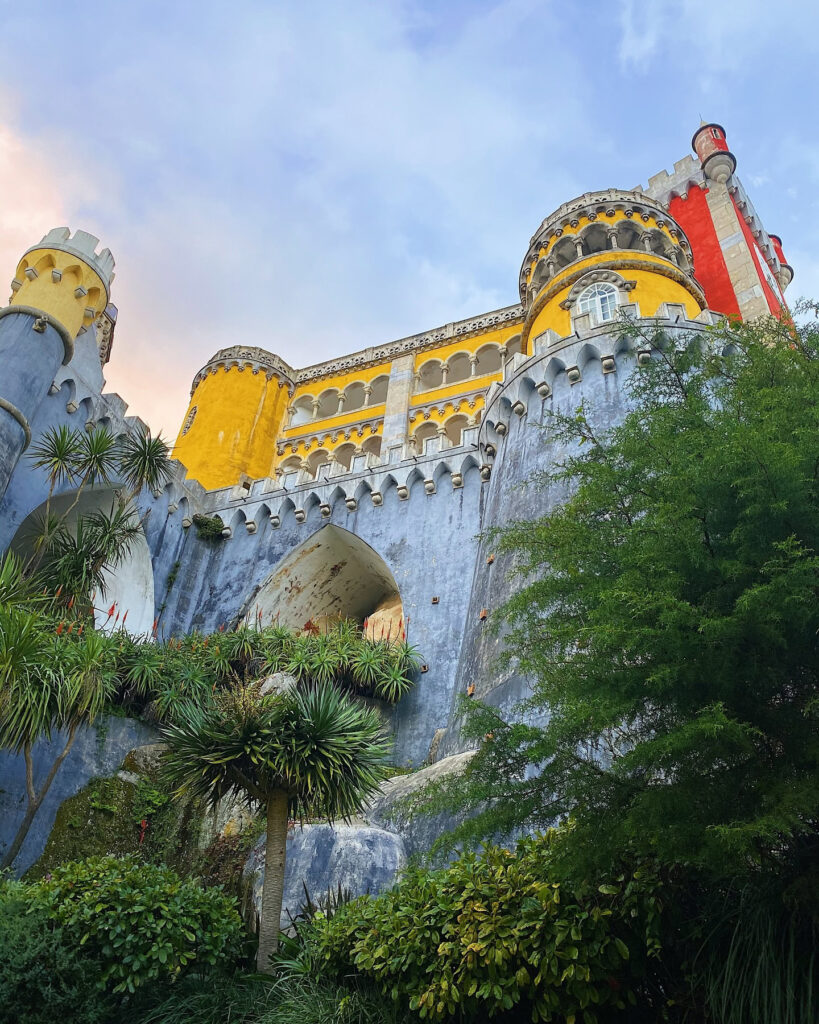
If you want to escape the city, take a day trip to Sintra, a fairy-tale town 40 minutes from Lisbon.
Getting to Sintra
Take the train from Rossio station in central Lisbon to Sintra. Trains run every 15-20 minutes, and the journey takes 40 minutes.
A return ticket costs around €4.60; it’s free with the Lisboa Card for the 72-hour version.
What to See in Sintra
Sintra is famous for its romantic palaces and lush forests.
You can’t see everything in one day, so pick 2-3 main sights.
Pena Palace is the most iconic – a colorful hilltop palace that looks like it belongs in a Disney movie. Tickets are around €14 and should be booked online in advance.
Quinta da Regaleira has a mysterious garden, underground tunnels, and the famous Initiation Well, which you can climb down into.
Tickets are roughly €12.
The Moorish Castle offers incredible views and a chance to walk along medieval ramparts.
Sintra town itself is charming with winding streets, traditional bakeries selling travesseiros (almond pastries), and craft shops.
I suggest taking Bus 434 from Sintra station to reach the palaces on the hills above town. The bus pass costs around €7 for unlimited hop-on-hop-off.
Return to Lisbon in the evening and have a relaxed dinner in Príncipe Real or Chiado. Pica-Pau is my favorite Portuguese restaurant, located in Príncipe Real.
Day 3: Option B – More Lisbon Neighborhoods
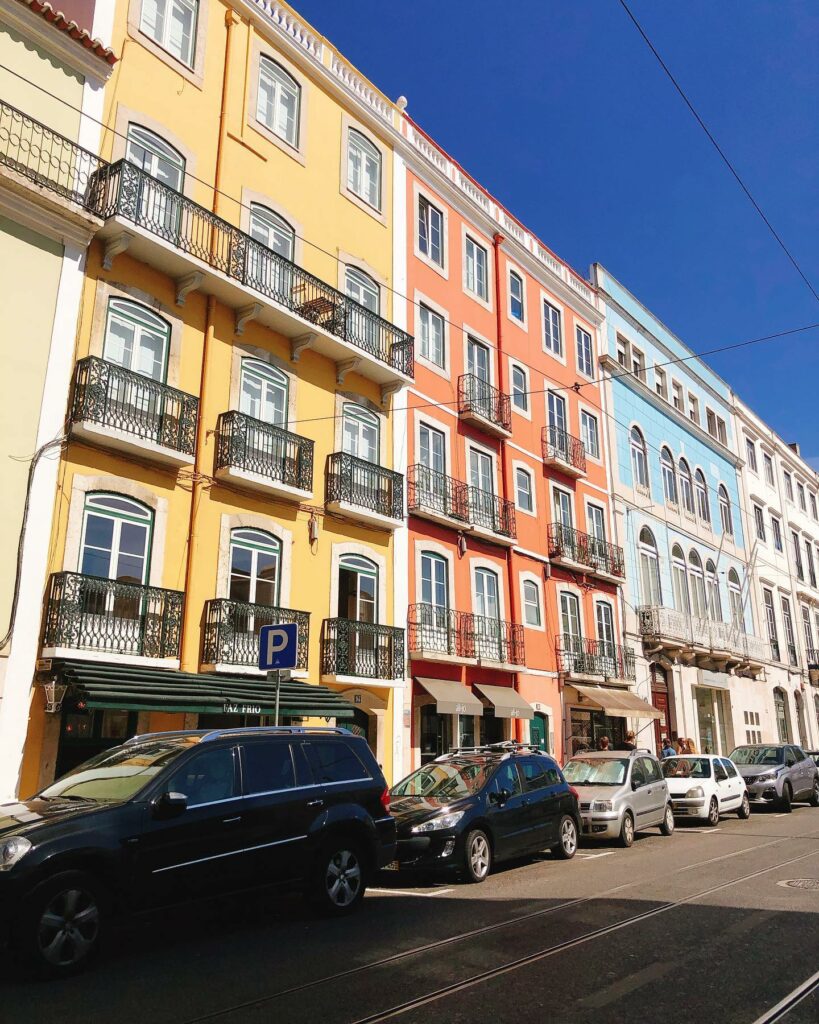
If you’re not interested in Sintra or want to explore more of Lisbon itself, spend your third day discovering neighborhoods you haven’t seen yet.
Morning: Príncipe Real and Shopping
Start in Príncipe Real, one of Lisbon’s trendiest neighborhoods.
The central garden (Jardim do Príncipe Real) is lovely in the morning, with a giant cedar tree and a reservoir you can walk underneath.
This area is known for design shops, vintage boutiques, and concept stores.
Stop at Embaixada, a restored palace converted into a shopping gallery with local designers and artisans.
For coffee, try Copenhagen Coffee Lab or Fábrica Coffee Roasters – both serve excellent specialty coffee.
If you want more suggestions, check out my favorite cafés in Lisbon.
Mid-Morning: Viewpoints
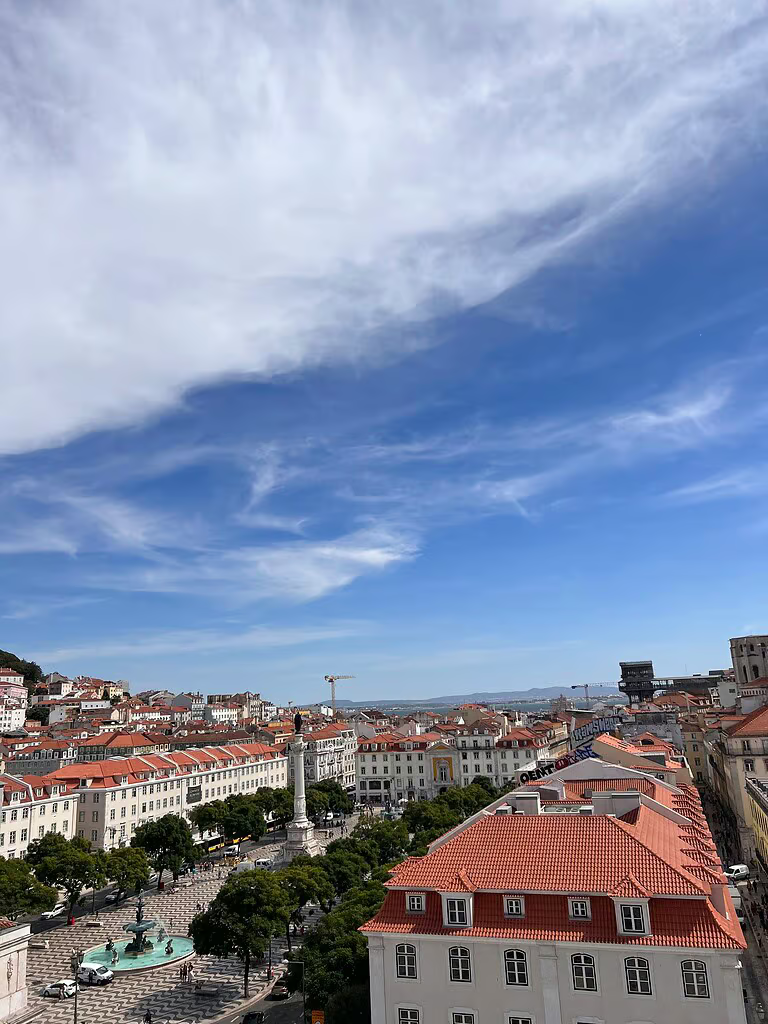
Walk to Miradouro de São Pedro de Alcântara, a terraced viewpoint overlooking downtown Lisbon and the castle.
There’s usually a kiosk here where you can grab a beer or coffee.
If you want another viewpoint, take a short Uber or Tram 28 to Miradouro da Graça or Miradouro da Senhora do Monte (the highest viewpoint in Lisbon).
I find myself drawn to Lisbon’s miradouros again and again – each offers a different perspective on the city.
Lunch
Head to Mercado de Campo de Ourique, a traditional market hall with food stalls.
It’s less touristy than Time Out Market and has a more local vibe.
You’ll find everything from sushi to traditional Portuguese petiscos.
Alternatively, eat in the Campo de Ourique neighborhood at one of the many cafes and restaurants. The area is very residential and authentic.
Afternoon: LX Factory or Parque das Nações
If you didn’t visit LX Factory on Day 2, now’s your chance.
The creative atmosphere, street art, and shops make it worth a few hours of your time.
Another option is Parque das Nações, Lisbon’s modern waterfront district built for Expo ’98.
It’s completely different from historic Lisbon with contemporary architecture, the Lisbon Oceanarium (one of Europe’s best aquariums), and the Vasco da Gama shopping center.
The oceanarium ticket is around €25 as of 2026.
Take the Red Line metro to Oriente station to reach Parque das Nações.
Evening: Sunset and Final Dinner
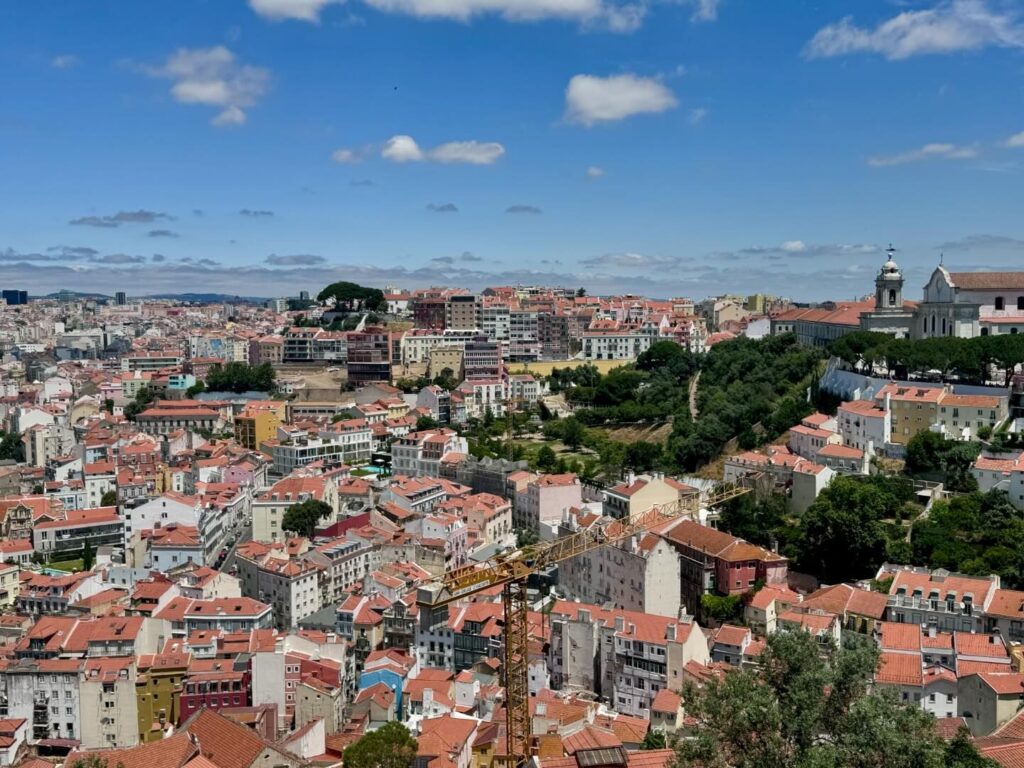
For your last evening, catch the sunset from one of Lisbon’s rooftop bars.
Park Bar in Bairro Alto is my favorite; it’s literally a park on top of a parking garage with incredible city views.
For your final dinner, treat yourself to a special restaurant.
If you love seafood, Ramiro is legendary for its shellfish (though you’ll wait in line). Cervejaria da Trindade combines history with excellent Portuguese food in a former monastery.
For something more intimate, try Taberna da Rua das Flores in Chiado for modern Portuguese cuisine.
After dinner, take a final walk through Baixa or along the waterfront to soak in Lisbon one last time.
Where to Stay in Lisbon for 3 Days
Location matters when you only have three days in Lisbon.
I recommend staying in Baixa, Chiado, or Cais do Sodré for easy access to the sights on Day 1 and Day 2.
These central neighborhoods put you within walking distance of most attractions and have excellent public transport connections.
Bairro Alto can be noisy at night due to its nightlife, so avoid ground-floor rooms if you’re a light sleeper.
For detailed recommendations, see my guide to where to stay in Lisbon.
Getting Around Lisbon
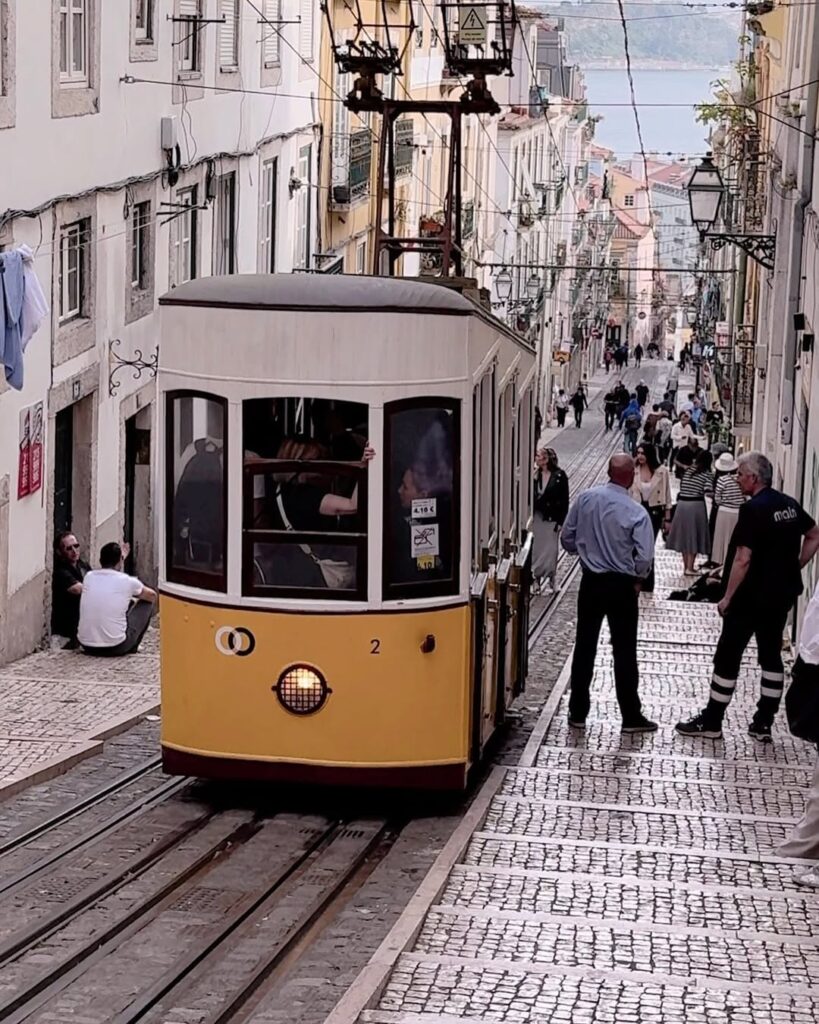
Lisbon is surprisingly compact and walkable, though the hills can be challenging.
For this 3-day itinerary, you’ll use a combination of walking, trams, and the metro.
A 24-hour unlimited public transport ticket costs €7.25 and includes metro, buses, trams, and funiculars. This is an excellent value if you’re sightseeing all day.
Alternatively, get a Navegante card (€0.50) and load it with Zapping credit. Each trip costs €1.70.
Taxis and Uber operate well in Lisbon and are more affordable than in other European capitals. A trip across the city typically costs €8-10.
What to Eat in Lisbon
Portuguese food is one of the highlights of any Lisbon trip.
Beyond pastéis de nata, don’t miss bacalhau (salted cod prepared dozens of ways), grilled sardines (especially in summer), bifanas (pork sandwiches), and petiscos (Portuguese tapas).
For breakfast, stop at any pastelaria for a pastel de nata and a bica (espresso).
I’m passionate about Portuguese wine, and Lisbon has incredible wine bars. Try wines from the Douro, Dão, or Alentejo regions.
A bottle of excellent Portuguese wine at a restaurant costs €15-25, far less than you’d pay for comparable quality elsewhere in Europe.
For restaurant recommendations, see my complete Lisbon restaurants guide.
Practical Tips for 3 Days in Lisbon
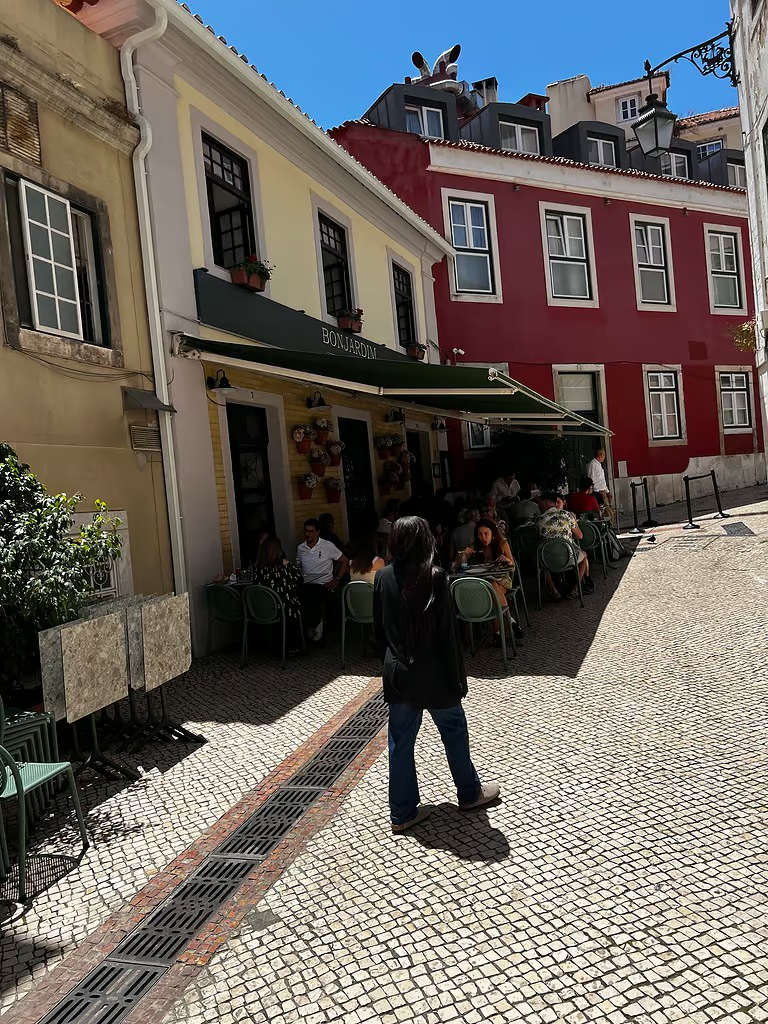
Start early – most monuments open at 9:30 am or 10 am, and you’ll beat the crowds by arriving right when they open.
Comfortable shoes are essential. Lisbon’s hills and cobblestone streets aren’t forgiving on feet.
Most restaurants serve lunch from 12 pm-3 pm and dinner from 7 pm-10 pm. Portuguese people typically eat dinner late, around 8-9 pm.
Be aware of pickpockets on Tram 28 and in crowded tourist areas. Keep your bag in front of you, and your valuables secure.
Many small restaurants and shops still accept only cash, so carry some euros.
For more detailed planning help, see my guide on how many days in Lisbon or browse other Lisbon itineraries if you’re staying longer.
Lisbon has many distinct areas, each with its own personality. For a full breakdown, see my guide to Lisbon’s neighborhoods.
Alternative 3-Day Itinerary Ideas
If you want to mix things up, here are some alternatives to the itinerary above:
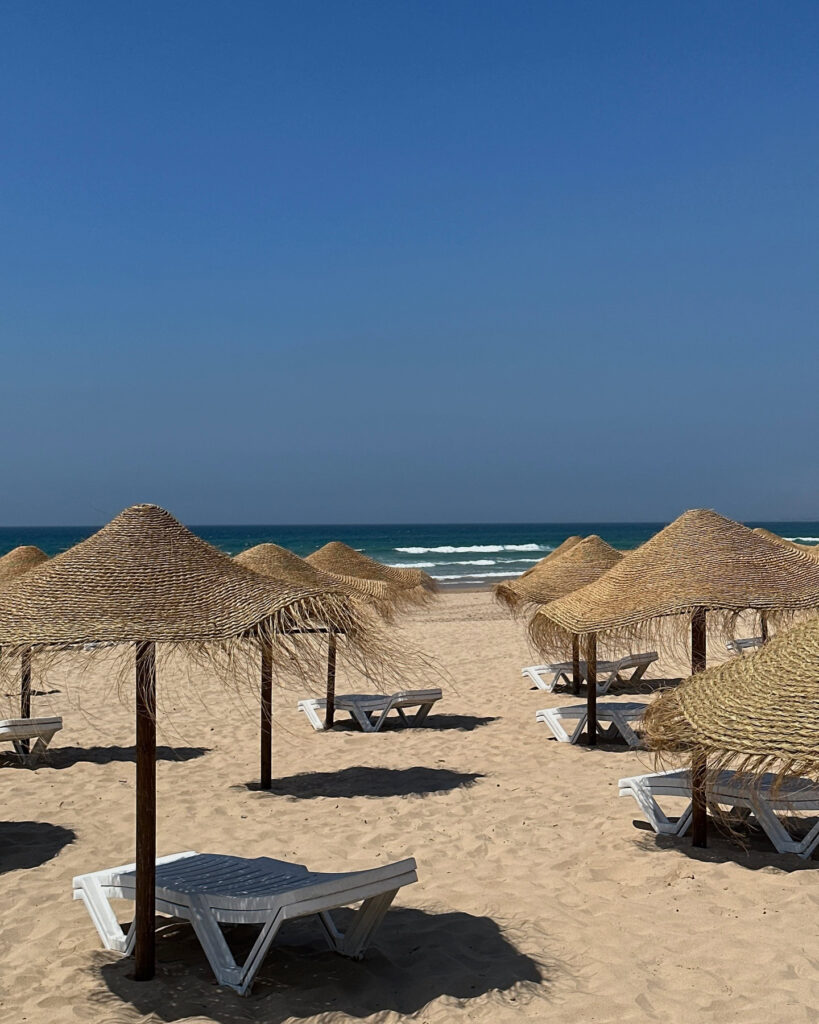
Beach lovers: Replace Day 3 with a trip to Cascais or Costa da Caparica beaches (best May-September).
Museum enthusiasts: Spend more time at the Gulbenkian Museum or the Tile Museum.
Food-focused travelers: Take a Lisbon food tour on Day 1 to get oriented, then explore neighborhoods based on what you learned.
Night owls: Experience Lisbon’s nightlife in Bairro Alto and Cais do Sodré, ending at Lux Frágil, one of Europe’s best clubs.
You could also consider splitting your time differently – check out my 2-day Lisbon itinerary if you’re arriving late on Day 1, or my 4-day itinerary if you have an extra day.
Here are the best things to do in Lisbon in March 2026
I’ll send you a list of the best things to do in March and every month thereafter.
It’s based on my personal experience of living and traveling around Lisbon for years. I’m sharing many hidden gems.
Looking for weekly Lisbon tips? Check out my Lisbon Newsletter.
Frequently Asked Questions
Planning On Going To Lisbon?
I’ve created a trip planner where you enter the number of days you’re going and what activities you want to do.
Based on your input, you then get an entire vacation planned with ideas.