Exploring the Castles in Lisbon and the surrounding area is like a journey through time in the Portuguese capital.
These castles and palaces have a captivating charm, offer a vibrant culture, and are close to the city.
When I lived in Lisbon back in 2018, I went to see quite a few of them. I’ve split some of the best ones into three lists below: those actually in Lisbon, those less than an hour outside of Lisbon, and those between one and two hours from Lisbon.
Let me know if I’ve missed any!
Castles and Palaces in Lisbon
Let’s start with the castles in Lisbon. These are usually pretty easy to access via public transport, or even walking if you stay close enough.
1. Castelo de São Jorge
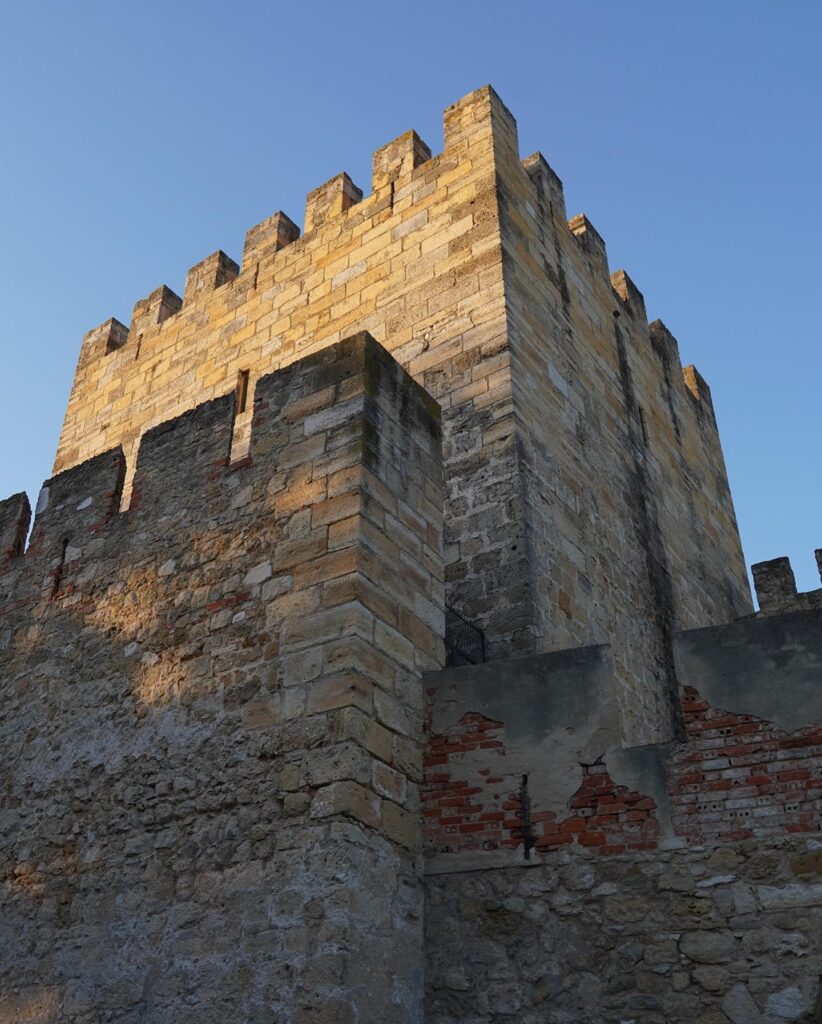
If you are in Lisbon, the first Portuguese castle you should visit is Castelo de São Jorge, also known as Saint George’s Castle.
The stronghold played a big part in the region’s history, serving as everything from a royal palace to military barracks. Now, it’s a museum of sorts.
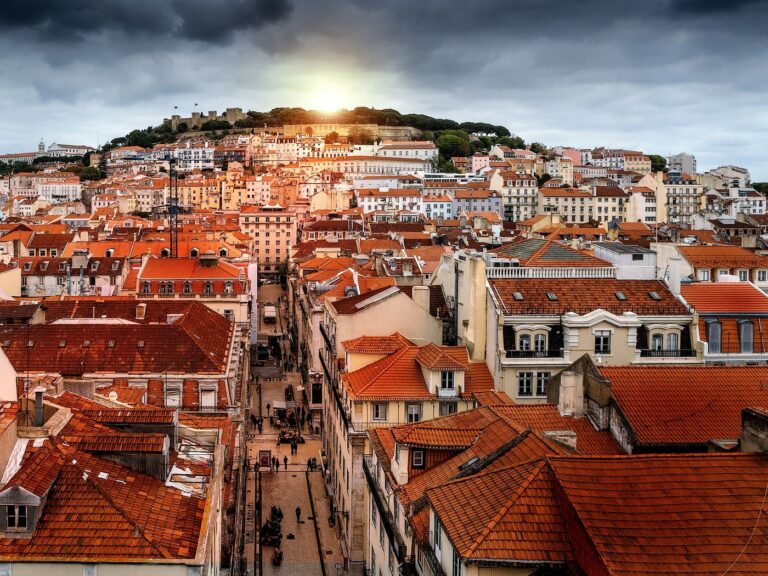
Even if you aren’t a history lover, the iconic landmark offers panoramic views of the historic neighborhoods, the Tagus River, and the 25th April Bridge.
2. Belém Tower (Torre de Belém)
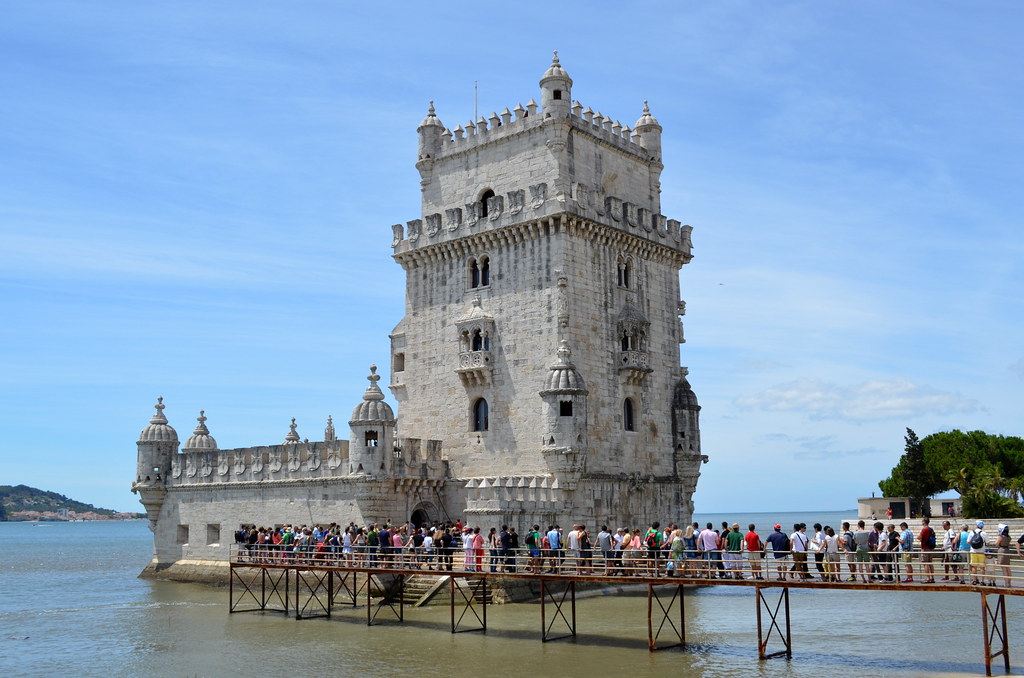
You will notice pictures of the Torré de Belém, better known as the Belém Tower, throughout the city. It is an iconic monument, now considered a UNESCO World Heritage Site.
Officially, it is the Torré de São Vicente (Tower of Saint Vincent).
The 16th-century structure resembles a Moorish castle with watch towers along the Tagus River. It was used to defend the harbor from seagoing raiders.
As the Portuguese explorations began in the 16th century, the Belém Tower was the last thing the sailors saw leaving Lisbon and the first thing they saw when returning.
The white-washed castle has a rich history, and the inside and outside have stonework themes in Manueline style.
Tip: The Belém district has a lot of attractions to explore, including the famous Pasteis de Belém, to enjoy a traditional Portuguese custard tart.
3. Ajuda National Palace
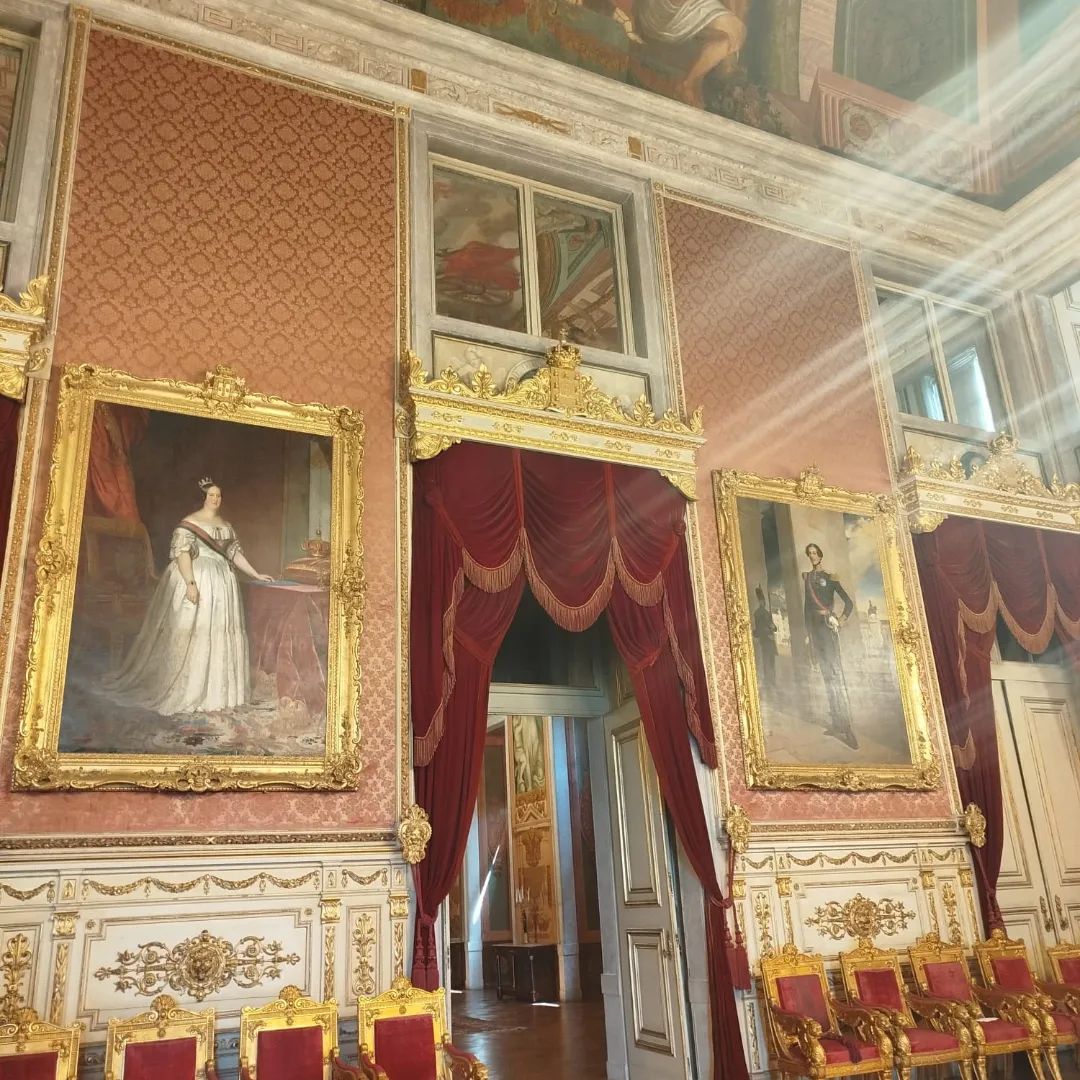
A former royal palace, the Ajuda National Palace, still has rooms that have the same layout and decoration they had back in the mid-1800s.
Constructed after an earthquake demolished the former official residence, Ribeira Palace, the Ajuda National Palace stands as one of the city’s most stunning palaces.
Its early Neoclassical exterior envelops opulent Baroque interiors and iconic rooms, which visitors can explore through guided tours.
Today, the palace is a museum showcasing significant collections of decorative arts.
4. Belém Palace
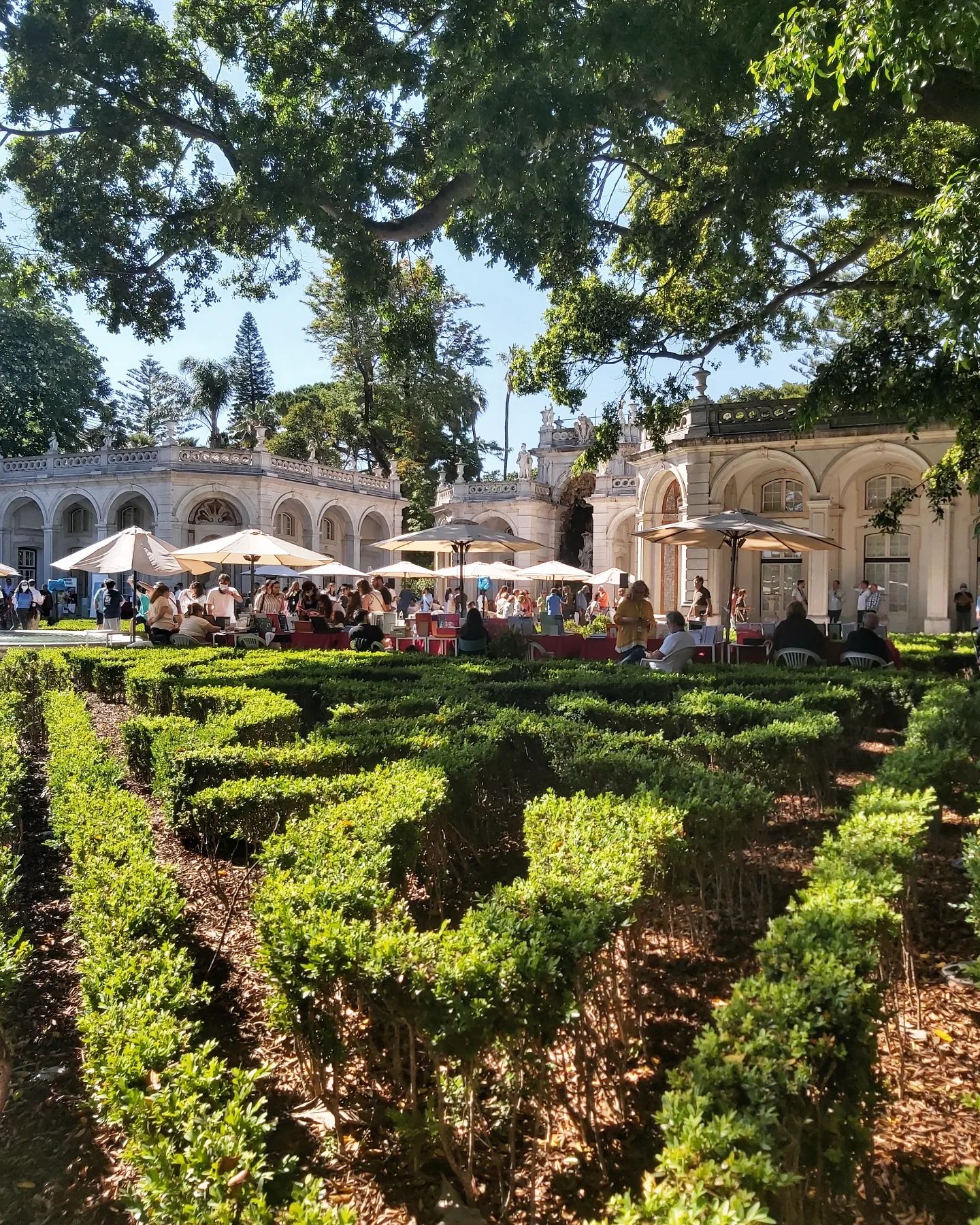
Once home to royals such as John V of Portugal and Joseph I of Portugal, the eye-catching pink façade of Belém Palace draws the attention of all who pass by.
The palace is complemented by meticulously maintained gardens and luxurious interiors that exude grandeur.
Since the monarchy’s abolition in 1910, the palace has served as the official residence of the President of the Republic.
Though it remains a working residence with limited opening times, you can book a tour on Saturdays or explore the Presidency Museum, which is open daily except Mondays.
5. Palace of the Marquesses of Fronteira
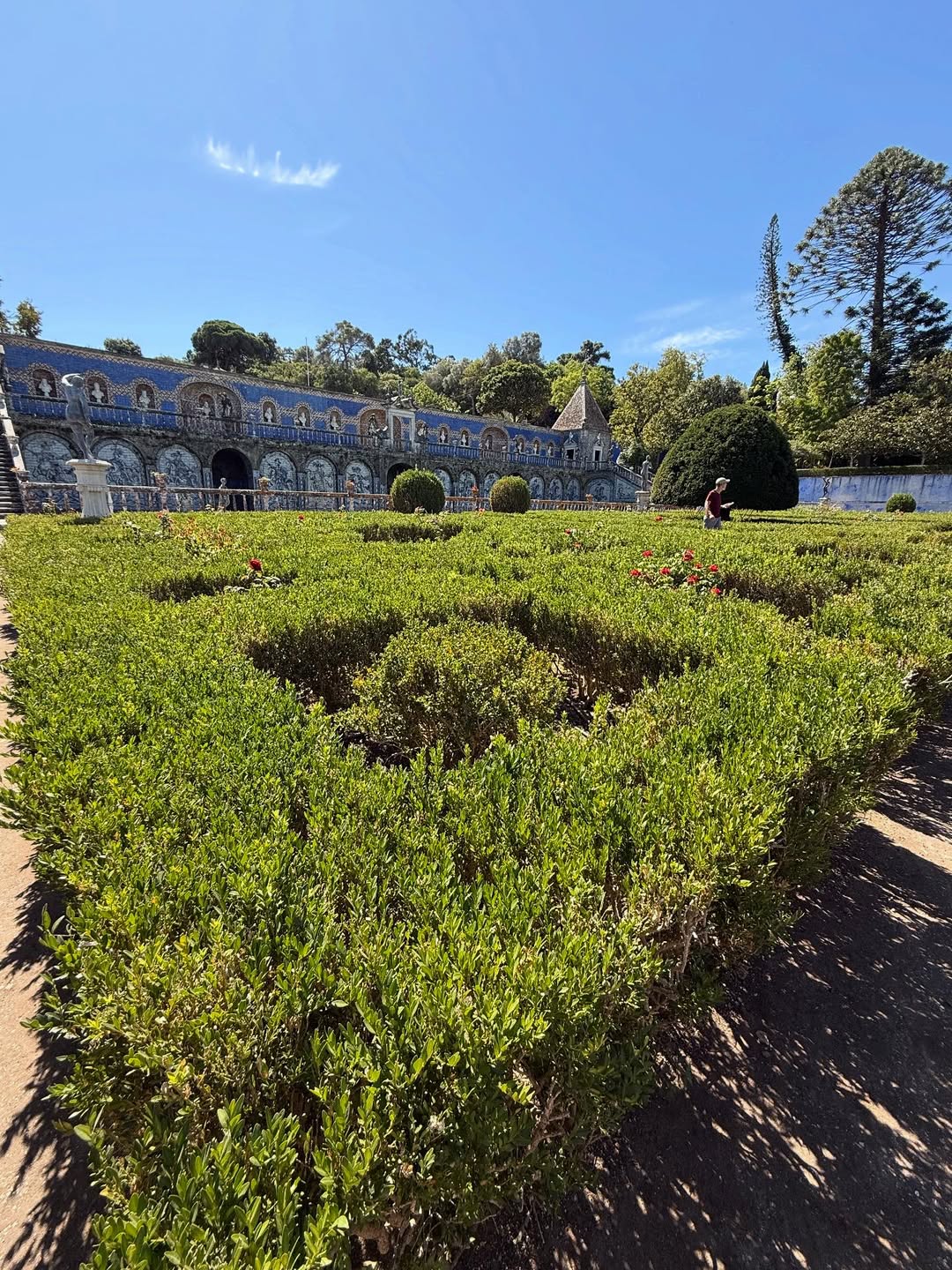
Surprisingly calm, even though it’s incredibly close to the city center, the Fronteira Palace has some incredibly beautiful gardens.
Many people just visit the gardens themselves for a lower cost of around €7. Of course, if you want a full tour of the 1670 home, the gardens will be included in the cost.
The building is still the residence of the Mascarenhas family, so unfortunately, there is no way to access the palace without a formal tour.
Best Castles Near Lisbon (Less Than An Hour Away)
If you are happy to travel a little, there are way more castles and palaces.
I don’t think you necessarily need a car to travel to these, since they are less than an hour away, public transport should suffice.
But making a day out of it and seeing the surroundings will probably make the trip more worth your while.
6. Pena Palace – Pena National Palace
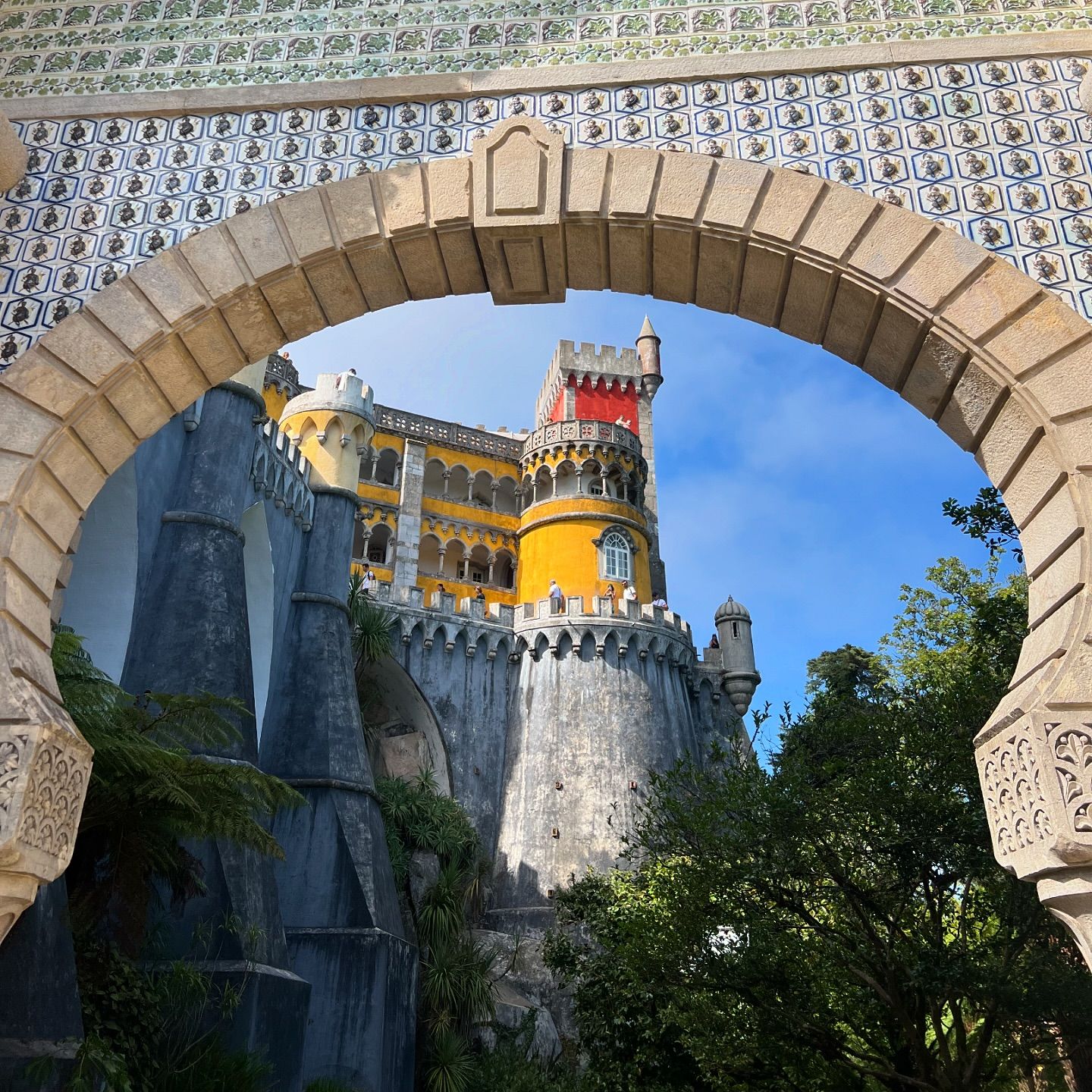
The Pena Palace is like something out of a fairy tale. Situated atop a hill in the Sintra Mountains near Lisbon, this castle stands out with its extravagant and opulent design.
Brightly colored turrets emerge from the lush green forest, showcasing a mesmerizing blend of architectural styles, including Neo-Gothic, Neo-Renaissance, Neo-Islamic, and Neo-Manueline.
The Pena Palace, also known as the Feather Palace, served as a summer retreat for the Portuguese royal family.
Its striking appearance is believed to have inspired Walt Disney’s famous Disneyland castle.
You can explore the Pena Palace and its grounds, delving into the area’s rich history and heritage.
Make sure to check out all the things you can do in Sintra while you’re there.
7. The Castle of The Moors (Castelo dos Mouros)
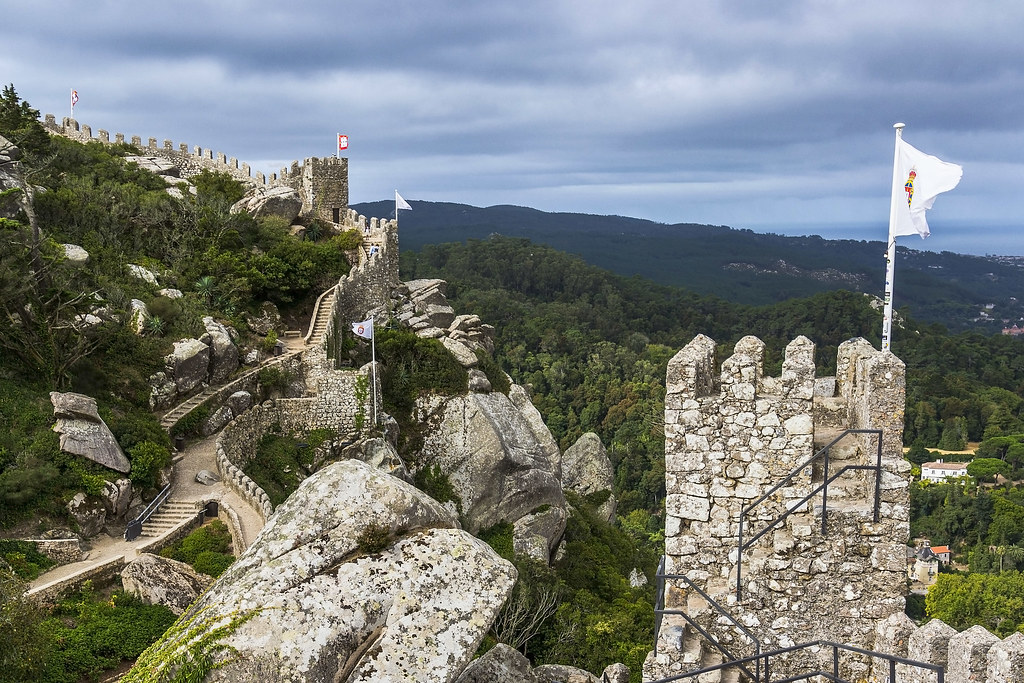
The Castle of the Moors is a worthy visit to Sintra. It is, historically speaking, the most visited castle and an important one in Portugal.
Castelo dos Mouros is named after the Moors, who built it in the 8th century. The Christians later took over during the Reconquista.
It was heavily damaged in the 1754 earthquake, and limited restoration took place, but it had high walls and ramparts in its glory days.
Today, it is mostly ruins, and you can climb to the battlements to see the stunning views of Sintra.
Tip: Check out how to reach Sintra from Lisbon, as there is a lot more to explore in this fairy-tale town.
Planning On Going To Lisbon?
I’ve created a trip planner where you enter the number of days you’re going and what activities you want to do.
Based on your input, you then get an entire vacation planned with ideas.

8. Quinta da Regaleira
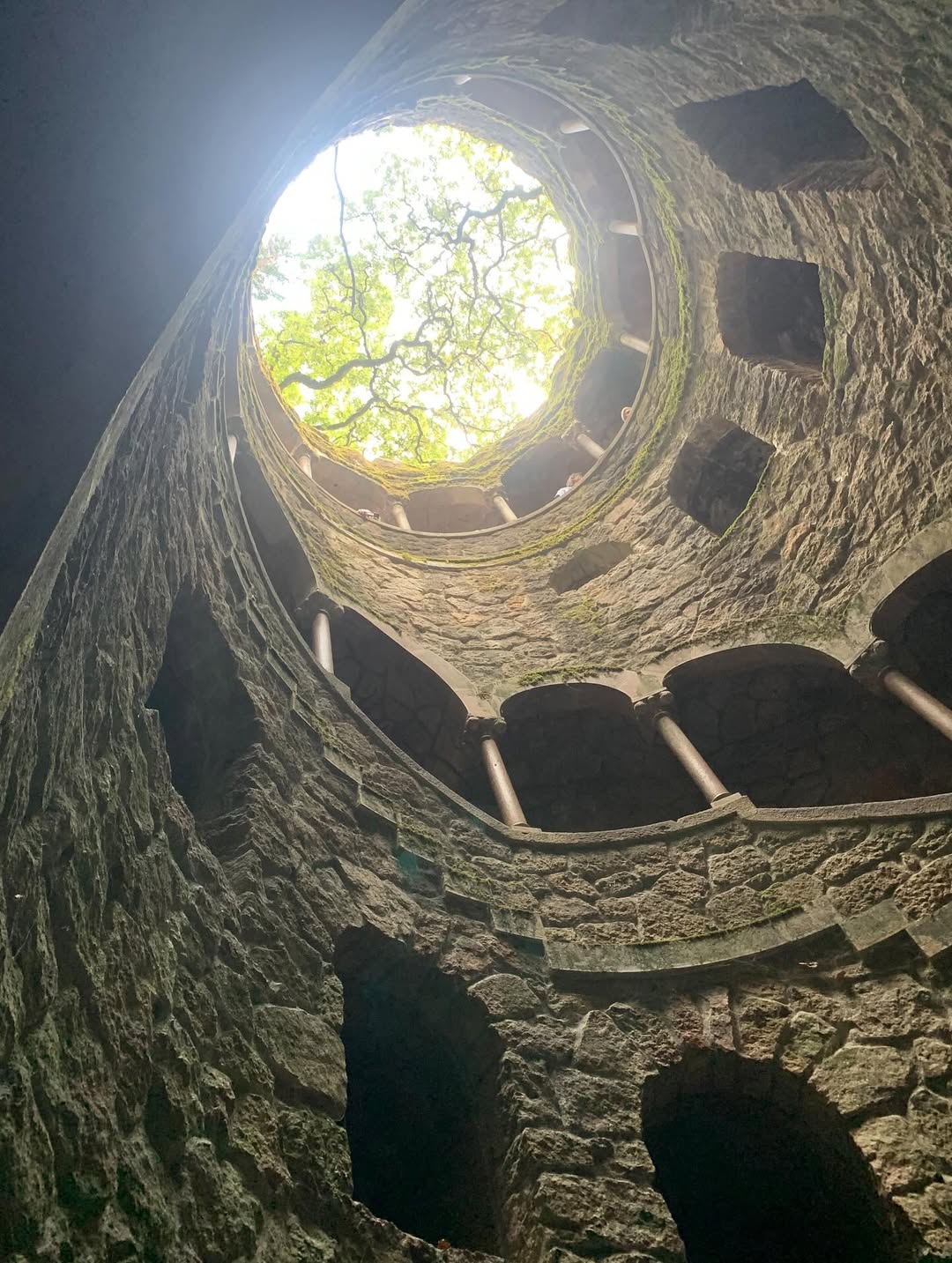
Another UNESCO World Heritage Site, the Quinta da Regaleira, has a variety of different buildings, including the main palace (Palácio da Regaleira).
Some of the most interesting features include the Gothic pillars and the gargoyles.
The four hectares are made up of some stunning land, with woods on the lower parts, and even a full park.
9. Monserrate Palace
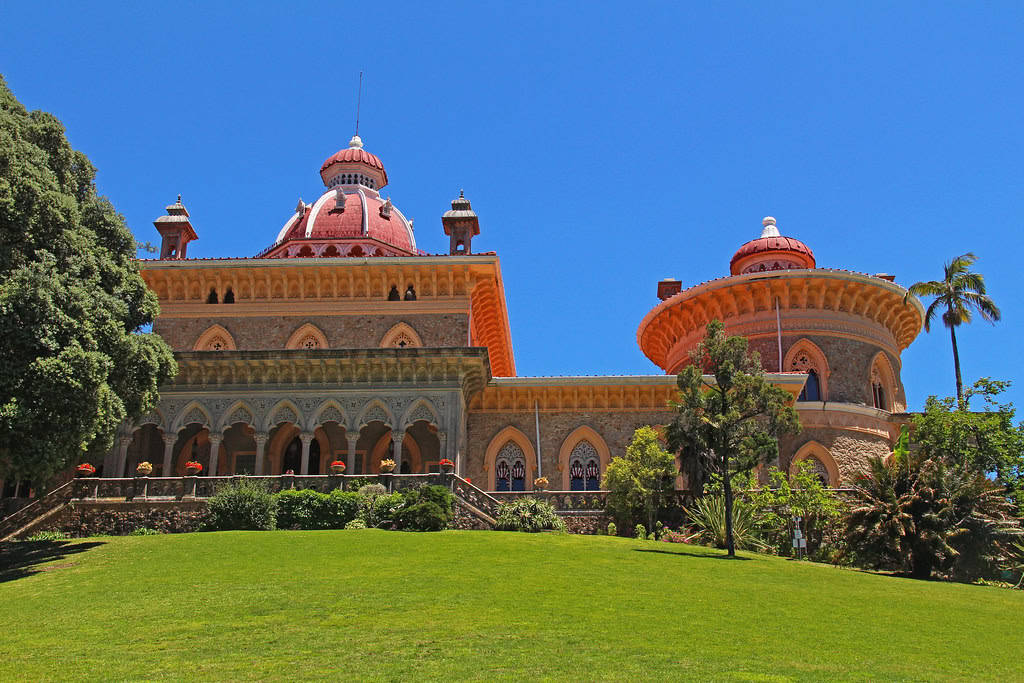
The Monserrate Palace used to be the summer resort of the Portuguese Court. Over the years, it’s been visited by a bunch of famous historical figures, including Lord Byron.
There is a massive park with a lake, fountains, and even rare plants. There is even a totem sculpture!
The building itself is in a more eclectic style, called Sintra Romanticism, quite similar to the Pena Palace.
10. National Palace Of Sintra (Palácio Nacional de Sintra)
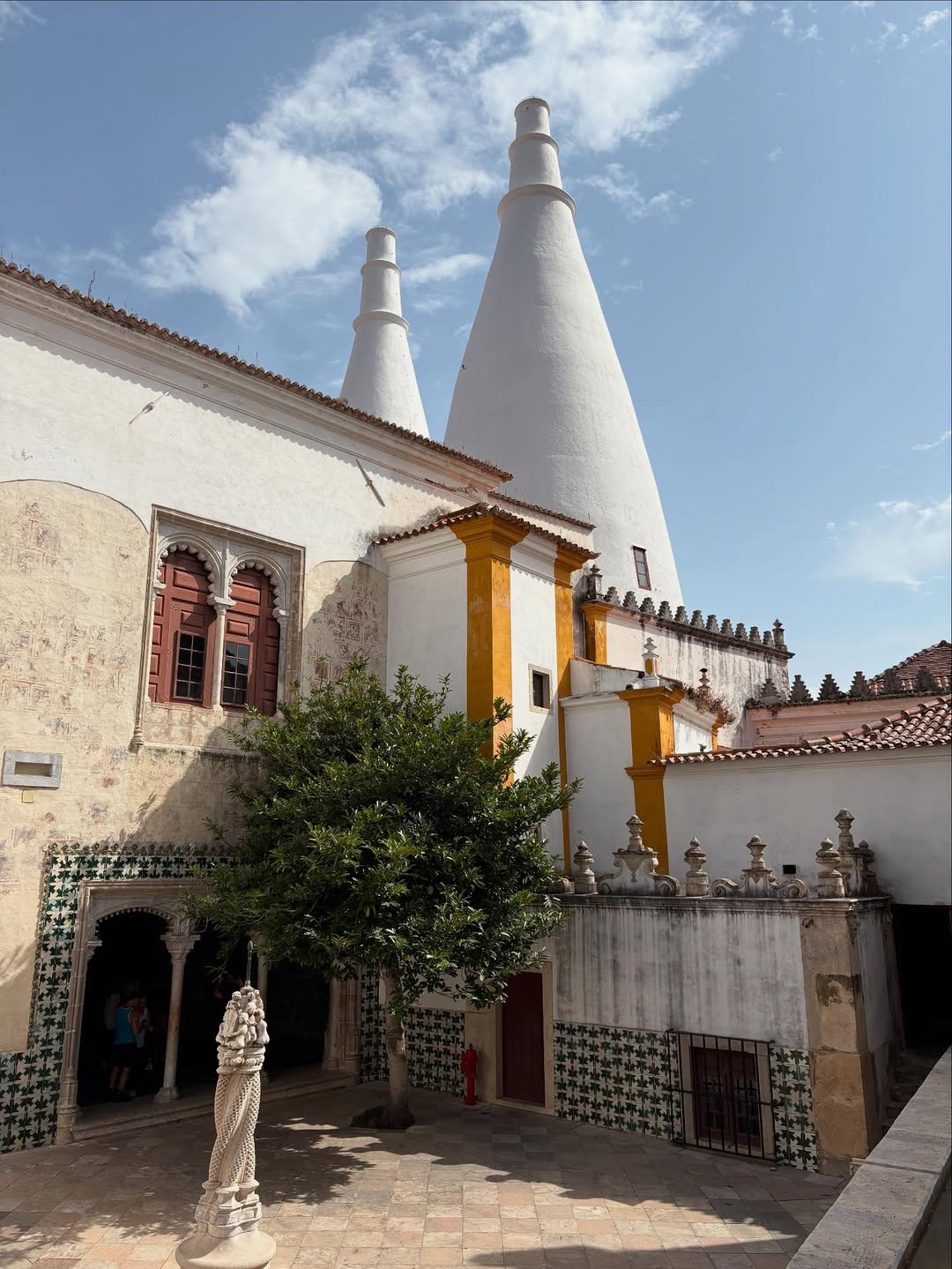
The royal palace, one of Portugal’s oldest palaces, stands prominently in the heart of Sintra, easily identifiable by its towering conical chimneys.
This iconic medieval structure was initially constructed in the 9th century as a residence for Moorish governors.
During Portugal’s monarchy, it transformed into the royal home of King John I of Portugal.
Today, you can wander through the palace’s stunning rooms, including the Sala dos Brasões, renowned for its exceptional tile panels that illustrate scenes from historical imperial life.
11. National Palace Of Queluz
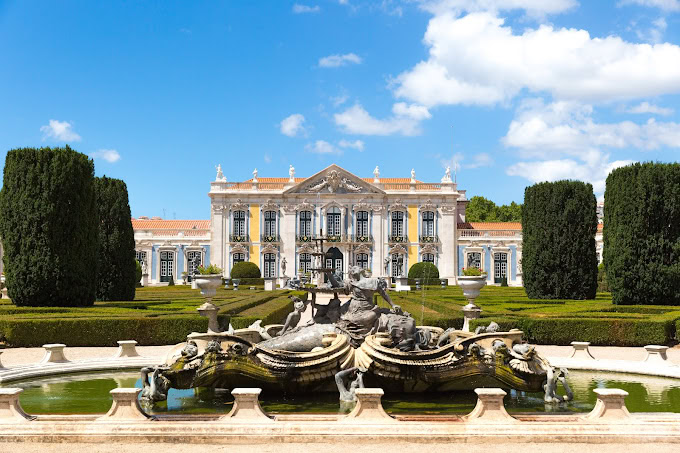
Nestled between Sintra and Lisbon city center, the National Palace of Queluz is renowned as one of Portugal’s most romantic palaces.
Built in the 18th century, with prominent Portuguese influences, it served as the summer residence for King Pedro III of Portugal and Queen Maria I.
The palace is celebrated for its magnificent architecture and beautifully landscaped gardens, which reflect the evolving tastes of the Court and incorporate elements of Baroque, Rococo, and Neoclassical design.
You can explore the grounds and experience a slice of life as 18th-century royalty.
12. Mafra National Palace

The Mafra National Palace was also a Franciscan friary. You can still see the church, standing out from the rest of the building with its white marble.
The building is a work of art, including several beautiful sculptures and stunning cloisters.
It’s a lot less crowded than some of the other historical sites in the area, but it’s definitely worth a visit.
13. Óbidos Castle
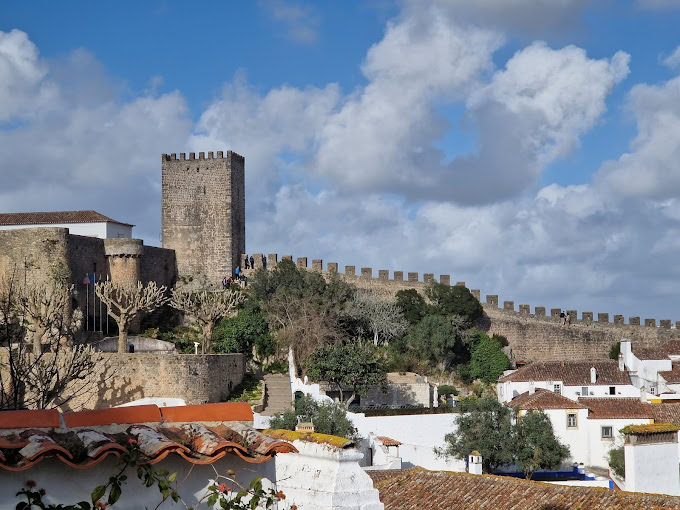
At the center of Óbidos, you find this iconic castle, Castelo de Óbidos, on top of a hill with breathtaking views.
It is one of many beautiful castles in Lisbon’s surroundings. Óbidos Castle dates back to the 12th century. The fortified castle was a wedding present that the king presented to his bride in 1282.
While it is not open to the public as it is now a hotel, some areas you can visit are free.
You can walk around the Óbidos Castle walls with high towers, the enclosed Cerca courtyard, gardens, terrace, and Belvedere.
Learn about how to reach Óbidos and some of the other things you can do here.
14. Almourol Castle
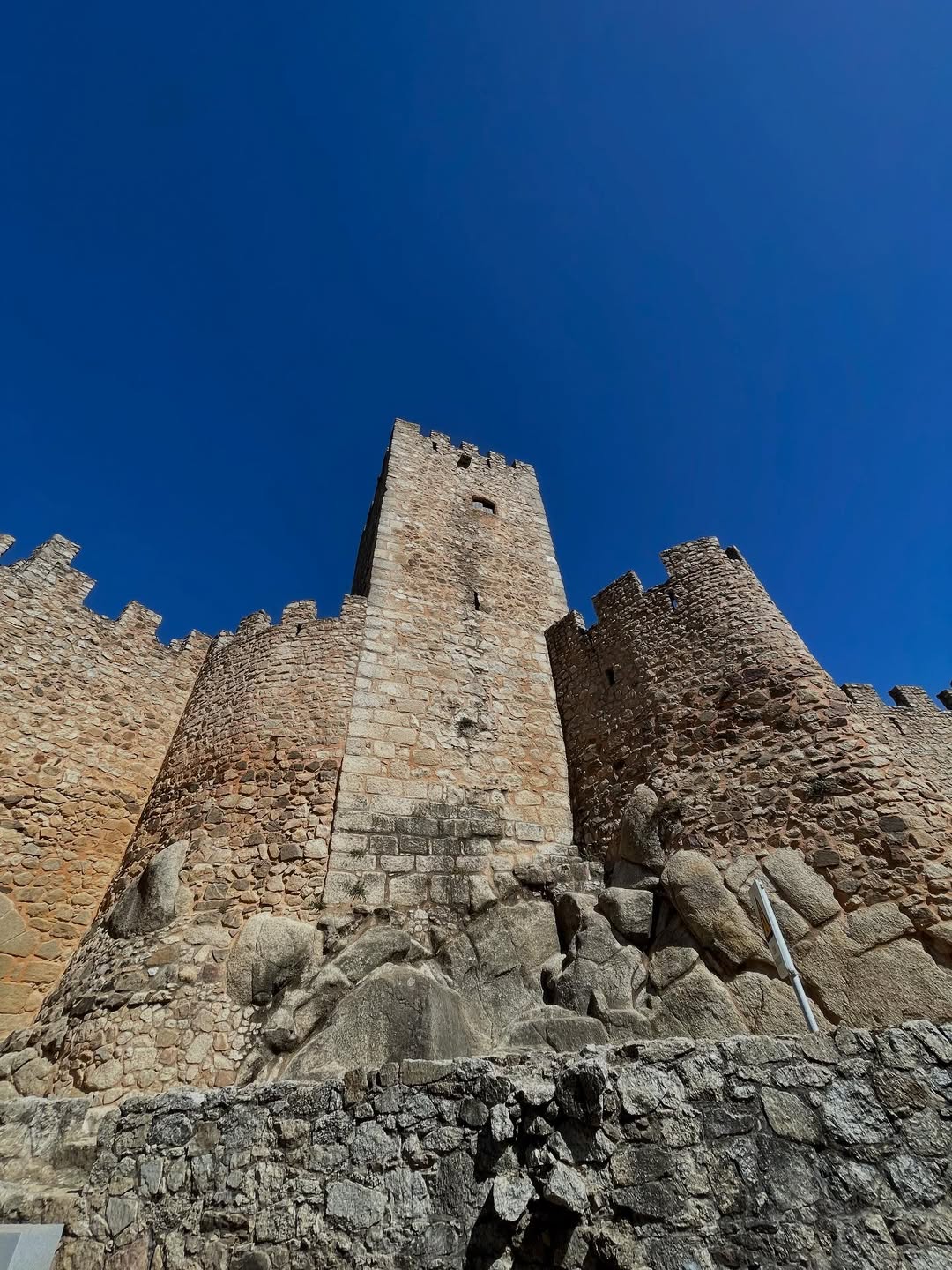
The Almourol Castle sits on a granite hill on a small island in the Tagus River.
It is believed to stand on a Roman ruin, but it is unclear which invading force remodeled it.
The Almourol Castle walls are an excellent example of medieval architecture associated with the Knights Templar.
At the time, it was a central defensive fortress that divided Portugal’s Moorish and Christian sections.
It was damaged during the 18th-century earthquake but has since been restored.
Tip: The best way to reach the Castle of Almourol is by train. Then you must take a small boat ⛴ to reach the castle.
15. Belver Castle (Castelo de Belver)
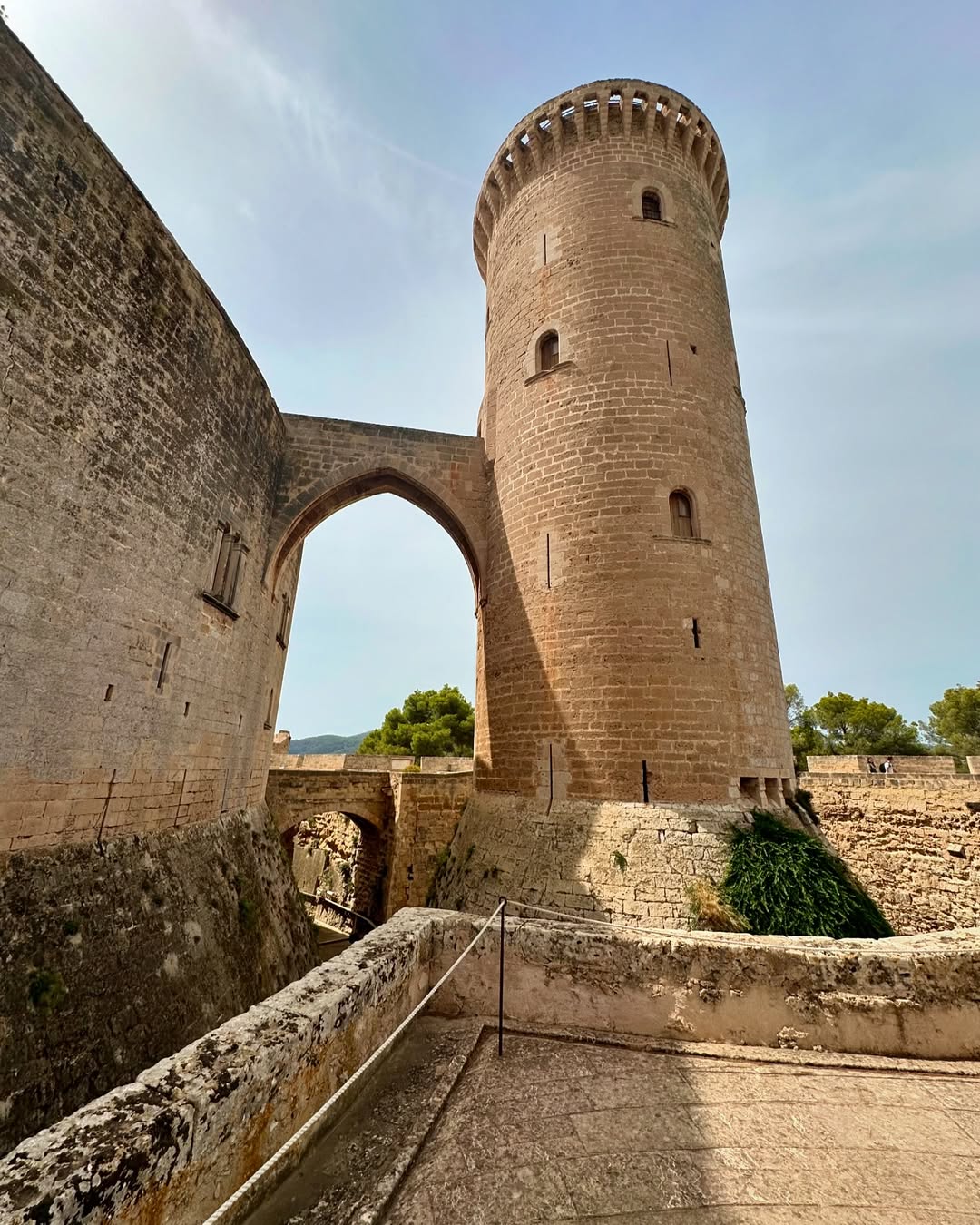
Another amazing castle on the Tagus, Castelo de Belver, was first occupied in 1210.
The military motifs are still visible to this day, even though it was damaged in the 1909 earthquake.
The view is absolutely incredible, with not just a Panorama of the river but also olive orchards.
It’s a great way to enjoy the landscape, and it’s relatively affordable to enter.
Best Castles 1-2 Hours From Lisbon
If you are willing to travel more than an hour, maybe rent a car and do some driving, there are amazing castles and palaces between one and two hours away from Lisbon.
16. Leiria Castle
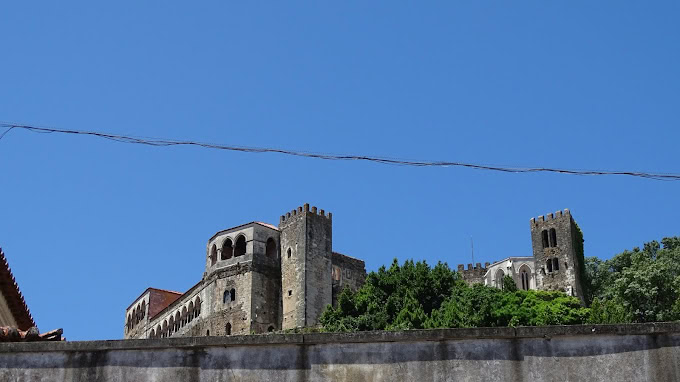
Leiria Castle remains a landmark on a hill overlooking the city.
The charming castle does not resemble a fairy-tale castle but has beautiful architecture. The colored tile roof with arched windows stands out.
Castelo de Leiria was constructed in the 11th century and destroyed by looters.
Once you enter the medieval walls, you will find the Church of Nossa Senhora de Pena and a royal residence.
Reaching the city of Leiria takes about a 1.5-hour drive by car.
Tip: Did you know there are some great spots around Lisbon to visit? Check them out here to make your vacation a memorable one.
Here are the best things to do in Lisbon in April 2026
I’ll send you a list of the best things to do in April and every month thereafter.
It’s based on my personal experience of living and traveling around Lisbon for years. I’m sharing many hidden gems.
Looking for weekly Lisbon tips? Check out my Lisbon Newsletter.
17. Castle of Evoramonte
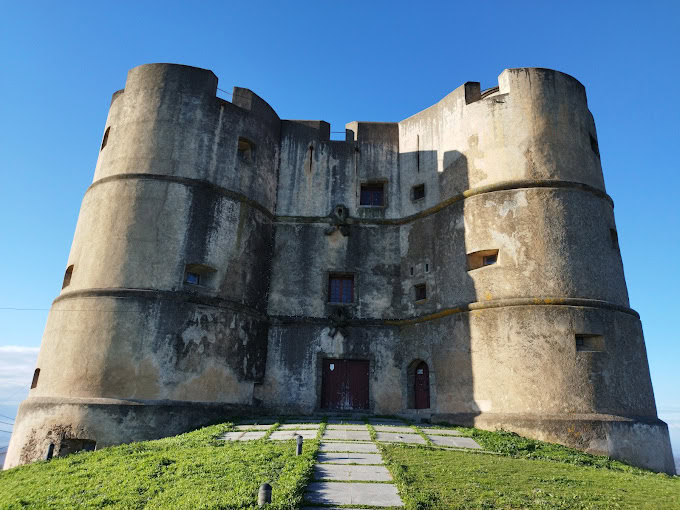
Another one of the magnificent castles around Lisbon is the Castle of Evoramonte.
Development started in the 14th century. Today, the overwhelming structure looks like it has been built in layers.
The rectangular castle with round towers is found on a slope with rope hitches in the façade, emerging from the Bragança royal family.
The castle is famous for being the location where the Convention of Evoramonte was signed in 1834, ending the Portuguese Civil War.
18. Montemor-o-Novo Castle (Castelo de Montemor-o-Novo)
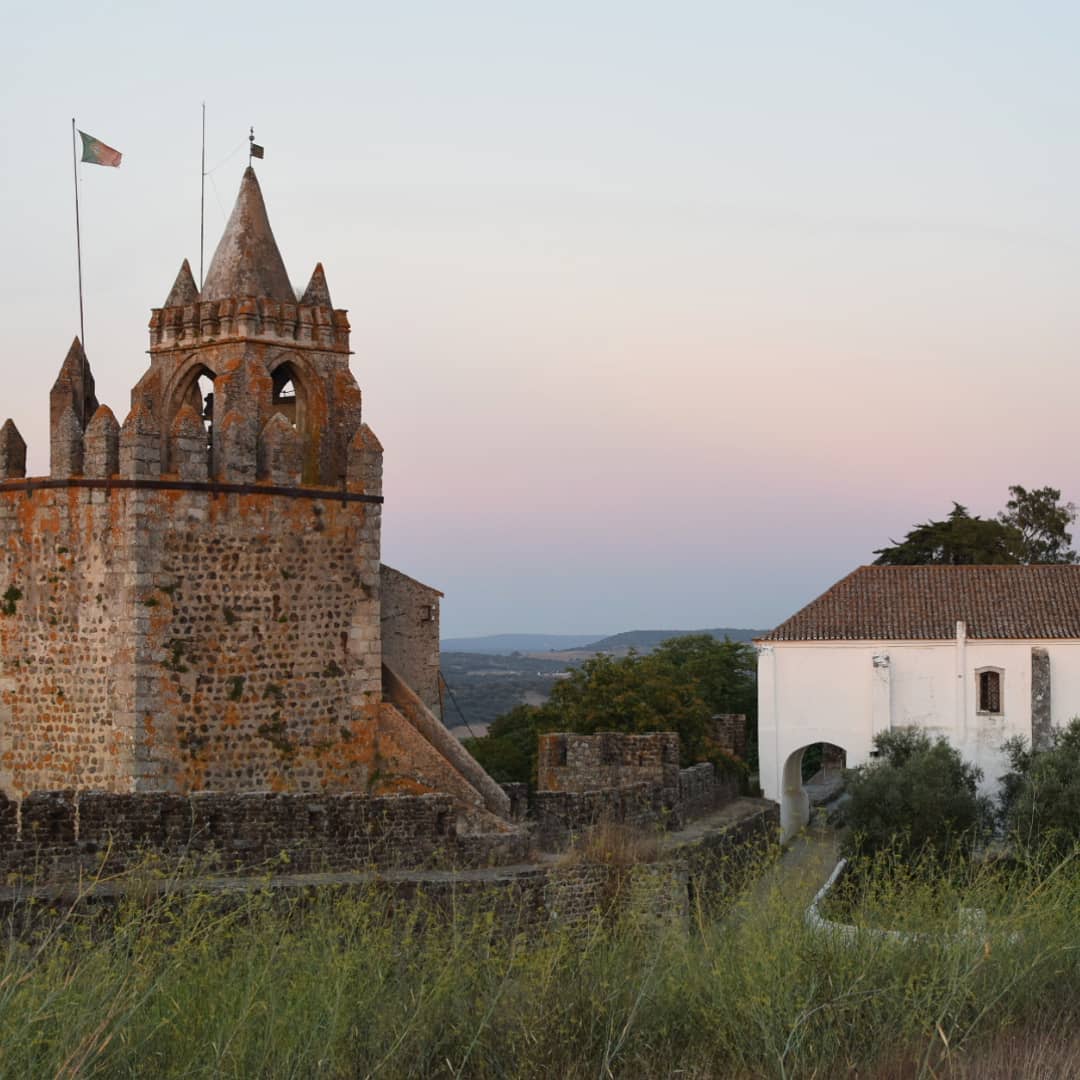
The Castle of Montemor-o-Novo is built on the site of a possible Roman fort that was destroyed in a previous invasion and has been a national monument since 1951.
What is great about this castle is that it is completely free to enter and look around.
If you want a more historical tour, you can get a guided tour for a small fee.
The surrounding parts of the Évora district are also incredibly beautiful and definitely worth a visit.
19. Monsaraz Castle (Castelo de Monsaraz)
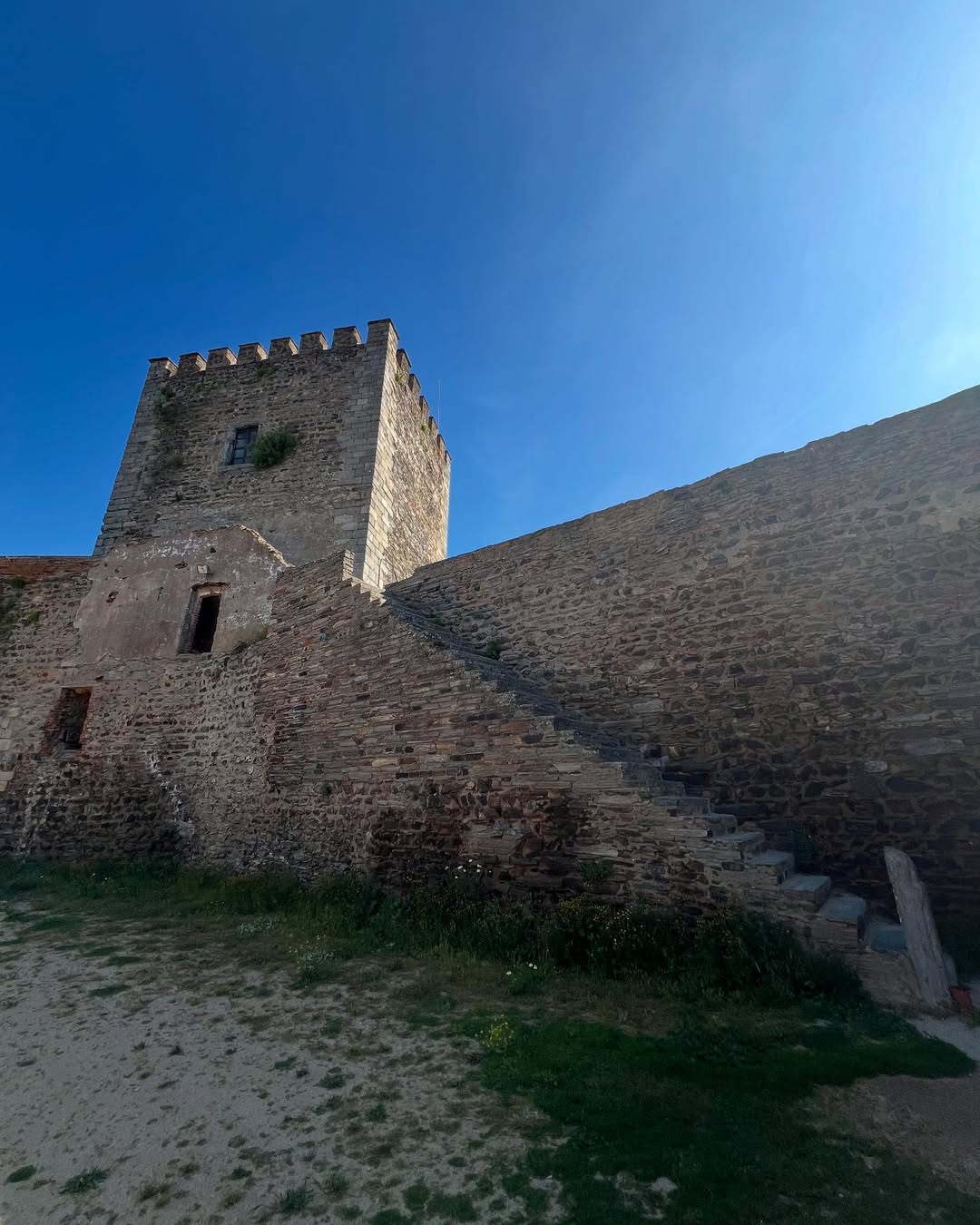
Castelo de Monsaraz is in Reguengos de Monsaraz, on a hilltop surrounded by cobblestone streets.
It’s quite small, as far as castles go, and built in the typical Roman and medieval styles of the region.
The walls and castle itself are completely free to visit, and the town inside the castle walls has a good variety of restaurants and shops.
20. Tomar Castle (Castelo de Tomar)
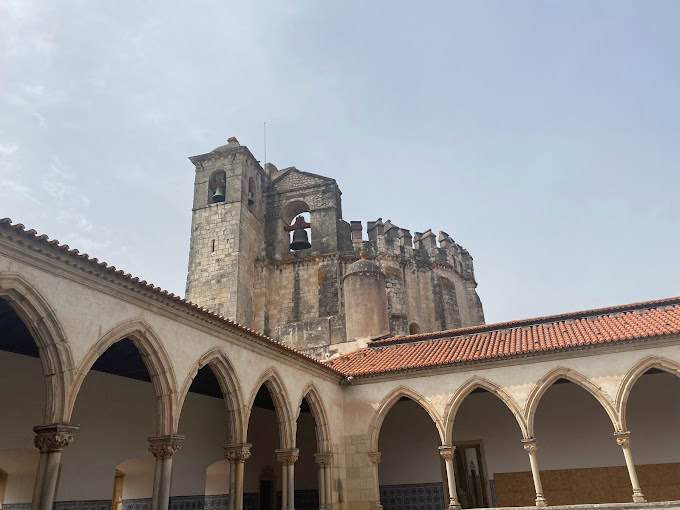
Castillo de Tomar, once a stronghold of the Knights Knight, is also a monastery built in the twelfth century.
Due to the integration of uniquely shaped towers, it is considered one of the most renowned castles in Portugal.
Its original purpose was to defend Portuguese territory from the invasion of North Africans (known in Iberia as Moors).
In 1312, the Knights were expelled from Europe, and much later, this fortress became the residence of King Manuel of Portugal.
The king’s name has been associated with the most significant alterations in the castle’s design when elaborate decorations in the Manueline style were added.
21. Guimarães Castle (Castelo de Guimarães)
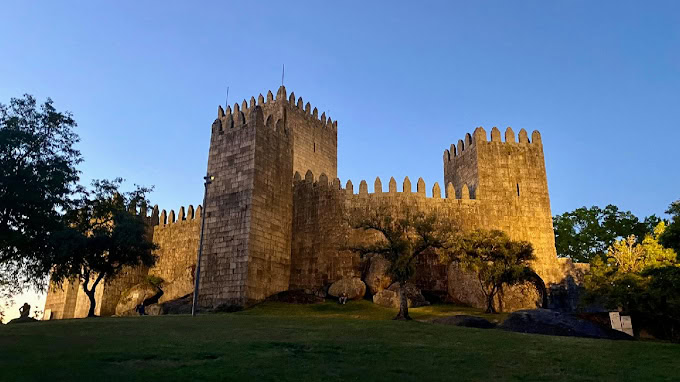
Guimarães Castle is considered the most significant medieval fortress in northern Portugal.
Its most striking feature is the walls shaped like a pentagram, with eight rectangular crenelated towers.
Constructed in the 10th century, it later became the official royal residence of Count D Henrique, the father of the first king of Portugal, Afonso Henriques.
The fortress survived the Battle of São Mamede in 1128, which resulted in Afonso’s victory and began an independent Portugal.
Since then, the castle has been referred to as the birthplace of the Portuguese nation. It is among the top castles in Lisbon, Portugal.
How to Choose Which Castles to Visit
Choosing which castles in Lisbon to visit is very difficult. There are just so many good options.
If it’s your first time in the country, and you only have a few days, I must recommend Castelo de São Jorge.
If you are spending a day in Sintra, then Pena Palace, Quinta da Regaleira, and the Castle of the Moors are all close together, and good options to see.
If the goal is peace and quiet, surrounded by beautiful gardens, visit Monserrate Palace or Fronteira Palace, and if you’re into history, then check out Almourol Castle and Mafra National Palace.
Tips for Visiting Castles in Lisbon
Visiting castles in Lisbon can be an amazing experience, but a little bit of preparation can make the day even better.
- Go early in the day: Many castles, especially those in Sintra, get very busy. If you’re going in the summer, the middle of the day can get quite hot, too.
- Buy tickets in advance: Online tickets can save you a lot of time, and let you compare deals if you’re going through a tour company.
- Wear comfortable shoes: Many castles have uneven paths, towers, and gardens to explore.
- Bring some water and snacks: Depending on where you go, there isn’t really food available in the actual castle.
- Use public transport where possible: Trains to Sintra are frequent and affordable. From there, buses or tuk-tuks can take you up to the palaces so you don’t have to worry about parking.
- Take your time: There is a lot to see. You don’t want to feel like you have to rush and miss half of the experience, especially in some of the bigger castles.
Wrap-Up: Palaces and Castles in Lisbon
Lisbon and its surrounding areas are home to a fascinating array of castles and palaces that reflect Portugal’s rich history.
From the iconic Castelo de São Jorge in the heart of Lisbon to the picturesque Belém Tower along the Tagus River, these historic landmarks offer a unique opportunity to step back in time and immerse yourself in the country’s medieval past.
Whether exploring the ruins of the Castle of the Moors in Sintra or admiring the architectural beauty of Leiria Castle, each site has its own story to tell.
These majestic castles are a testament to Portugal’s historical significance and offer breathtaking views and a chance to experience the country’s vibrant culture.