Lisbon is a city with a rich history, and so much has happened over the years that there are many interesting facts about it.
It’s everything from historical facts to recent events, and all these facts about Lisbon, one of Portugal’s largest cities, help you plan a better, more fun trip.
I’ve traveled and lived in Lisbon for years, so the fun facts are based on my experience. I’ve seen them first-hand, and they’re pretty amazing.
I’m sure you’ll like a lot of them, and fact 5 blew me away when my Portuguese partner told me about it; it feels so recent.
These facts only scratch the surface of what makes this city special. For the full picture, check out my guide on why visit Lisbon.
1. Lisbon Fact: One of The Oldest European Cities
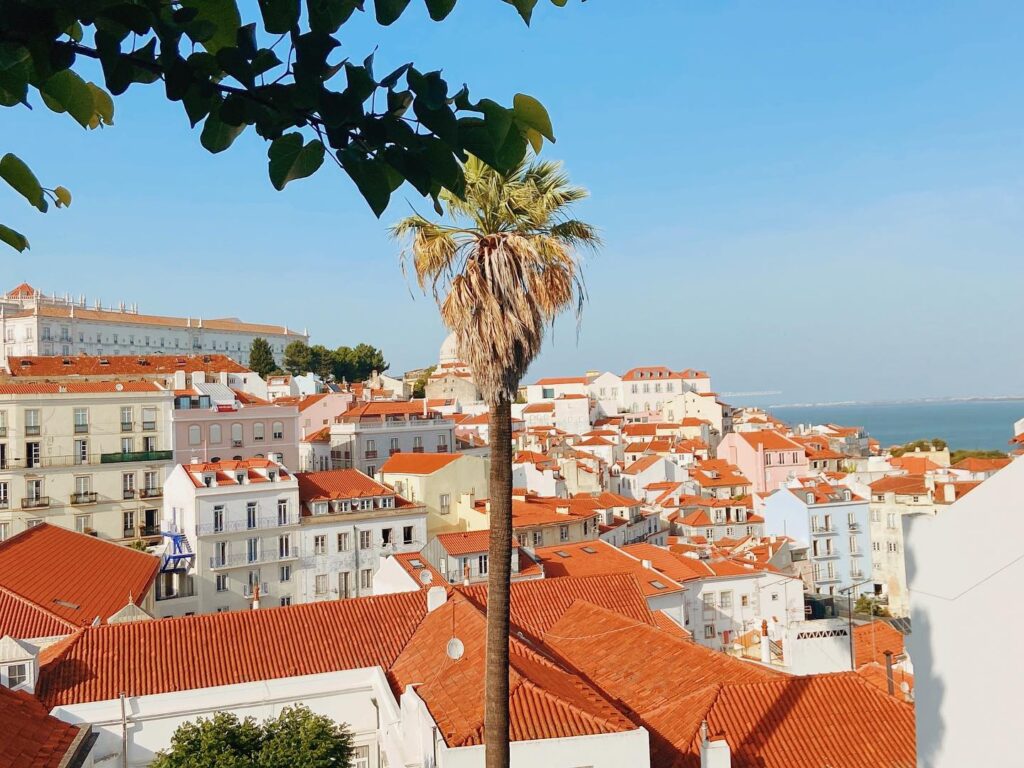
Yes, Lisbon is one of the oldest European cities. It is ancient, and archaeologists suggest it dates back to prehistoric times.
According to historical records, the city’s history dates back to 205 BCE when the Romans invaded it.
One fun fact about Lisbon is that the Romans called it Olissipo.
2. Lisbon Was Not Always Portugal’s Capital City
One interesting fact about Lisbon is that the city was not always the capital. Many of the heritage towns in Portugal have occupied different positions at different times.
Guimaraes was the first capital of Portugal from 1131 until the 12th century. From there, Coimbra remained the capital until 1255, when Lisbon was officially named the capital.
Ever since then, Lisbon has carried the honor
3. Lisbon Was Destroyed in the 1755 Earthquake
The Great Lisbon Earthquake of 1755 caused havoc in the city, followed by a series of fires and a tsunami. It was one of the deadliest earthquakes ever.
The commercial center of Lisbon, Praça do Comércio, was destroyed, including the Royal Ribeira Palace and many adjoining regions/monuments.
Until today, you can still see the devastating effects of the major earthquake at Carmo Convent, standing without a roof.
The sea reached all the way up to Campo de Ourique, and there is a tale going around among the Portuguese people that the sea will once reclaim what was once its own.
4. The Yellow Buildings at Praça do Comércio
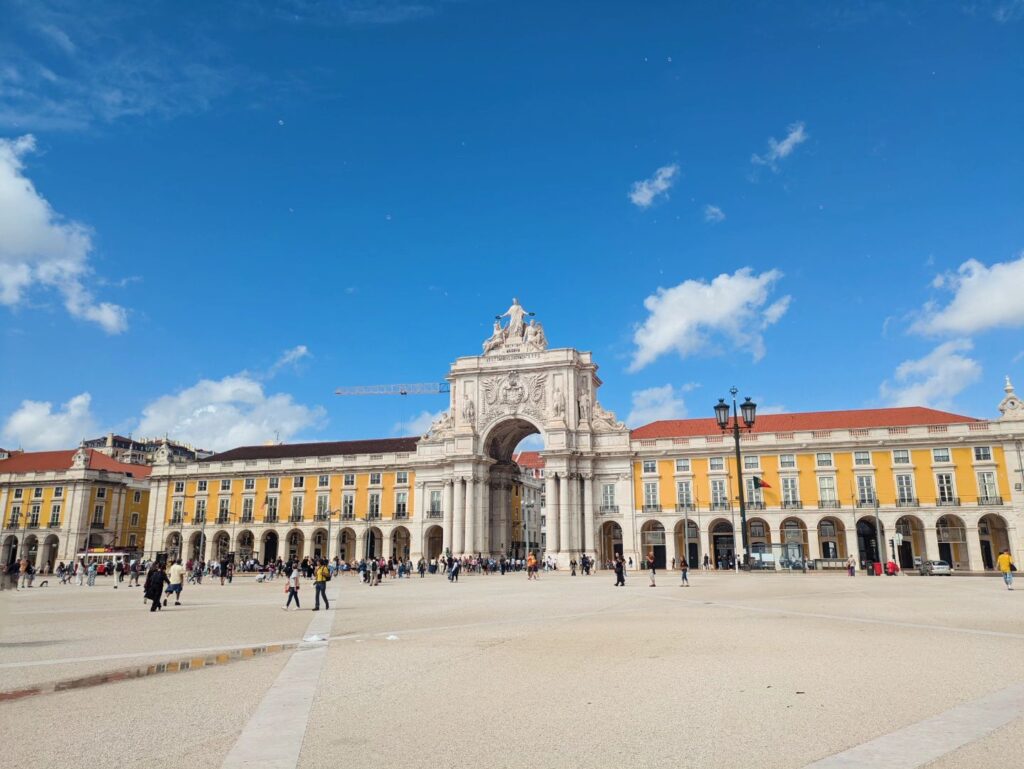
At Praça do Comércio, in the city centre, you see the yellow Pombaline buildings standing out from the rest of the square.
These buildings were built after the devastating earthquake, and these are things you just have to see when you’re in Lisbon.
These buildings are not ordinary; they were the earliest earthquake-resistant constructions in Europe.
The exciting thing is that people conducted earthquake tests at the time.
They built small wooden models, and troops marched around them to simulate an earthquake.
5. Lisbon was once under a dictatorship
Not many know this, but from 1933 until 1974, Lisbon and the entire country were under the dictatorship of António de Oliveira Salazar.
It was dissolved by a peaceful demonstration on 25 April 1974, during which a young boy placed a red flower in one of the soldiers’ weapons. Afterward, everything started to dissolve.
The part of the dictatorship was so sad, but the way the Lisboetas fought back was so beautiful, and it’s still celebrated today every year on the 25th of April.
Here are the best things to do in Lisbon in March 2026
I’ll send you a list of the best things to do in March and every month thereafter.
It’s based on my personal experience of living and traveling around Lisbon for years. I’m sharing many hidden gems.
Looking for weekly Lisbon tips? Check out my Lisbon Newsletter.
6. You are Walking on a Stone Carpet in Lisbon
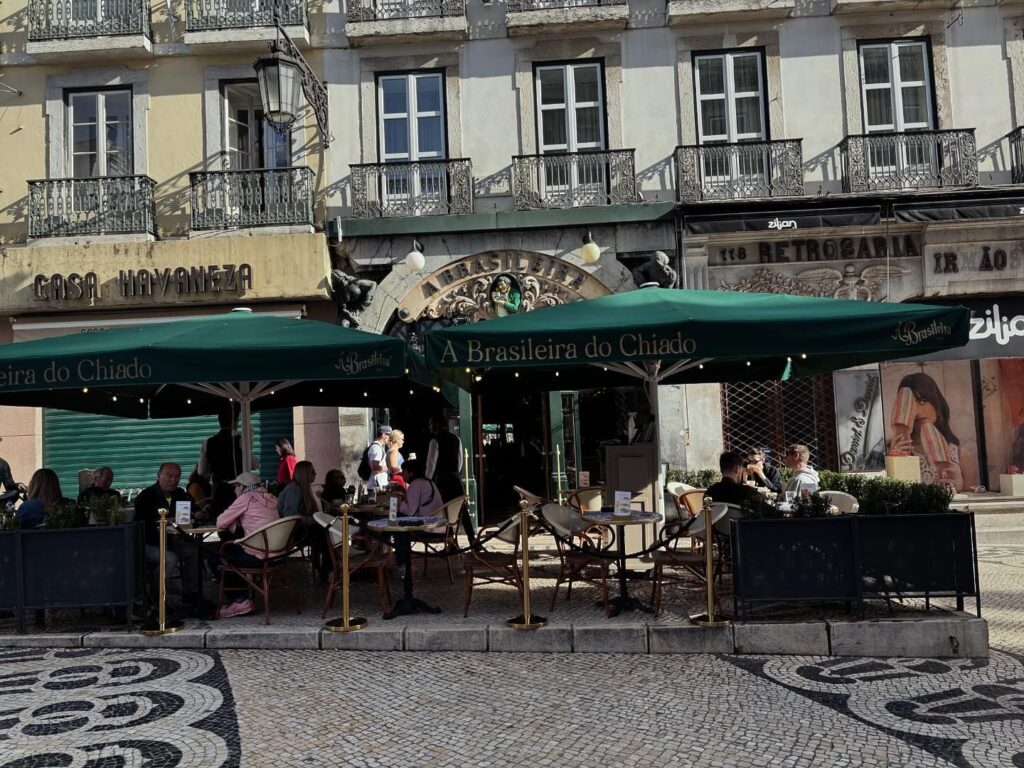
When visiting Lisbon, you see black and white stones everywhere in public squares and on sidewalks.
These are Portuguese pavements and art pieces dating back to the 15th century.
An interesting fact is that there are different versions found in the former Portuguese colonies, from Brazil to Macau.
You can even find a paving school dedicated to art in Lisbon called Escola dos Calceteiros.
While the pavements are charming, they are slippery, and it is best to wear flat, comfortable shoes.
When it’s raining or the sun is baking, it’s the most slippery thing ever. I’ve almost fallen so many times wearing my sandals, so be careful, especially in the city centre.
So, when you walk those cobblestone streets next time, look down to see the patterns, waves, flowers, and faces.
7. Rossio Square’s Dark History
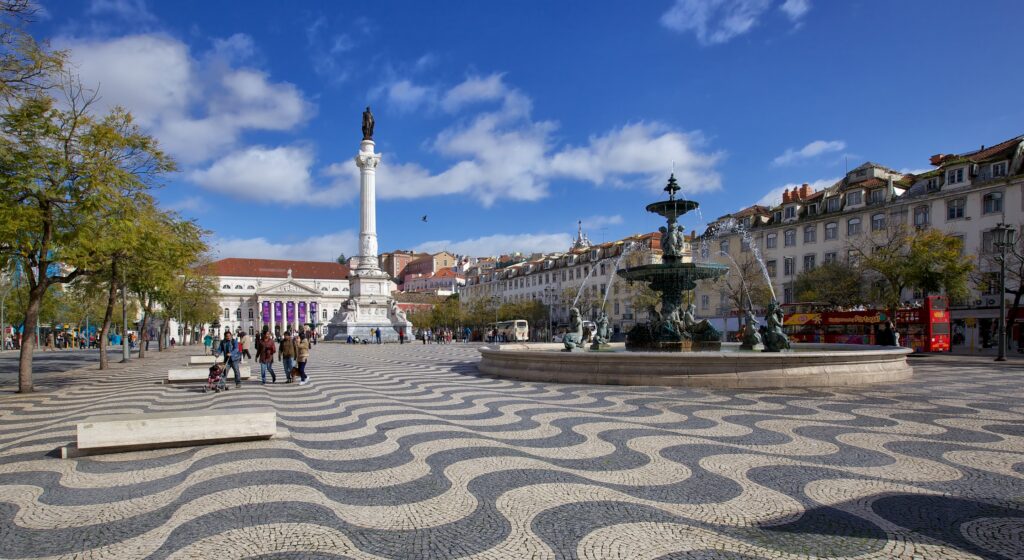
Rossio Square is where people in this beautiful European capital have gathered for centuries. Yet it has a dark side and is one of Lisbon’s lesser-known facts.
On the north side of Rossio Square, the Inquisition of Lisbon was established in the Palace of Estaus. Hence, Rossio was a public execution spot and the first auto-da-fé (act of faith)
8. The Raven is Lisbon’s Symbol
When you look at the Lisbon Coat of Arms, you see two ravens directing a ship to sea.
It represents the ravens that escorted the remains of Saint Vincent of Saragossa, the patron saint, during his journey from Sagres to Lisbon.
The other queer Lisbon fact is that there was a raven cult in the city for a very long time. The cult inhabited a section of São Jorge’s Castle.
9. The Alfacinhas
Lisbon locals are officially referred to as Lisboetas, but informally as Alfacinhas.
Interestingly, the name refers to a lettuce that grew abundantly on the hills of this cosmopolitan city.
10. Lisbon Has a Roman City Underneath The Streets
The coastal capital city has a full-blown Roman town under the city centre. You can find upper-class homes, swimming pools, galleries, and factories here. You can visit these galleries, which are open to tourists a few times a year.
So when you’re walking around in Baixa, when they’re renovating the streets, you get a sneak peek down into the Roman city below, it’s super fascinating.
In 2024, they were renovating the streets, and you could look through the shielding and see the old Roman city below.
Tip: Check out the Facebook page and website to find out when to visit.
11. The City of Spies
During World War II, espionage flourished in Lisbon, the main gateway to and from Europe.
The most fascinating fact about Lisbon is its connection to its spying history.
A British writer, Ian Fleming, who created James Bond, was a spy stationed in Lisbon working for the British Secret Service.
The Estoril Casino on the Portuguese Riviera inspired him to write his first book, Casino Royale.
12. Lisbon’s Lesser-Known Gem
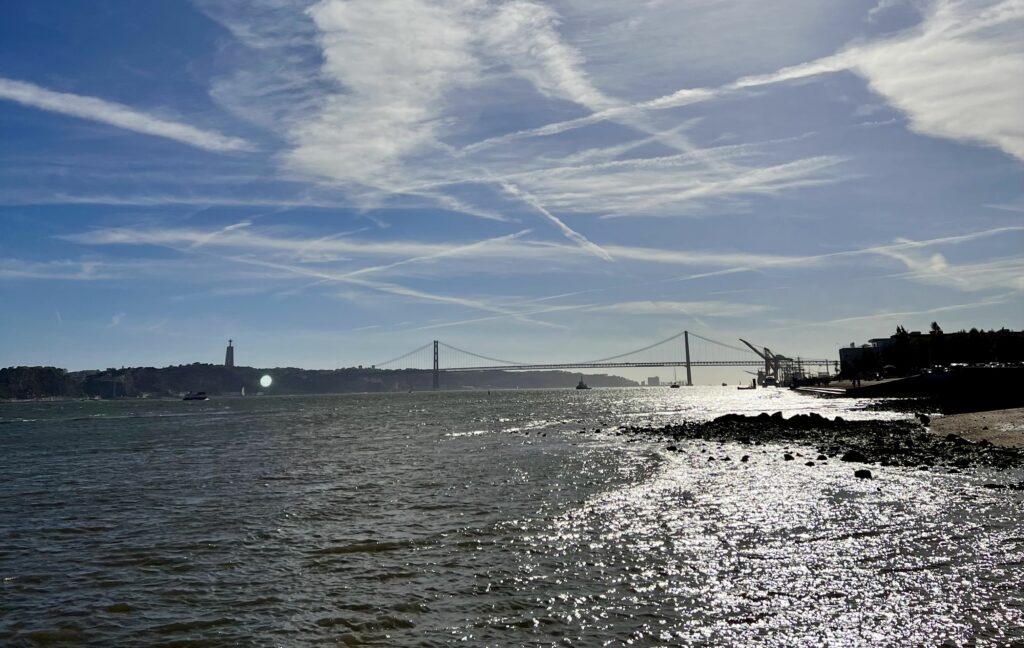
You can walk on a trench in Lisbon, the Aguas Livre Aqueduct found in the Alcántara Valley.
The massive 19-km-long trench, dating back to the 18th century, is hidden from tour groups. The aqueduct survived the 1755 earthquake and is listed as a UNESCO World Heritage Site today.
You get a spectacular view of Lisbon when exploring and walking the trench.
Tip: If you want more wonderful views, check out my post on the steep hills with fantastic miradouros to explore.
13. The Lisbon State Prison
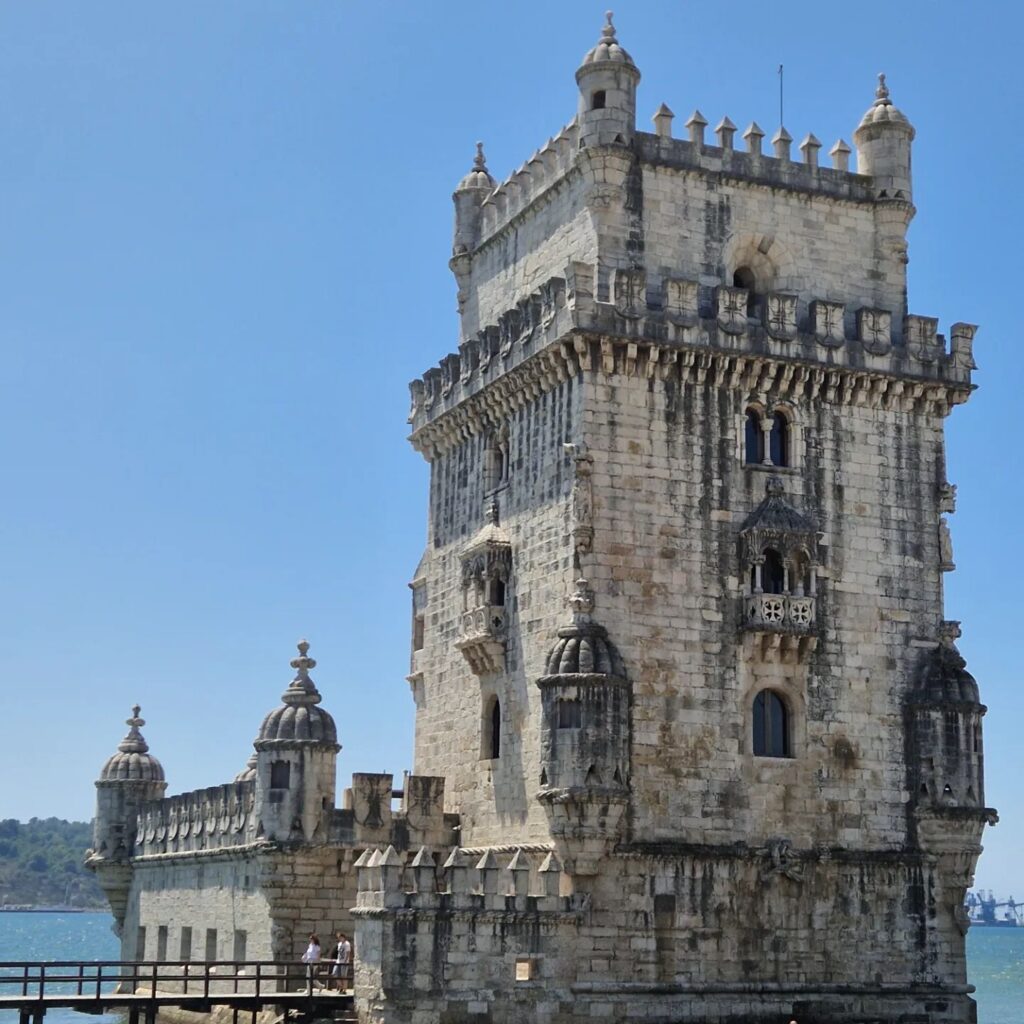
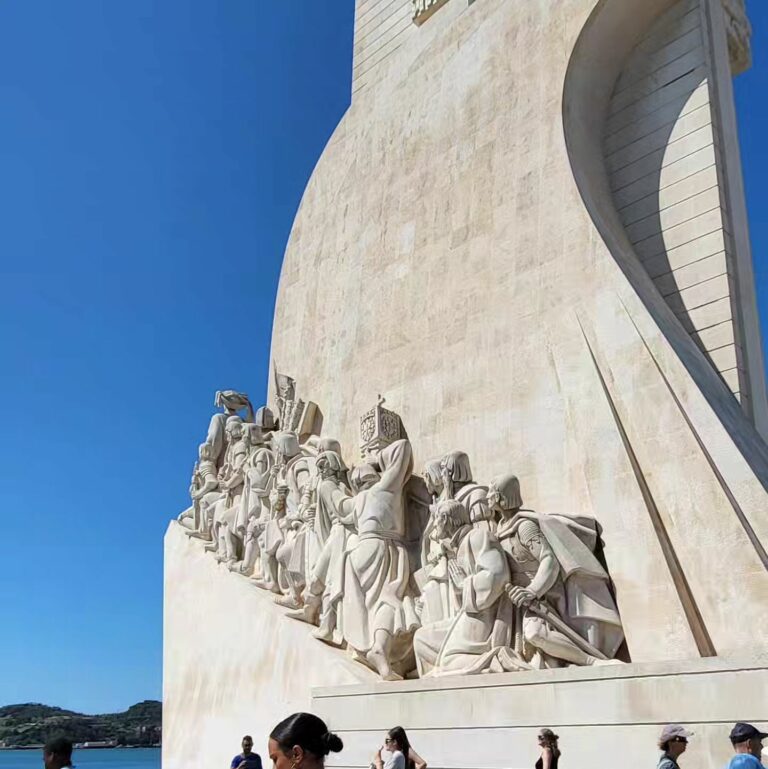
Belém Tower was a state prison for a long time. It was constructed in the 16th century as part of Lisbon’s river defense system and featured cannons.
At the same time, it was used as a state prison for much longer than as a bulwark of defense. It also served as a lighthouse, telegraph office, and customs port.
14. Belém Tower Has a Rhino on It
Belem Tower features a sculpture of the Indian rhino. It is an exciting story about how it came to be a famous landmark.
According to legend, the rhino traveled from India to Portugal as a diplomatic gift. It had many owners and met a tragic end.
Yet, it inspired many sculptors and painters to use its image across Europe.
15. Fado Culture
The birthplace of Fado is Lisbon, a traditional Portuguese music. You can hear it everywhere in the Alfama district.
It sounds beautiful and represents saudade, which means longing for someone, but you can’t really translate it, as they say.
You will hear many stories about its origin, but the one that stands out is the intermingling of cultures and nationalities.
Many believe it started with the enslaved Brazilians and was brought to Lisbon when sailors returned from South America.
Others say it started with the Moors staying near Lisbon and continued after the Christians took over, which explains the melancholy, longing songs.
It is a fact that Fado was inscribed on UNESCO’s List of Intangible Cultural Heritage of Humanity in 2011.
16. Lisbon Has a Museum Dedicated to Azulejos
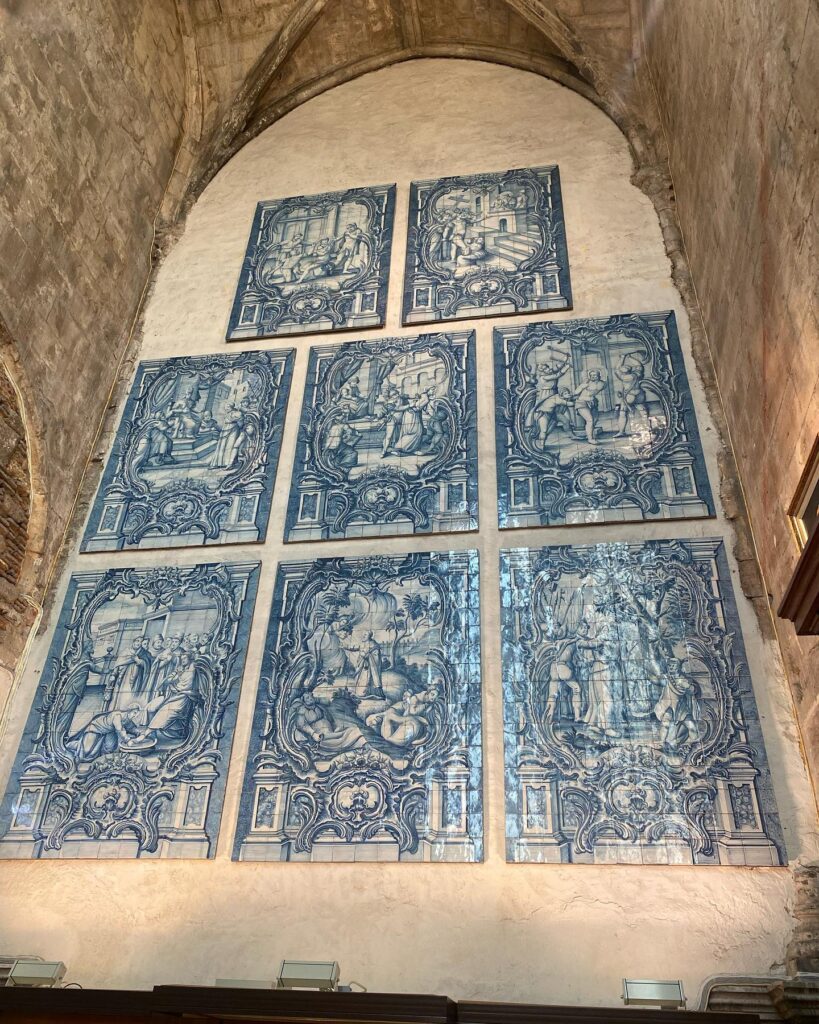
Walking the cobbled streets and viewing the street and walls, you will see the blue Portuguese tiles known as azulejos around every stop.
A fact is that you can delve deeper into the evolution and history of azulejo at the dedicated National Tile Museum.
One thing is for sure: the Museum of Azulejos will captivate you for hours. On the top floor, a giant blue/white tile panel shows Lisbon’s appearance before the earthquake.
17. Lisbon Has The Longest Bridge in Europe
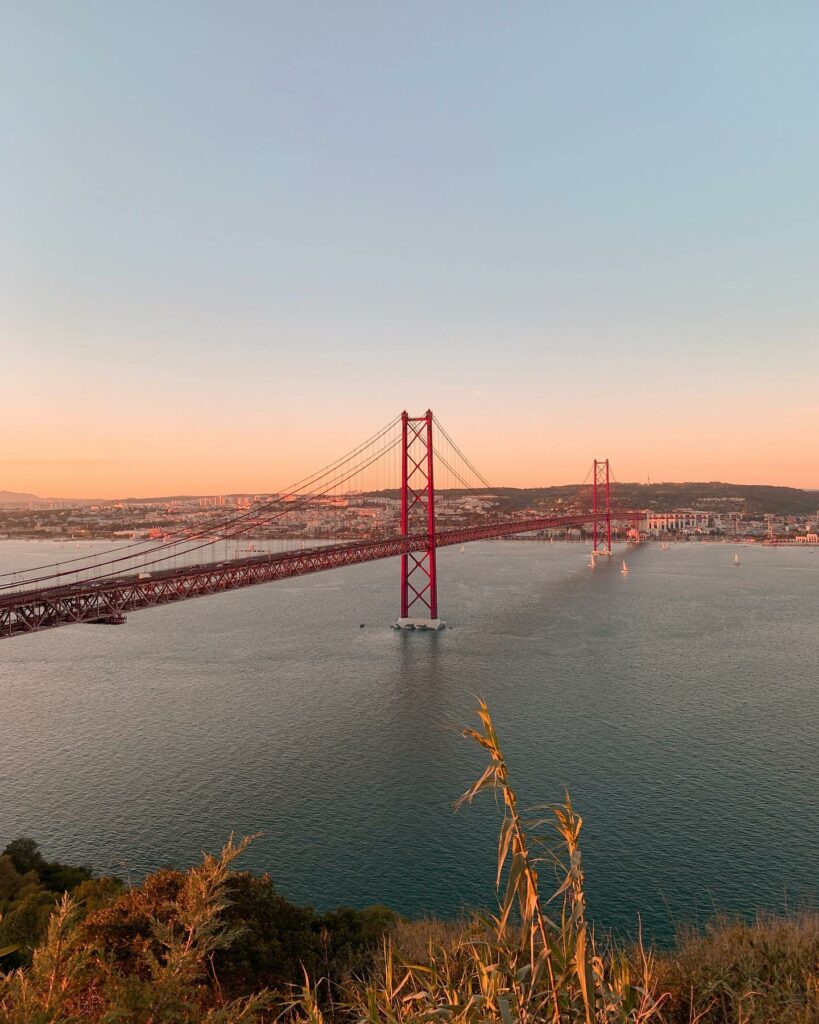
A Lisbon fact is that the city has the second-longest bridge in Europe and the longest in the European Union, the Vasco da Gama Bridge.
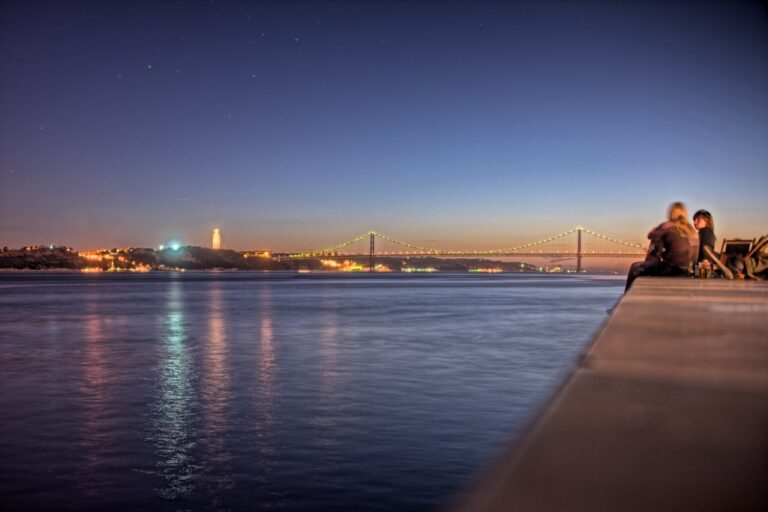
The bridge is 7.6 miles (12 km) long, and the 25th April Bridge is also long and resembles the Golden Gate Bridge in San Francisco.
It is the longest suspension bridge in Europe.
18. Lisbon Has The Most Museums
As one of the European cities, it has the most eclectic collection of museums, not confined to archaeology or art.
Here, you can learn about costumes, coaches, design, ethnology, Fado, news, and more.
You can find museums for everything in Lisbon, and there are many to explore.
19. Lisbon’s Metro Is a Portuguese Tile Art Museum
If you use the metro as a budget traveler to commute in Lisbon, you first notice the walls covered with colorful azulejos that tell stories and mark events.
An excellent example is the Arrival at Restauradores, the Alto dos Moinhos sketch, and the blue dome at the Parque station.
While touring the interior of the metro stations, walking through several rooms, it appears to be a tile museum.
20. The Emblematic Trams
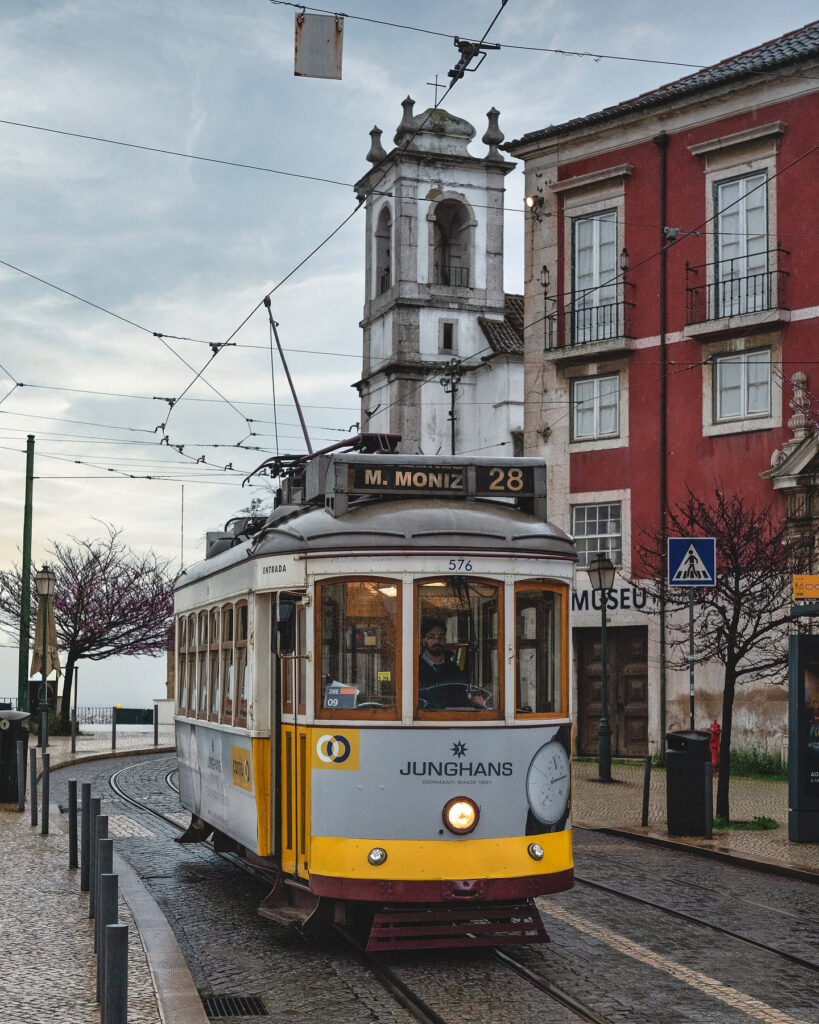
Another fact about Lisbon is the American connection with the 25th April Bridge and the famous trams you see.
The yellow trams in Lisbon were inspired by the trams seen in the USA. At first, these trams were called Carros Americanos.
The first trams in Lisbon were pulled by horses until they were replaced by engines in the early 19th century.
21. Lisbon Has The Most Vibrant Street Art
You notice the incredible architecture as you stroll and take in Lisbon’s fabulous views.
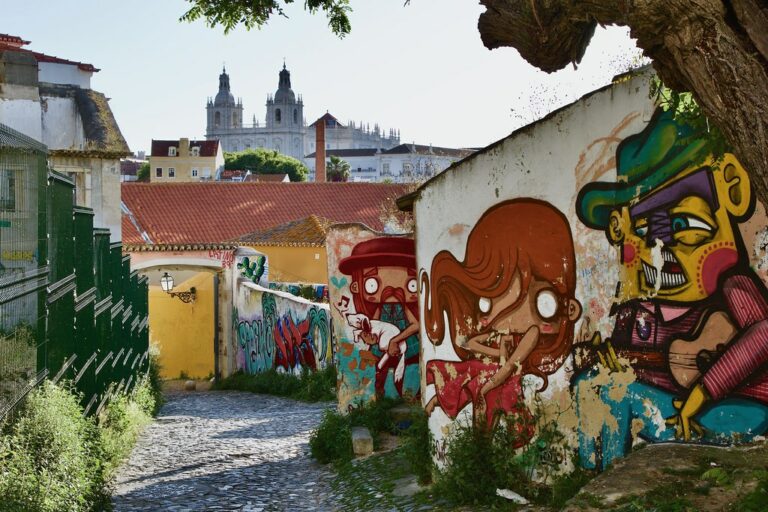
But that is not all you will see along the beautiful hills; there is street art everywhere.
Each hill has its own character and viewpoint. Explore them all in my guide to the 7 hills of Lisbon.
Strolling through Lisbon’s historic neighborhoods reveals an open art museum with graffiti and street murals.
You find them primarily in Alfama, the historic district of Lisbon.
There is a dedicated street art museum called The Underdogs Gallery, which you can visit.
22. The Most Expensive Chapels Found in Lisbon
Lisbon has some of the most impressive chapels, and São Roque Church is the world’s most expensive.
Here, you can see outstanding European art, with elaborate chapels adorned with gold Baroque architecture.
23. 70% of Portugal is empty
Roughly 70% of the country has extremely low population density, particularly in the interior regions.
The coastal areas from Porto to Lisbon and the Algarve house most of Portugal’s 10.3 million residents, while vast inland regions like Alentejo and Beiras remain sparsely populated.
This emptiness stems from decades of rural-to-urban migration that accelerated after Portugal joined the EU in 1986. I’ve driven through towns in the interior where you’ll see more abandoned stone houses than occupied ones, and entire villages with populations of fewer than 50 people.
The economic opportunities clustered around Lisbon, Porto, and the tourist-heavy Algarve, leaving behind a hauntingly beautiful countryside of rolling hills, medieval castles, and traditional farms that most travelers never experience.
24. A Popular Souvenir is Canned Fish
Yes, it sounds strange. Who will give someone canned fish as a gift? Still, it is one of the best souvenirs to take home.
Tins of mackerel, anchovies, sardines, and tuna are packed airtight in colorful boxes, so you can easily take them with you.
What started as an affordable source of protein has become one of Portugal’s famed food icons, and you can even find it on restaurant menus.
25. The Largest Saltwater Oceanarium is in Lisbon
Lisbon has the world’s largest saltwater aquarium, a great place to visit with kids in Parque das Nações.
Oceanario de Lisboa is large and features four marine habitats: cold-water, temperate, and tropical. Here you can see amphibians, various plants, mammals, algae, fish, and invertebrates.
You also find temporary exhibitions to explore.
26. Pastéis de Belém: A Top Secret Recipe
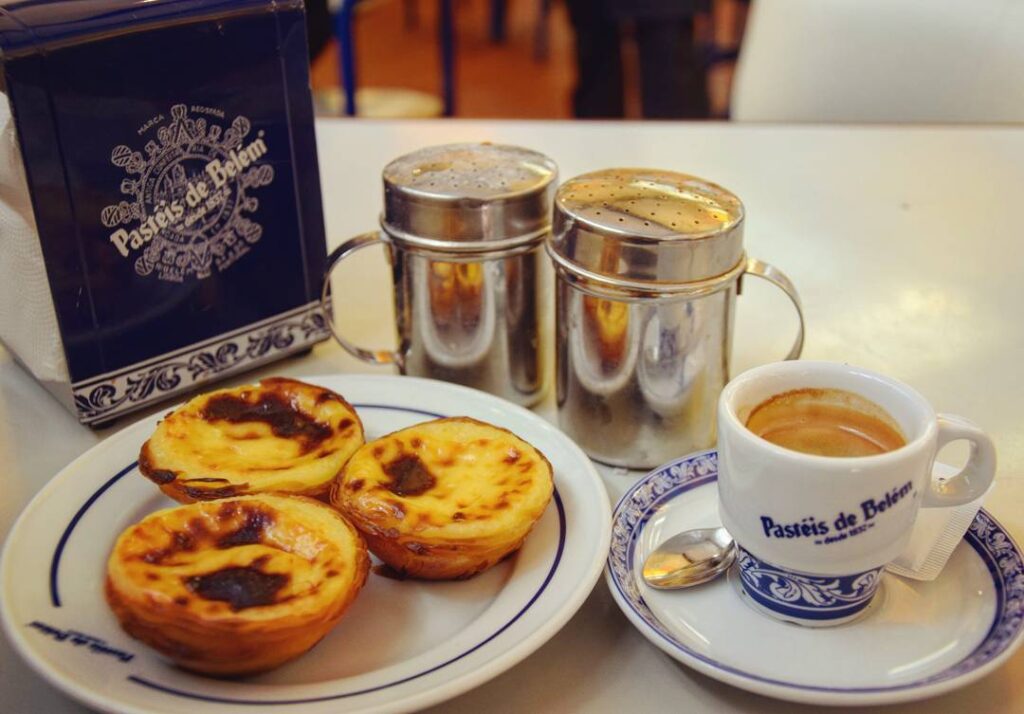
One thing you will learn to love is the famous Portuguese dessert, Pastel de Nata.
According to many in Lisbon, it originated with the monks at Jeronimos Monastery in Belém.
Even though the recipe is top secret, you can find these egg tarts at most cafes and bakeries in Lisbon today.
According to legend, the recipe was first handed down to Pastéis de Belem, and only the top owner and trusted chefs know the ingredients.
Planning On Going To Lisbon?
I’ve created a trip planner where you enter the number of days you’re going and what activities you want to do.
Based on your input, you then get an entire vacation planned with ideas.

Wrap-Up: Facts about Lisbon
These facts about Lisbon will make your trip even more memorable, no matter where you go in the Portuguese capital.
While visiting and talking to the friendly locals, you may even come across some facts not mentioned here.
If you do, I would love to hear your thoughts, so do not hesitate to leave some more facts about Lisbon in the comments. Enjoy your trip to Lisbon.