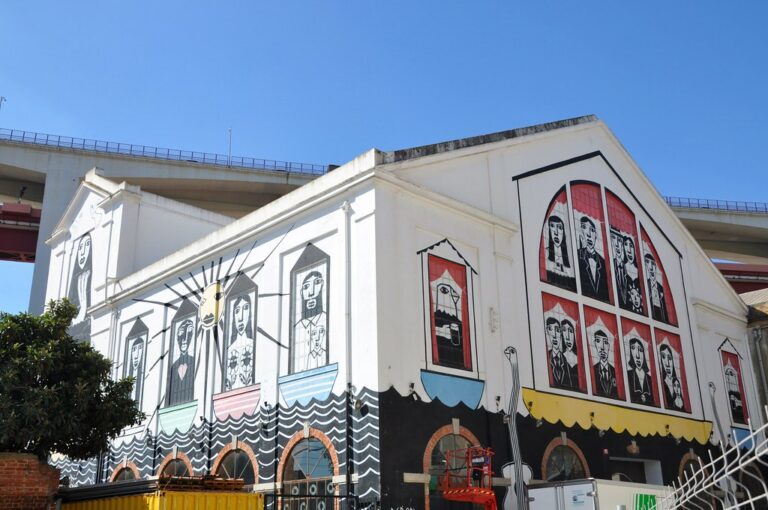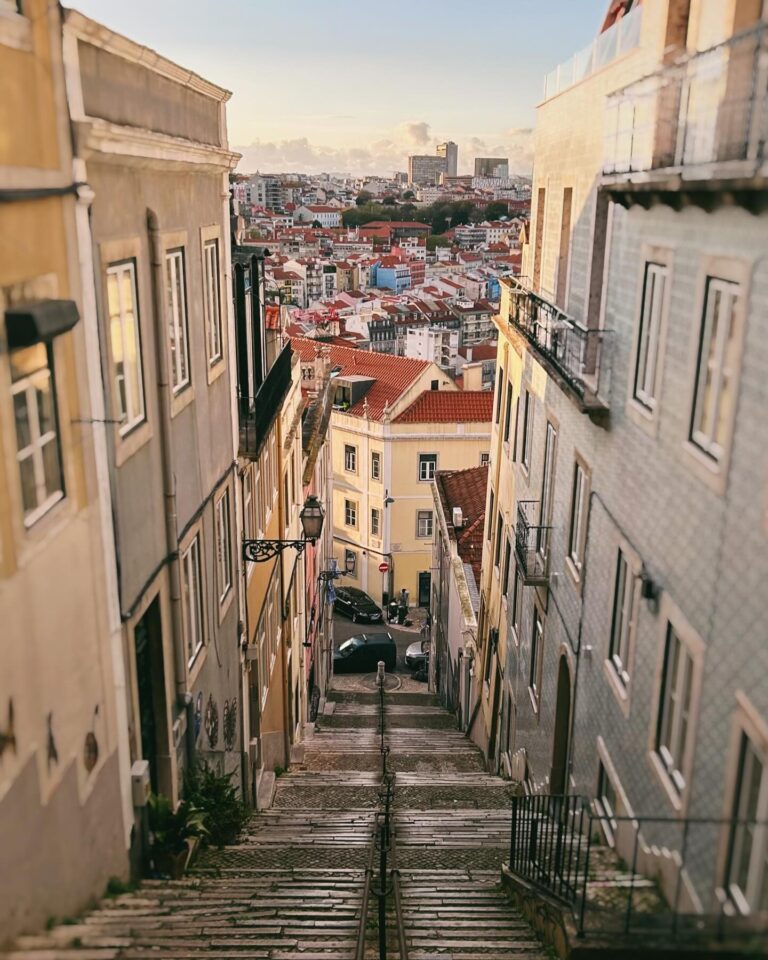
When I first moved to Portugal, I lived in Alfama, Lisbon, and it’s a time I’ll remember as cozy and romantic.
You see, Alfama is the oldest part of Lisbon, and it’s filled with narrow streets and alleys, and wherever you go, you can feel the history of this part of Lisbon.
I would start every morning by walking to the local café for coffee and freshly pressed orange juice. It was super cozy!
Sometimes, on random days, the café would be closed without warning, and that was part of what made Alfama so special and cozy.
If you’re considering staying here, read my full guide on where to stay in Lisbon to see how Alfama compares to other neighborhoods.
This area features cobblestone streets and scenic viewpoints, offering views of Lisbon, cathedrals, and the Tagus River.
In Alfama, there are many iconic buildings, including the Sé Cathedral, Castelo de São Jorge, Igreja de Santo António, the National Pantheon, and more.
Historically, the district was outside the castle walls and home to Lisbon’s poorer residents. As Lisbon became a maritime city, it became home to dock workers and sailors.
Today, Alfama is a fashionable, artisanal district with a rich history and unique character.
Alfama is just one of many areas worth exploring. See my complete guide to Lisbon’s neighborhoods to find the one that matches your vibe.
18 Things to Do in Alfama, Lisbon
When you visit Alfama, you need things to do and see, so here is a full list of things to do.
I recommend you take a walking tour in Alfama to experience as many of these attractions as possible.
I’ve tried to sort them by my favorite things, but take your pick and plan your Alfama trip.
1. Miradouro da Graça Viewpoint
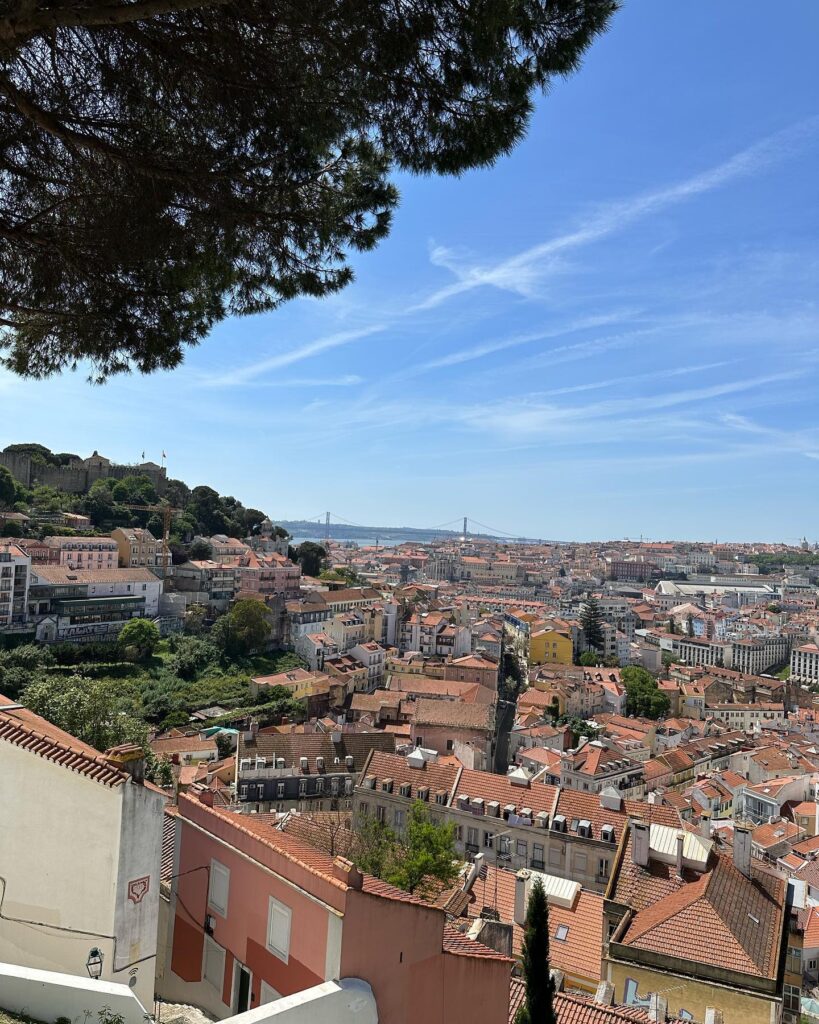
If you want a fantastic view of the city, I highly recommend visiting Miradouro da Graça.
The terrace/viewpoint is a well-known destination. It has beautiful trees that provide shade and an open-air café, perfect for taking a break and enjoying the view.
Getting there is simple – you can either walk or take Tram 28E.
Tip: Miradouro da Senhora do Monte is another beautiful viewpoint worth exploring.
2. Miradouro das Portas do Sol Viewpoint
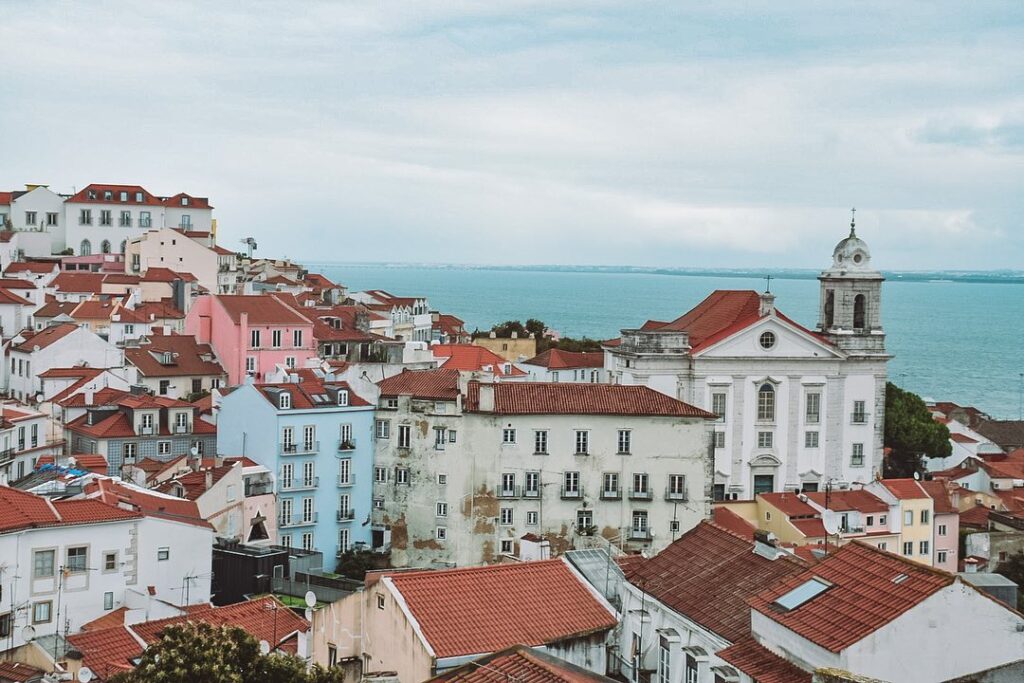
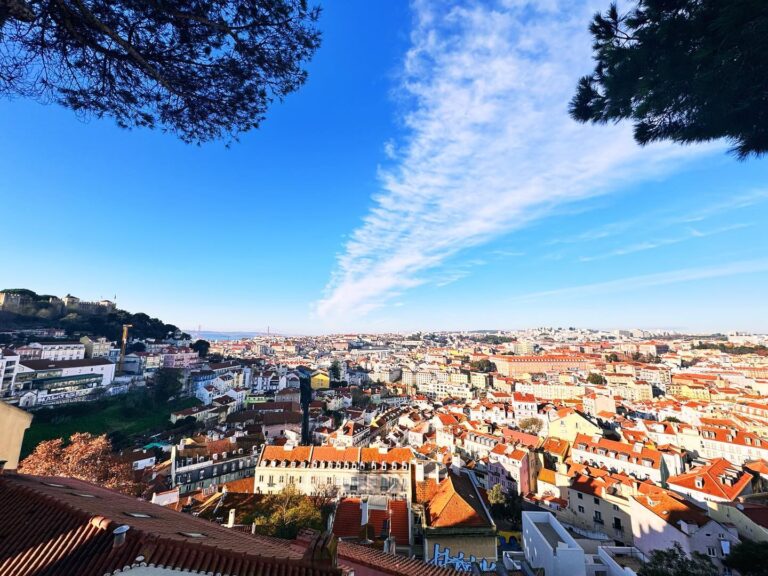
At Miradouro das Portas do Sol, you get a stunning panorama of the Tagus River and the city’s red rooftops.
You can even glimpse the hills and mountains beyond the water on a clear day. As you stand on the terrace, you’ll also see the São Vicente of Fora Monastery in the distance.
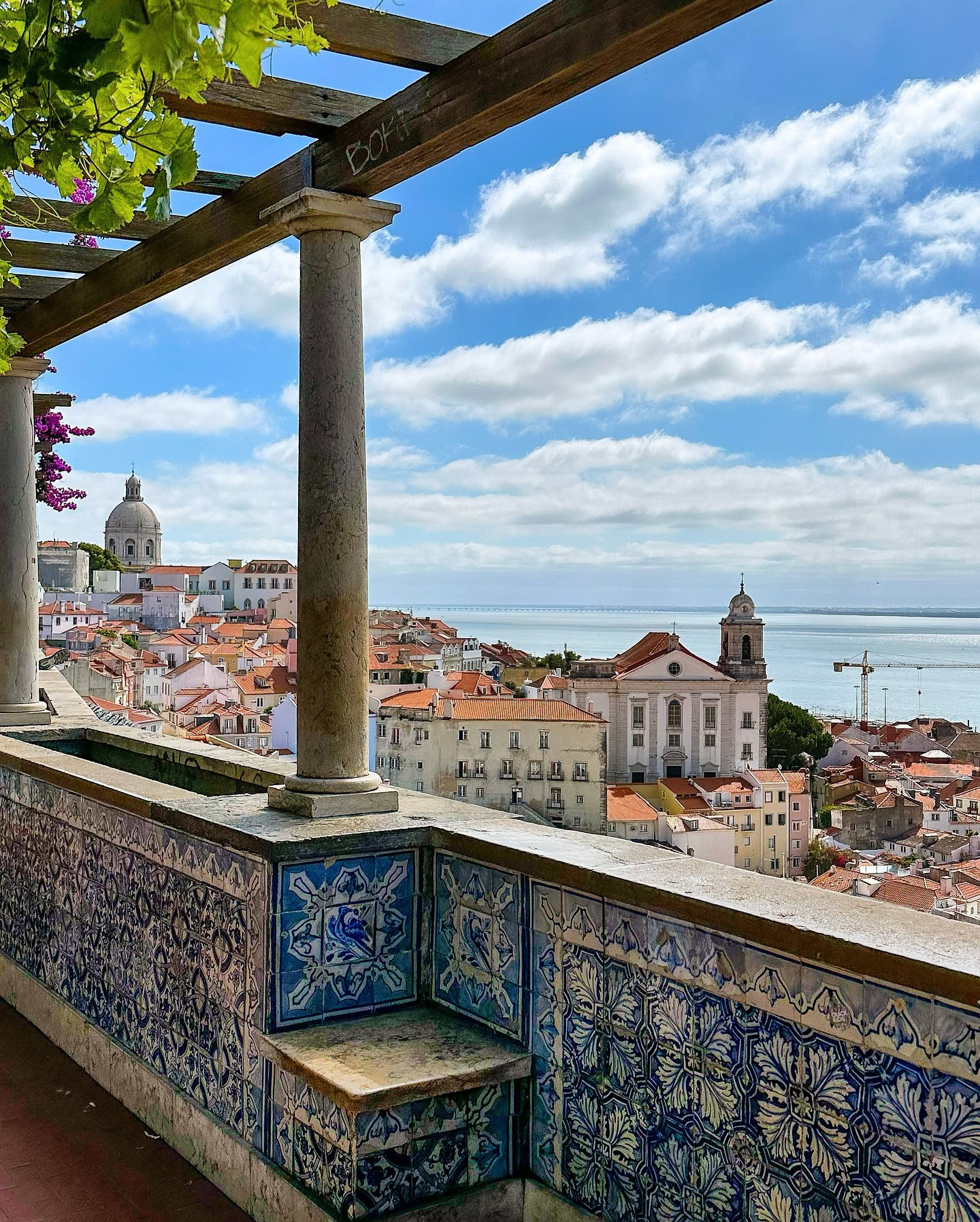
3. Miradouro de Santa Luzia
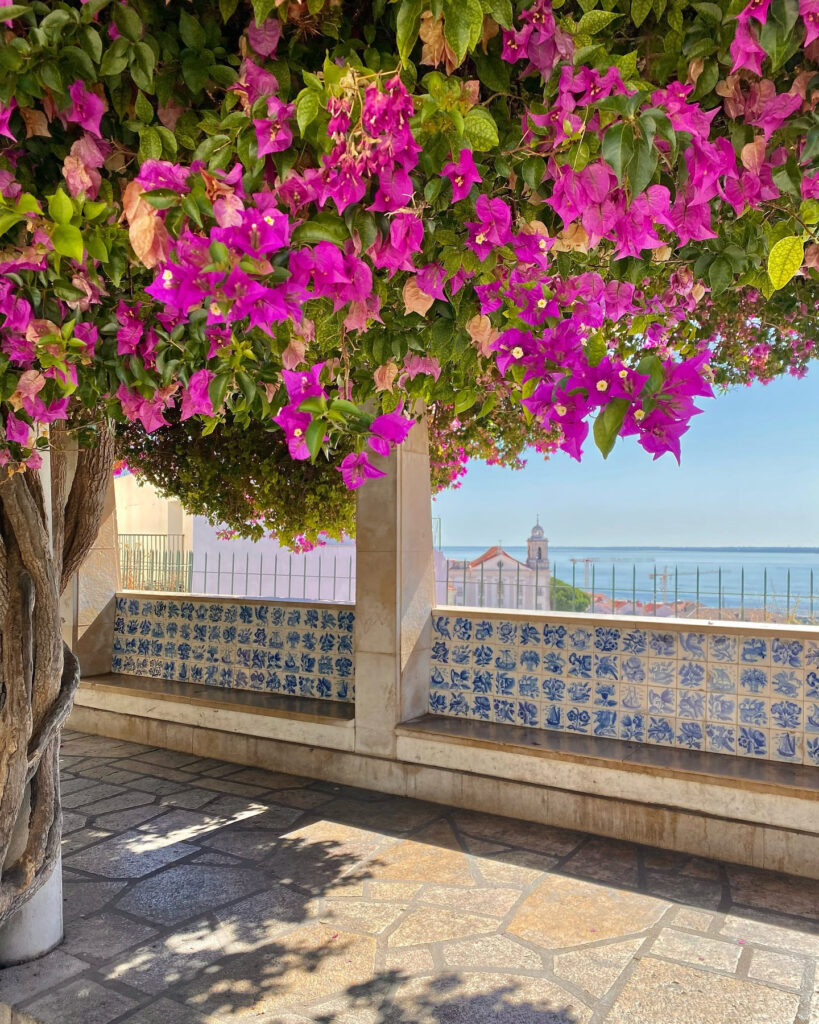
Visit Miradouro de Santa Luzia for a beautiful view of the city. Here, you can witness the beautiful architecture of Alfama as it runs down towards the Tagus River.
The deck is covered with a trellis supporting vines, surrounded by decorative tiles and a small garden. From this point, you can spot the domes and towers of the churches in Alfama.
4. São Jorge Castle
Opening Hours: from 9:00 am – 6:00 pm(9 pm March-October)
Price: €15 adult / €7.5 Youth / FREE for kids under 13
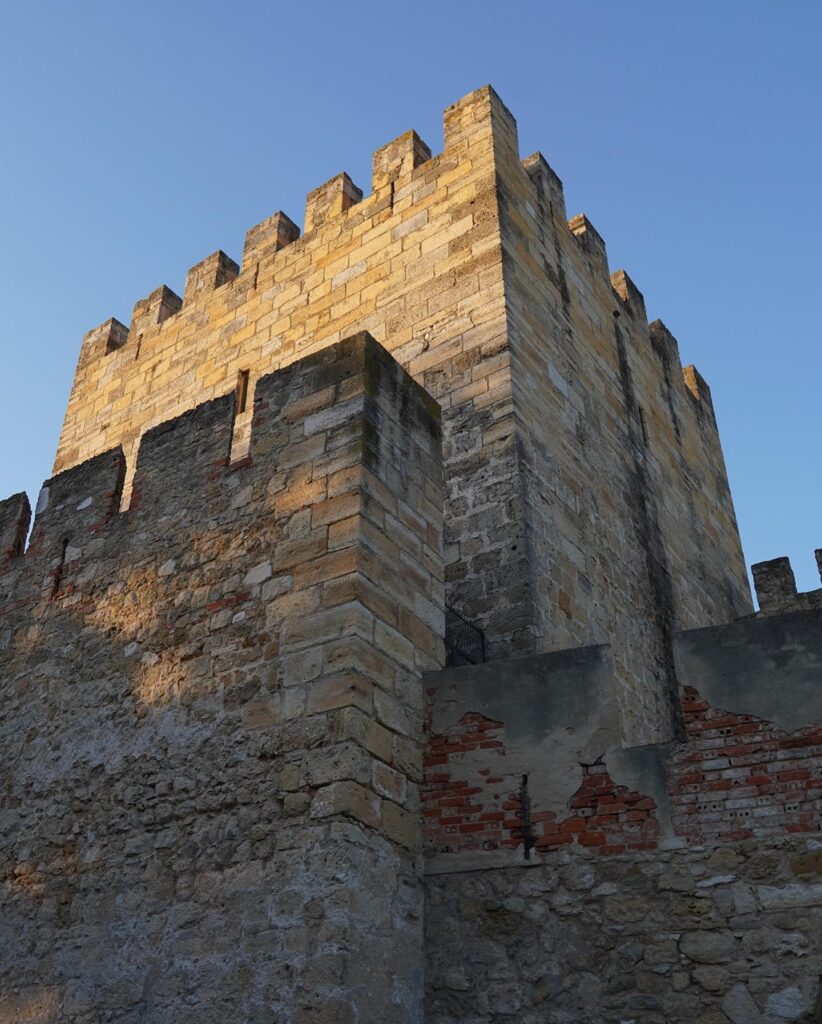
Castelo de São Jorge’s origins can be traced back to the Roman era, around 200 BC. Over the centuries, it was fortified, conquered, and occupied by various groups, including the Moors and Crusaders.
However, the castle suffered significant damage due to an earthquake in the mid-1700s, and it was later restored in 1944, marking the last major renovation.
Given its rich history and cultural significance, the castle is known as one of the city’s most important landmarks.
Tip: Travel with the Tram 28E included in your Lisboa Card.
5. Tour Alfama with Tram 28
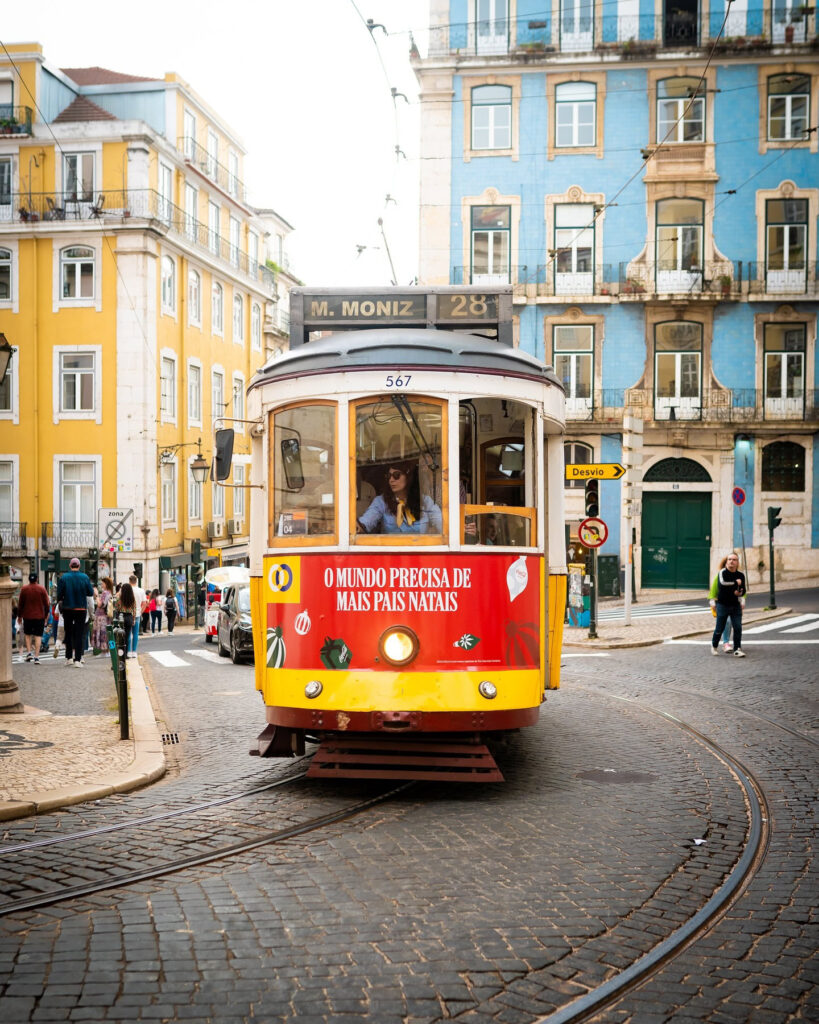
This is the most famous tram in Lisbon, and it’s a great way to experience Alfama as it drives around the entire area.
It costs €3.5, and I recommend taking it from Martim Moniz as it might be super crowded if you take it in Alfama.
It’s super crowded during rush hour, so get on early, find a place to sit, and enjoy a trip through Alfama.
6. Experience the Nightlife in Alfama
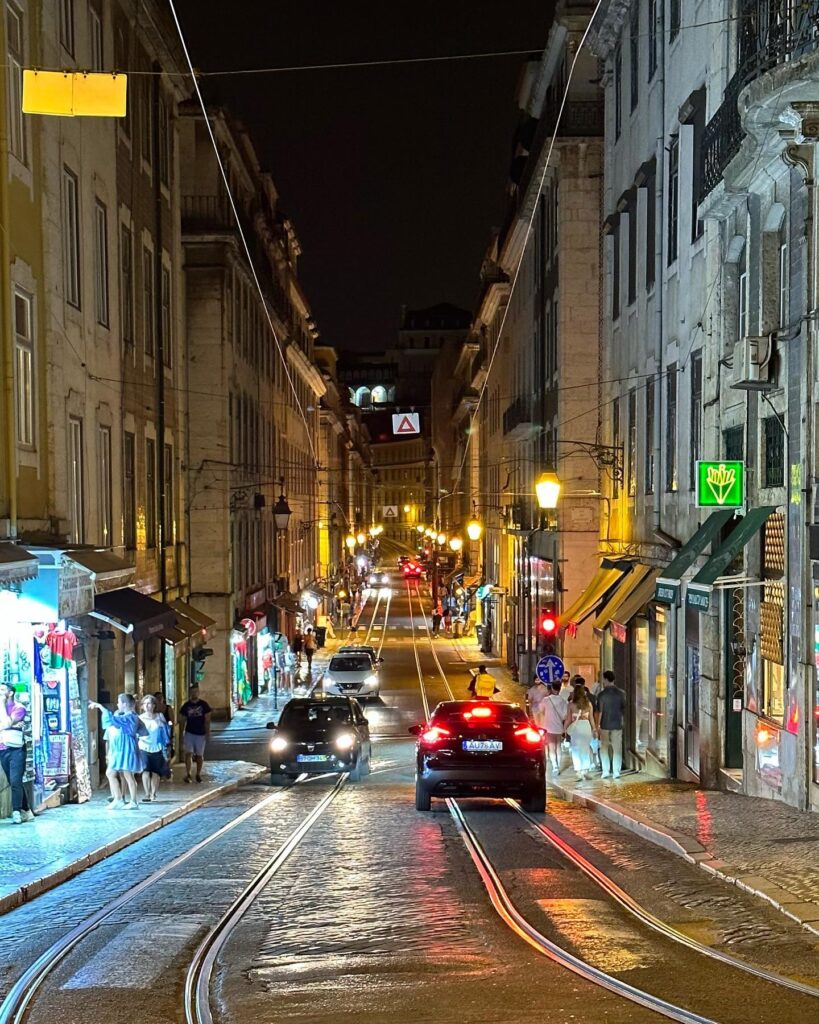
Alfama’s nightlife has a unique charm that sets it apart from other districts in Lisbon. While it may not be as vibrant as areas like Bairro Alto or Cais do Sodré, it offers a more laid-back and intimate nocturnal experience.
- Fado Houses: Alfama is famous for its traditional music and Fado houses. Here, you can enjoy soulful performances and Portuguese cuisine in a cozy and intimate atmosphere.
- Cafes and Bars: Alfama’s local cafes and bars are charming and have outdoor seating. You can enjoy mild evenings mingling with locals over drinks and snacks.
- Night Walks: Alfama’s nightlife is super peaceful at night, perfect for a walk on its narrow, cobblestone streets, taking in the historic architecture and serene beauty of the surroundings.
7. Feira da Ladra
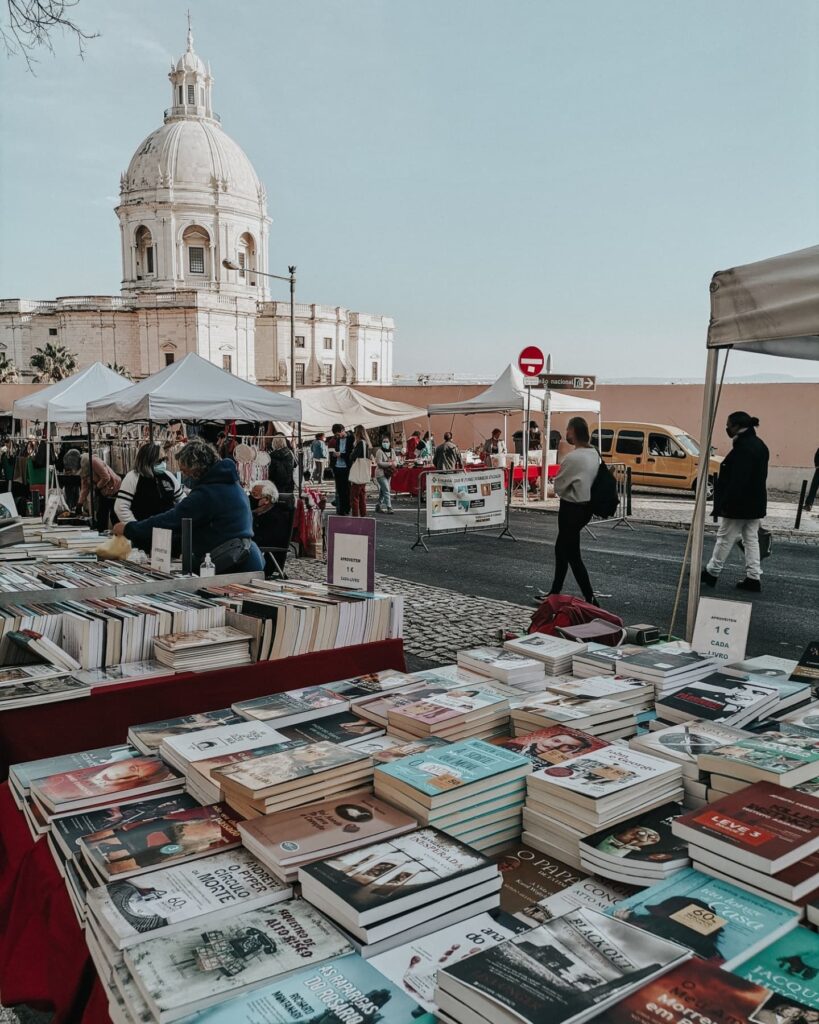
Feira da Ladra is a massive flea market and my favorite in Lisbon. It’s located in Graça, which is practically in Alfama.
You can find anything from local cutlery and plates to clothing and outdated electronics, even beautiful old cameras.
If you’re in Alfama on Tuesdays or Saturdays, visit this market. It’ll be worth your time; it’s incredible.
8. Lisbon Cathedral (Sé Cathedral)
Opening Hours: Daily from 9:00 am – 7:00 pm
Mass Times: Sundays at 11:30 am and 7:00 pm, Tuesdays and Saturdays at 6:30 pm
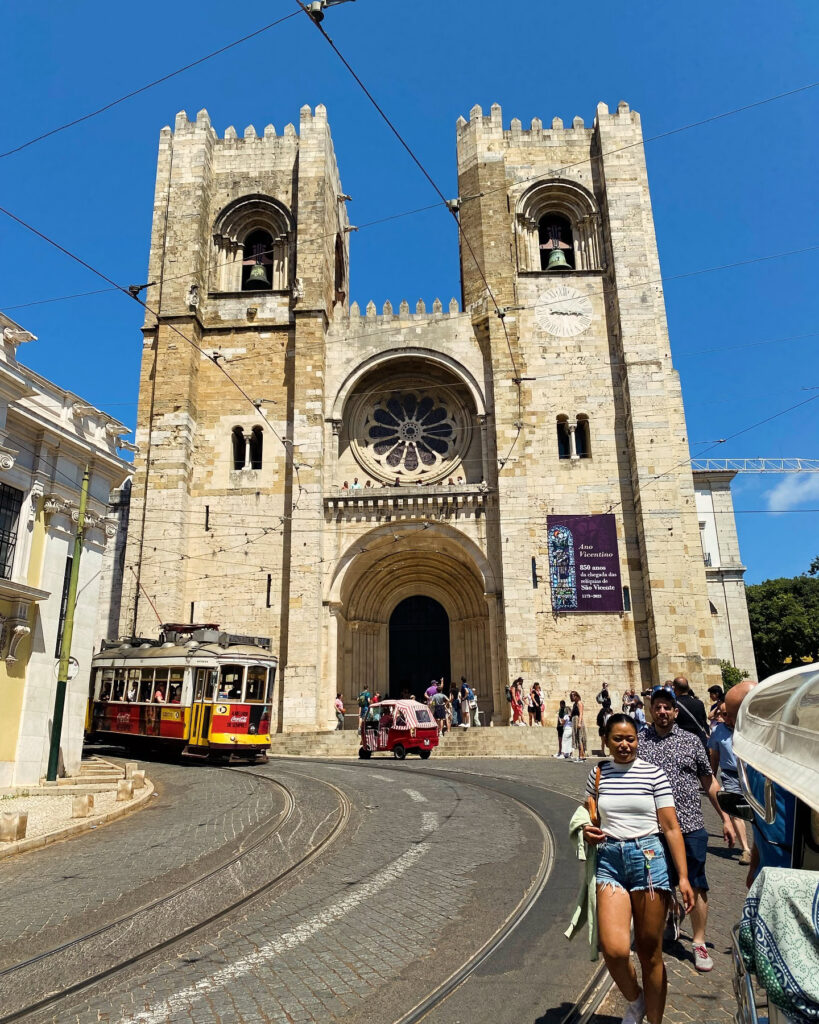
The Sé Cathedral, the Cathedral of Saint Mary Major, is Lisbon’s oldest church.
It was constructed in 1147, and it underwent several renovations and modifications due to natural disasters like earthquakes, fire, and the passing of time.
The cathedral combines Gothic, Romanesque, and Baroque architecture and remarkable artwork.
You’ll get to see sculptures resting on tombs, intricate windows, exquisite embellishments, and beautiful paintings.
9. Igreja de Santo António de Lisboa
Opening Hours: All days from 8 am – 7 pm(8 pm on weekends)
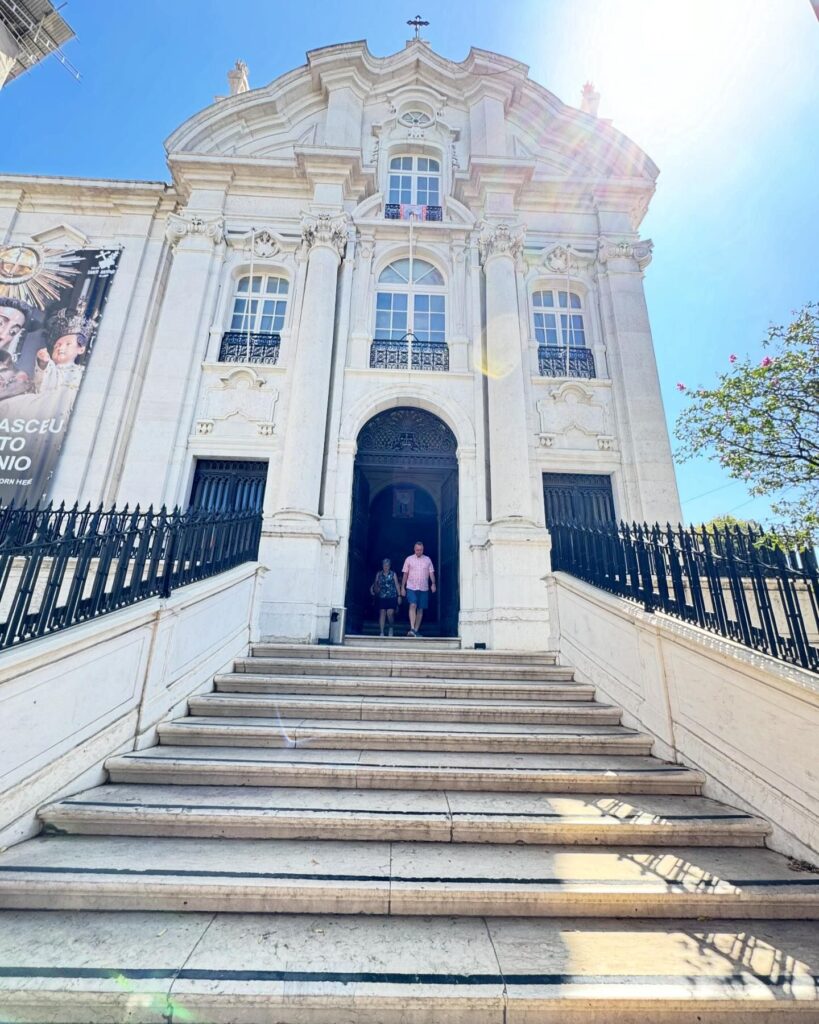
In the mid-1700s, the Catholic church was constructed on the site where experts believe Saint Anthony was born.
The church’s exterior is beautiful, with lofty vaulted ceilings and a dome that lets in a lot of natural light.
It has been reconstructed several times since its original 15th-century inception and now stands as a national monument.
They also added a saint statue in the square before the church, which Pope John Paul II sanctified in 1982.
The church’s crypt is built where Saint Anthony’s birthplace once stood. You can also observe a canvas that showcases the most accurate facial representation of Saint Anthony.
If you’re in Lisbon on June 13, you can participate in the yearly procession at the church, which winds through Alfama in honor of Saint Anthony’s “patron saint day.”
10. National Pantheon
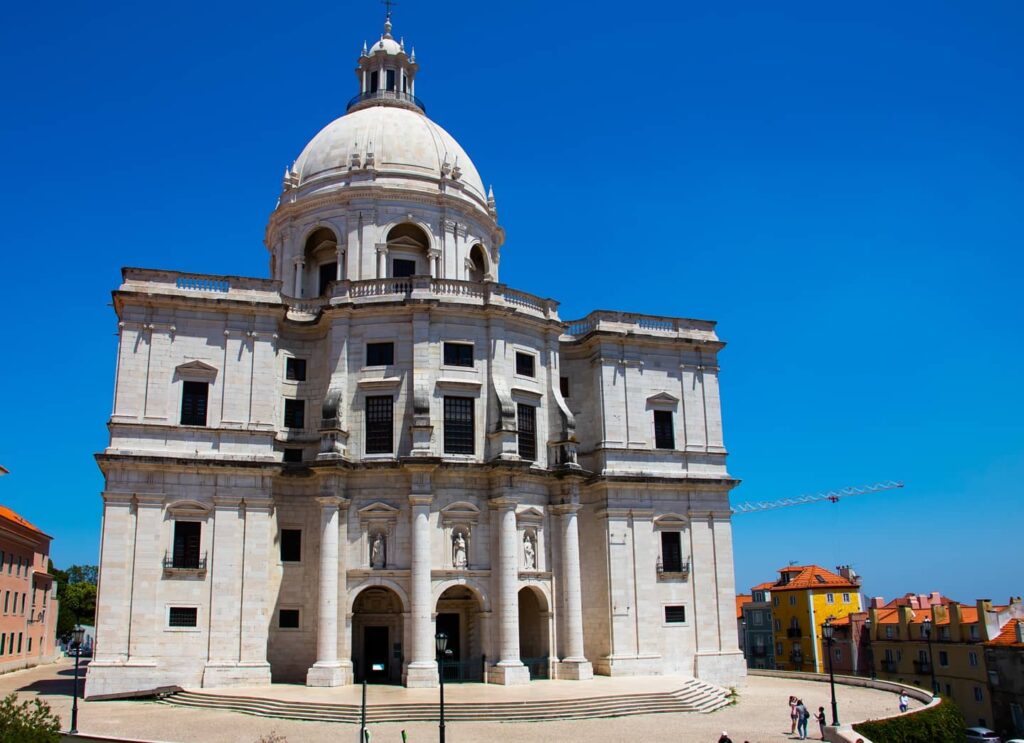
Opening Hours: Tuesdays – Sundays from 10:00 am – 6:00 pm
Closed: January 1, Easter Sunday, May 1, and Christmas Day
The National Pantheon is located in the Alfama district next to Feira da Ladra, known for its beautiful dome.
It’s a church from the 17th century, and you have to see it.
Inside the church, the walls feature colorful marble and flowing shapes, and you’ll get to see several tomb rooms that honor national figures such as explorer Vasco de Gama and Fado legend Amelia Rodriguez.
On the terrace, you can enjoy a breathtaking view of Lisbon. This beautiful monument is the resting place of many writers, artists, former presidents, and military figures.
Tip: Use the Lisboa Card to get admission for free.
11. Listen to Fado Music
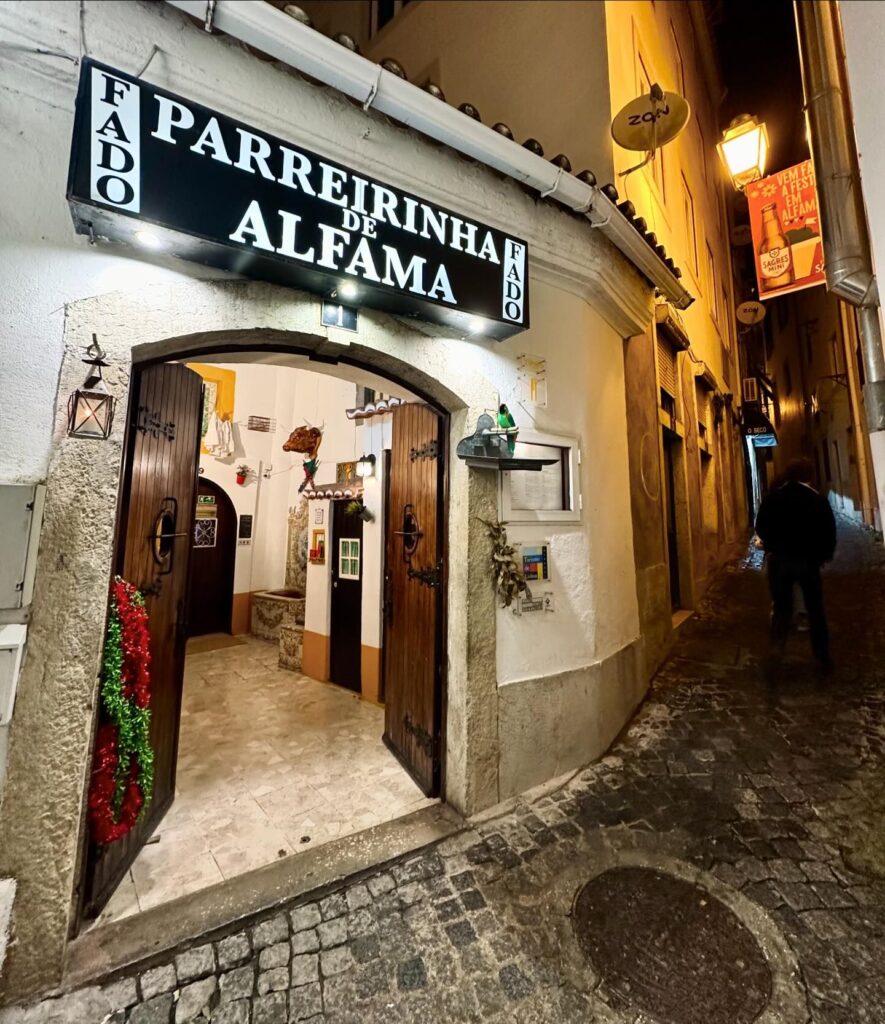
Fado Music is the most popular musical genre in Portugal, and it’s what they’re known for.
In the Alfama district, Fado is huge, and there are so many restaurants where you can eat while listening to this beautiful music.
There are many different types of Fado, and while I was a bit skeptical at first, I was positively surprised.
It’s beautiful music and sounds incredible when you start listening to it.
12. Visit the Fado Museum
Hours: Tuesdays – Sundays from 10 am – 6 pm
Closed: January 1, May 1, and Christmas Day
Price: €5 adult / €2.50 young adult 13 – 25 / FREE under 12
Paid Tours: €3 per 1-hour tour (Book in Advance)
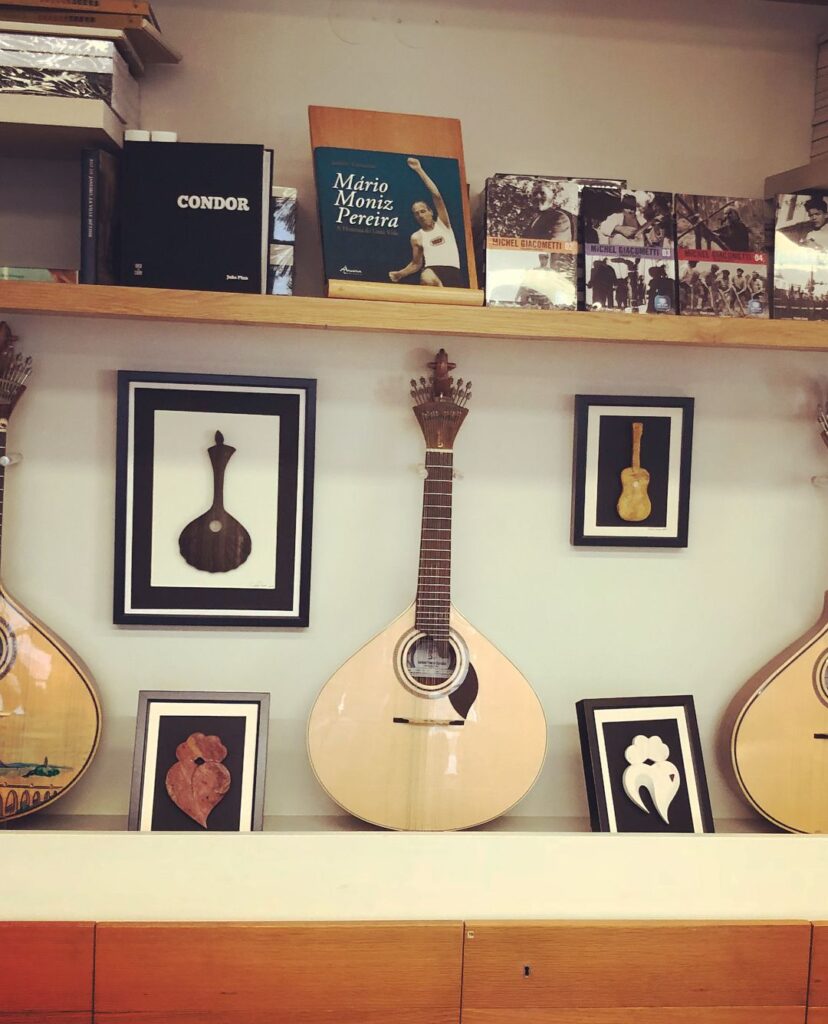
The Museu do Fado is a tribute to Portugal’s talented fado musicians and singers, who have shaped Lisbon’s culture with their emotional and somber genre.
Although fado’s roots can be traced back to ancient times, it became popular in Lisbon in the early 1800s. Today, you can often hear fado in Portuguese pubs and restaurants, where the lyrics revolve around themes of fate, longing, and the sea.
The museum has a collection of instruments, especially Portuguese guitars used for fado, and artwork that showcases the genre’s influence on Lisbon’s culture.
To help you appreciate this music genre, the museum offers interactive exhibits, audio guides, and live performances at the attached restaurant.
If you wish to explore the museum in-depth, you can email the museum to pre-book a guided visit in Portuguese, Spanish, English, or French.
13. Campo de Santa Clara
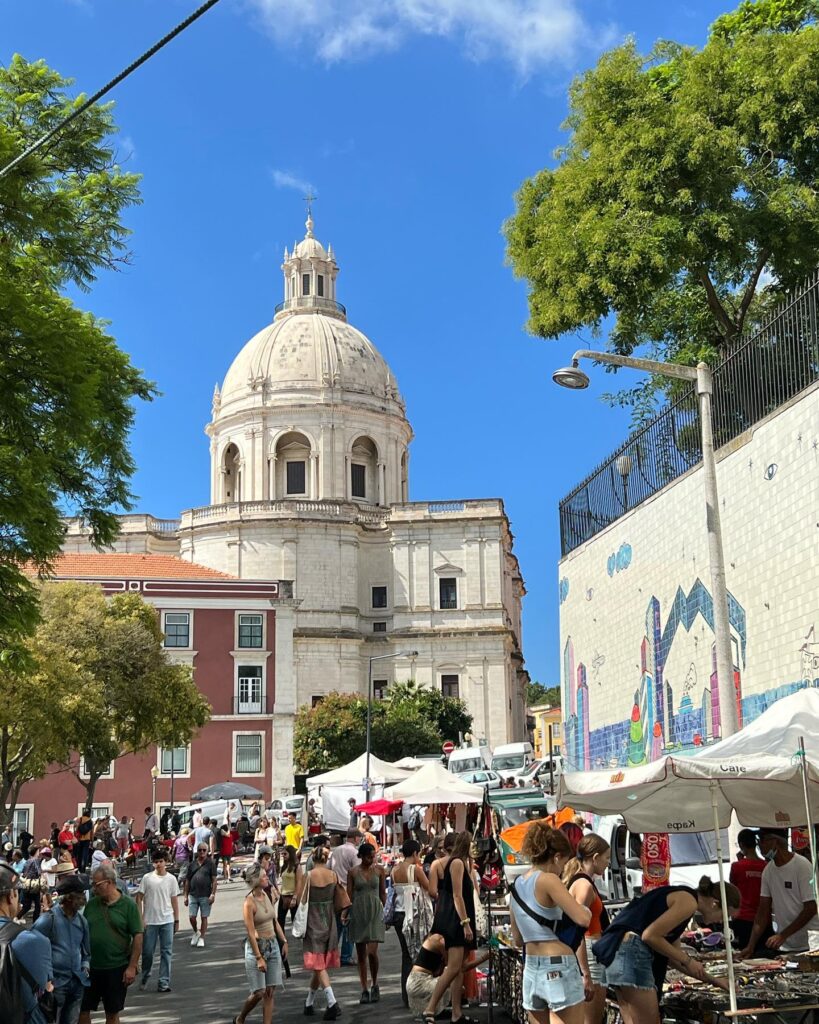
Campo de Santa Clara Square is a charming location surrounded by architectural masterpieces.
If you visit on a Tuesday or Saturday, you can experience the renowned pop-up flea market Feira da Ladra, which has earned the nickname “Thief’s Market.”
14. São Vicente de Fora
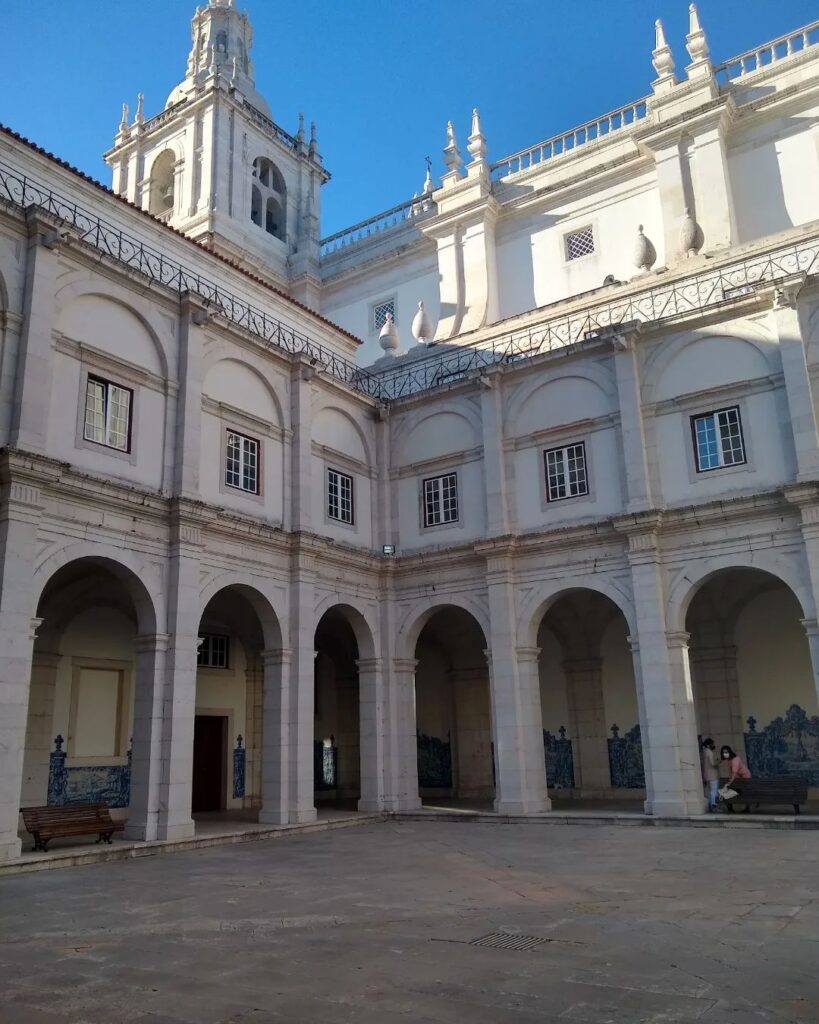
Opening Hours Mondays – Saturdays: 9 am – 8 pm
Opening Hours on Sundays: from 9:00 am – 12:30 pm and 3 pm – 5 pm
The church was constructed in 1582, and it is enormous, as you can see from above.
When you walk around inside the church, it feels super majestic, and you can really sense that great things have happened here.
The monument was built to commemorate the Portuguese and European crusaders who were buried here.
15. Amália Rodrigues Mural
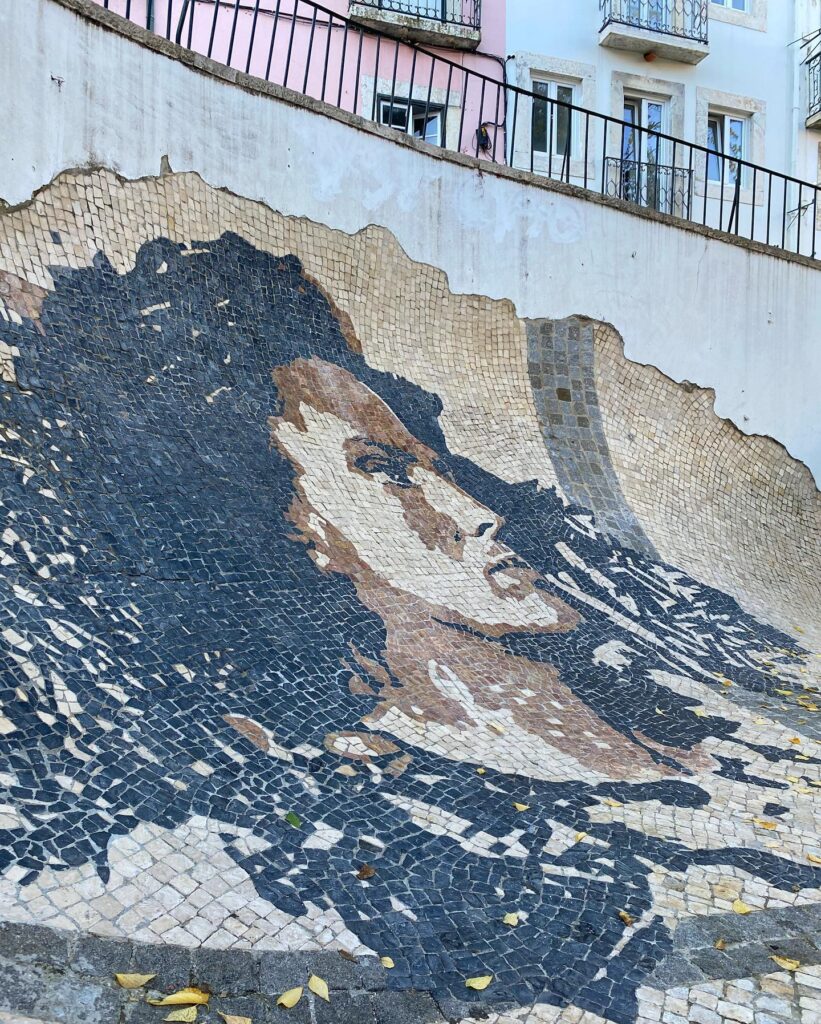
The mural featuring Amália Rodrigues is a street art piece in Alfama.
Amália Rodrigues, also called the Queen of Fado, was a celebrated Portuguese actress and singer who played a crucial role in popularizing fado worldwide.
The mural is a mosaic that extends up onto a wall, seamlessly blending into the cobbled street below. Interestingly, thanks to the ingenious arrangement of the mosaic pieces, Amália appears to cry when viewed in the rain.
Tip: Explore the street art around Alfama and other districts in Lisbon.
16. Igreja de São Miguel
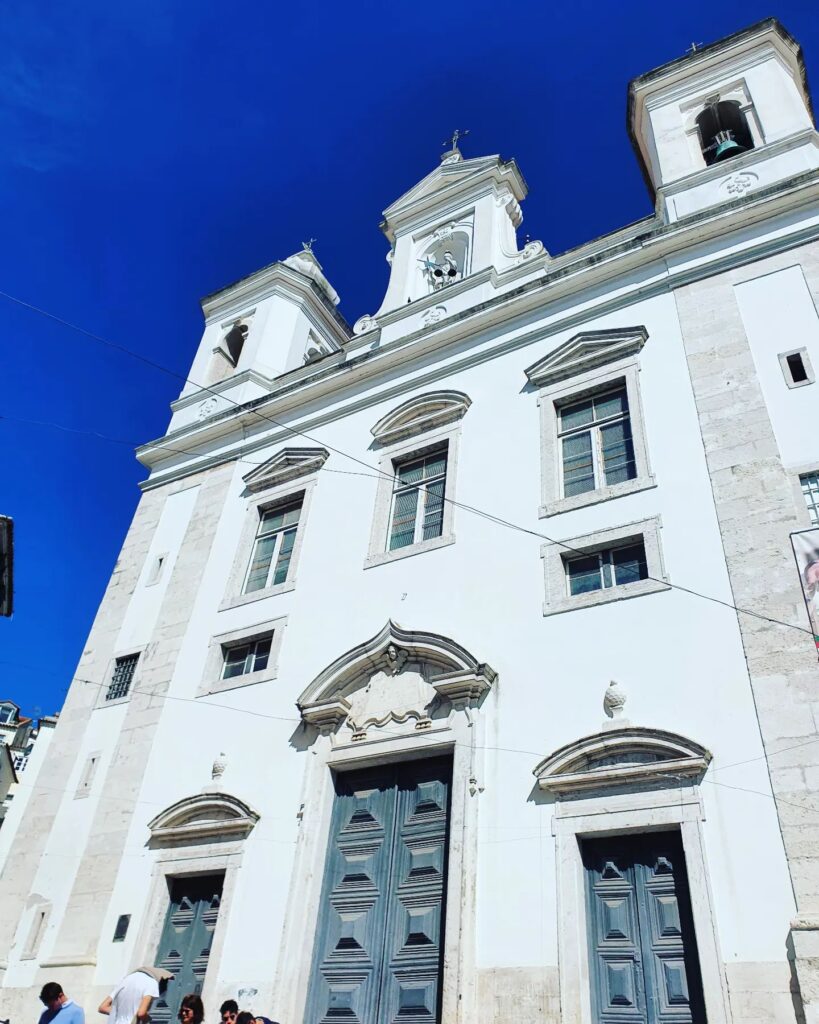
This Catholic Church has been an integral part of the community in Alfama since the neighborhood was established.
The church was rebuilt entirely before the mid-1700s because of the famous earthquake in Lisbon.
Although all services are conducted in Portuguese, attending mass provides an opportunity to listen to the choir and immerse oneself in the local community ambiance.
17. National Military Museum
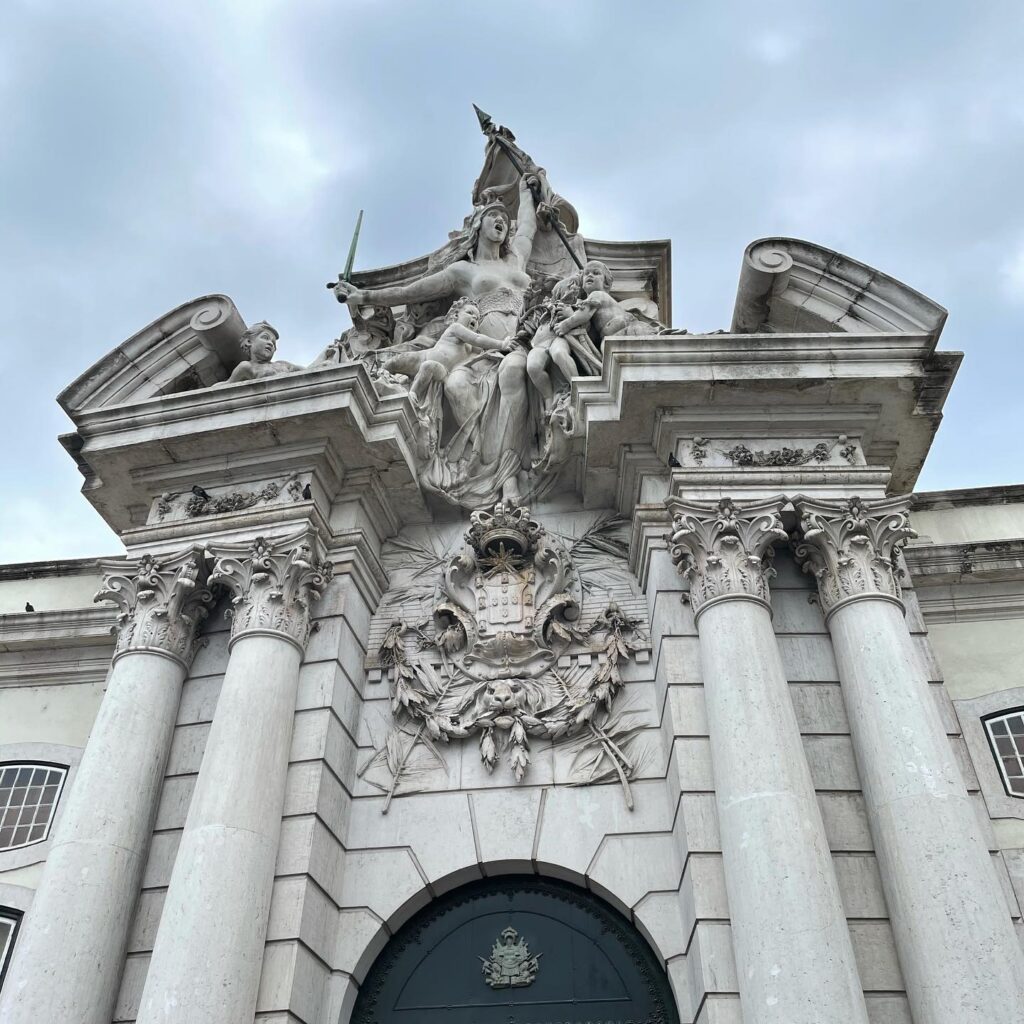
Hours: Tuesdays – Sundays from 10:00 am – 17:00
Price: €3 adult / €1 senior or child, also receive 20% using your Lisboa Card
The Museu Militar de Lisboa, located on the site of a former 16th-century shipyard, shows the world’s most extensive collection of artillery.
The museum provides a comprehensive overview of Portugal’s rich military history through various exhibits, including illustrated tiles, paintings, documents, and military gear.
You can explore various subjects, such as World War I, Vasco da Gama’s discovery of his route to India, and the Peninsular War.
In addition to its fascinating exhibits, the museum building is also a point of interest, as it is an excellent example of the Baroque style.
18. Roman Amphitheatre
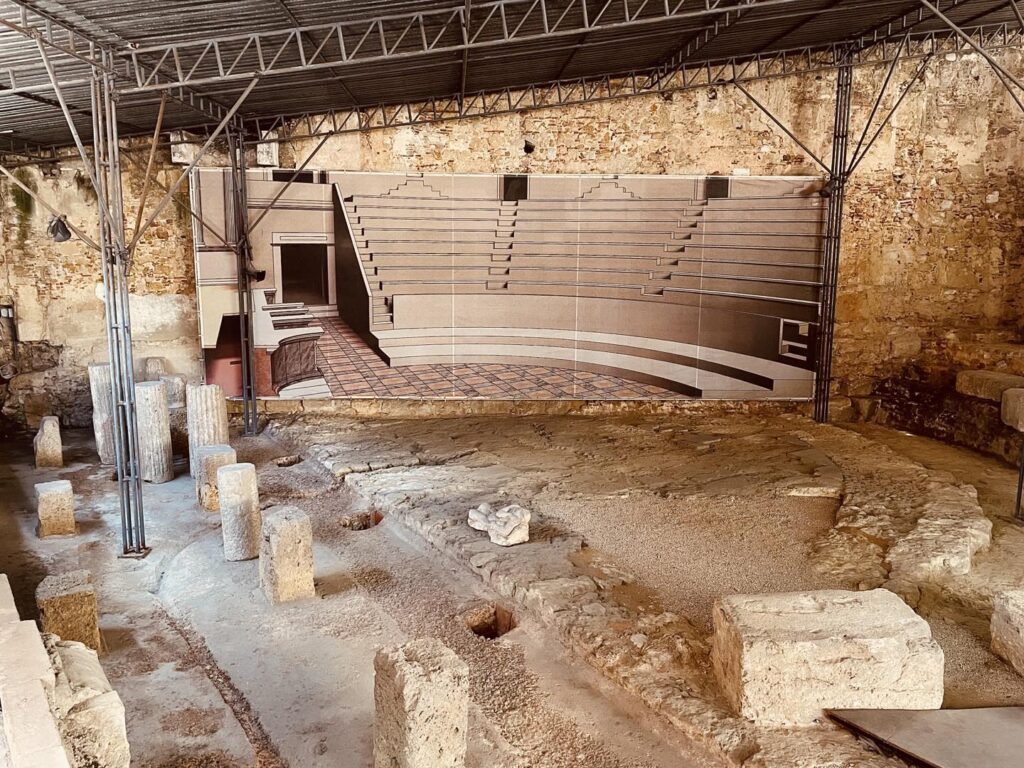
What’s left of the Roman Amphitheatre is just ruins, but they’ve done a good job telling the story of how it once looked in Lisbon.
A fun fact about Lisbon is that an entire Roman city existed below the current city, which you can still see in some places in Chiado.
This is what this theater in Lisbon is proof of as well.
So if you’re looking for some history, I strongly recommend you visit this place.
How to Get to Alfama
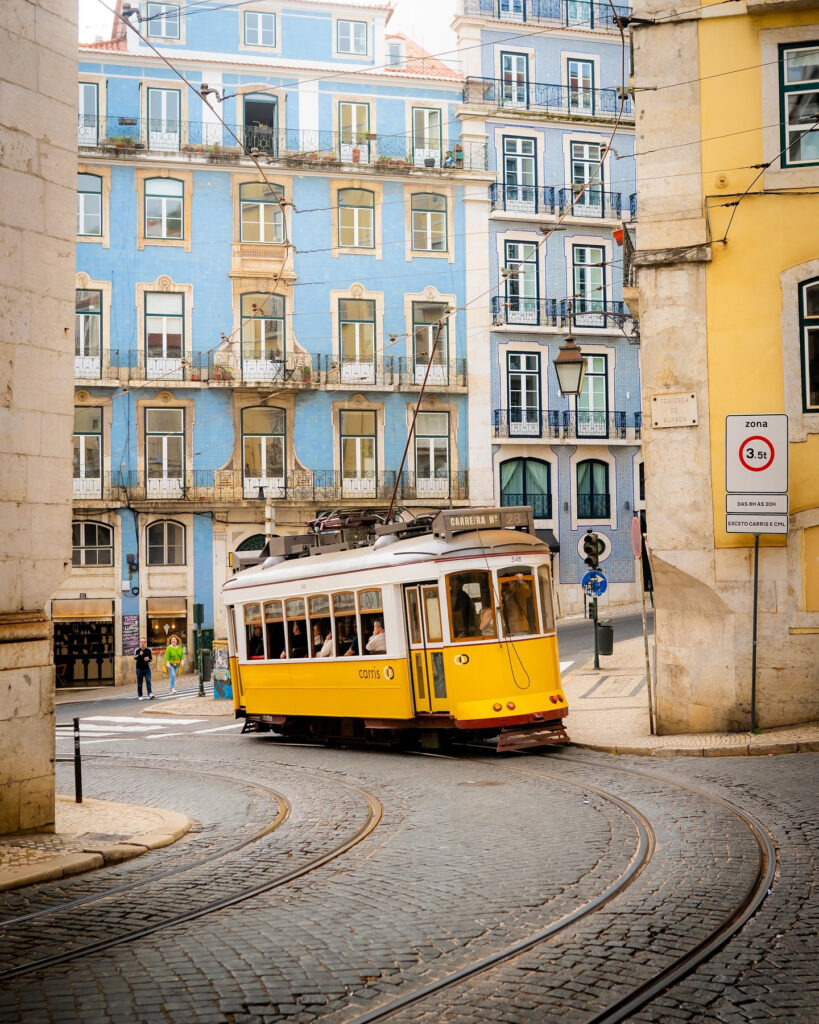
I prefer to walk to Alfama from wherever I am in Lisbon, but you can also get to Alama by public transportation using the tram or bus.
You can take Tram 28 from anywhere in the city center towards Alfama.
Another option is to get on the hop-on-hop-off bus, which includes Alfama and has several stops, such as Lisbon Cathedral, Saint Anthony Church, and Lisbon Castle.
Best Restaurants in Alfama
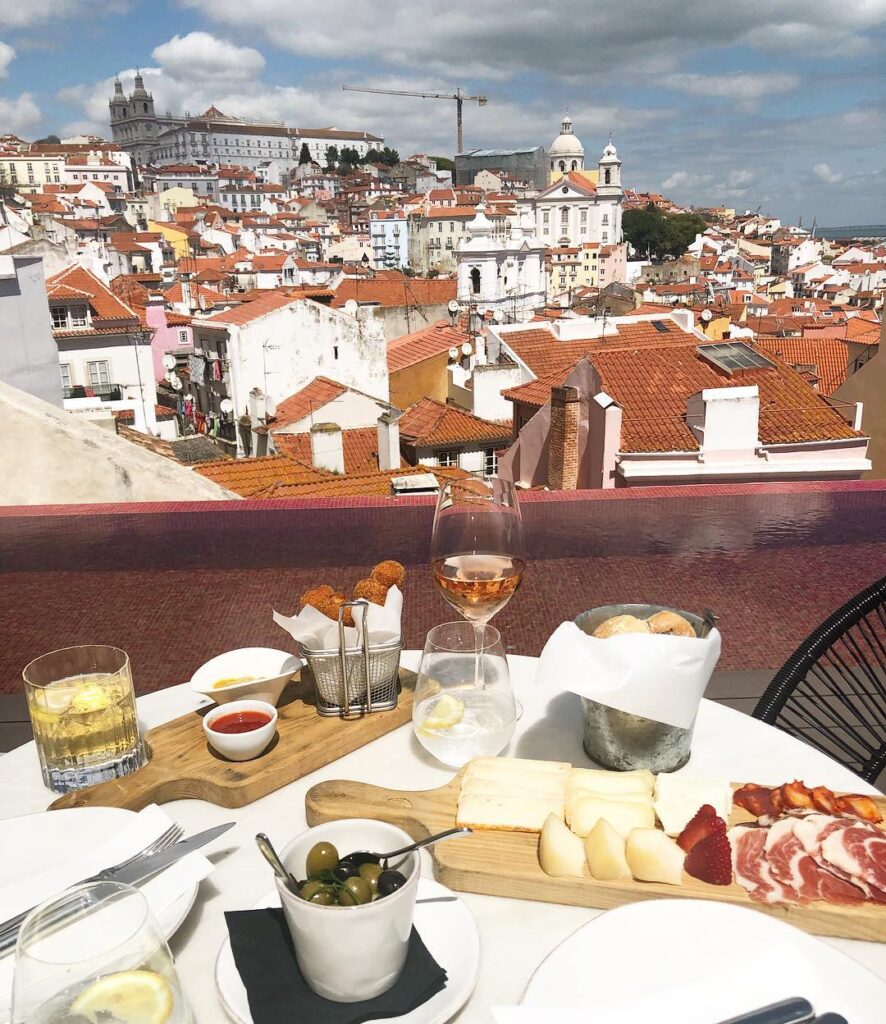
Alfama is packed with great restaurants, from brunch to lunch and dinner, and I encourage you to explore and try multiple restaurants.
- Affair Restaurante & Bar: Great for dinner and lunch.
- Memmo Alfama: Amazing tapas place; it’s delicious.
- SOL Restaurante e Jardim: Incredible views, fantastic food, and snacks.
- Taberna Moderna: Amazing local food.
Where to Stay in Alfama
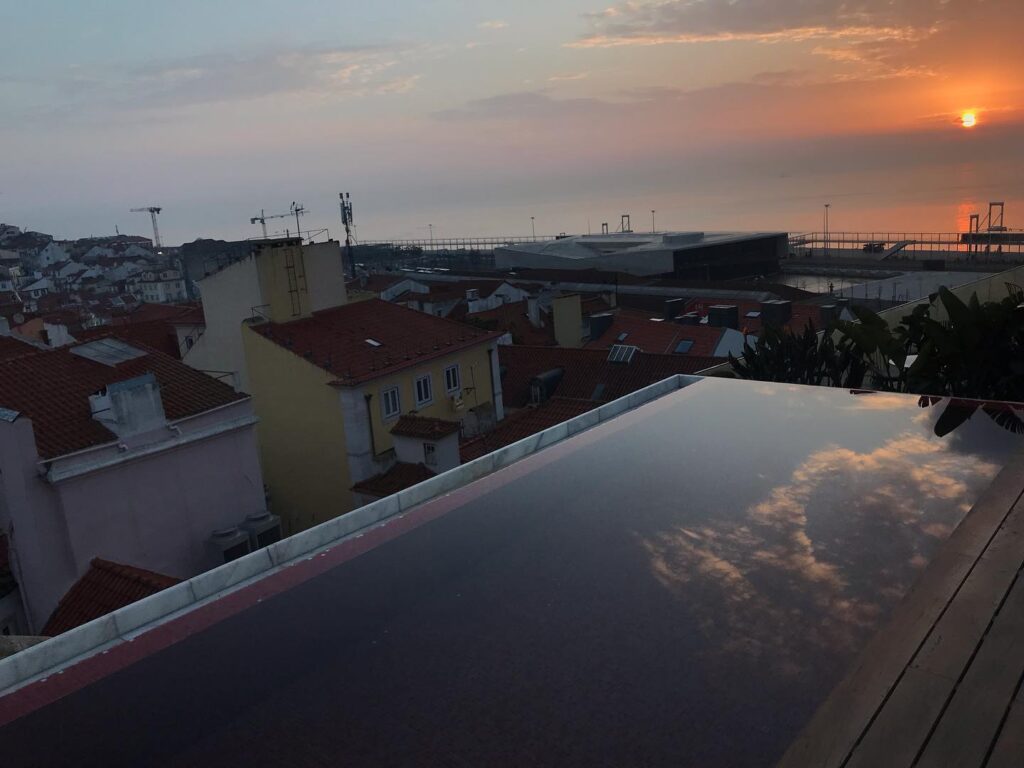
Memmo Alfama is also one of the best hotels in Alfama.
When I stayed in Alfama, I stayed in an Airbnb, but that was back in 2018, and a lot has changed since then. Today, I stay exclusively at hotels when visiting Lisbon.
- Memmo Alfama: Best overall hotel
- Solar Do Castelo: Super romantic local hotel.
- Santiago De Alfama: Beautiful hotel with an amazing view
You can get even more hotels in Alfama here.
Here are the best things to do in Lisbon in April 2026
I’ll send you a list of the best things to do in April and every month thereafter.
It’s based on my personal experience of living and traveling around Lisbon for years. I’m sharing many hidden gems.
Looking for weekly Lisbon tips? Check out my Lisbon Newsletter.
Wrap-Up
The Alfama district in Lisbon is something you just have to experience. You can’t leave Lisbon without spending a couple of hours in this part of the city.
It’s the oldest part of Lisbon, and the further east you go, the more you can feel it. It’s just such a romantic place.
You’ll find yourself walking down the cozy, narrow streets and seeing a lot of local cafés and monuments.
My favorite flea market is also in Alfama, and you should visit it if you’re in the Alfama district on a Tuesday or Saturday.
Lastly, if you need some amazing restaurants in between these picturesque streets, then I’ve made a list for you as well.
FAQ
Planning On Going To Lisbon?
I’ve created a trip planner where you enter the number of days you’re going and what activities you want to do.
Based on your input, you then get an entire vacation planned with ideas.