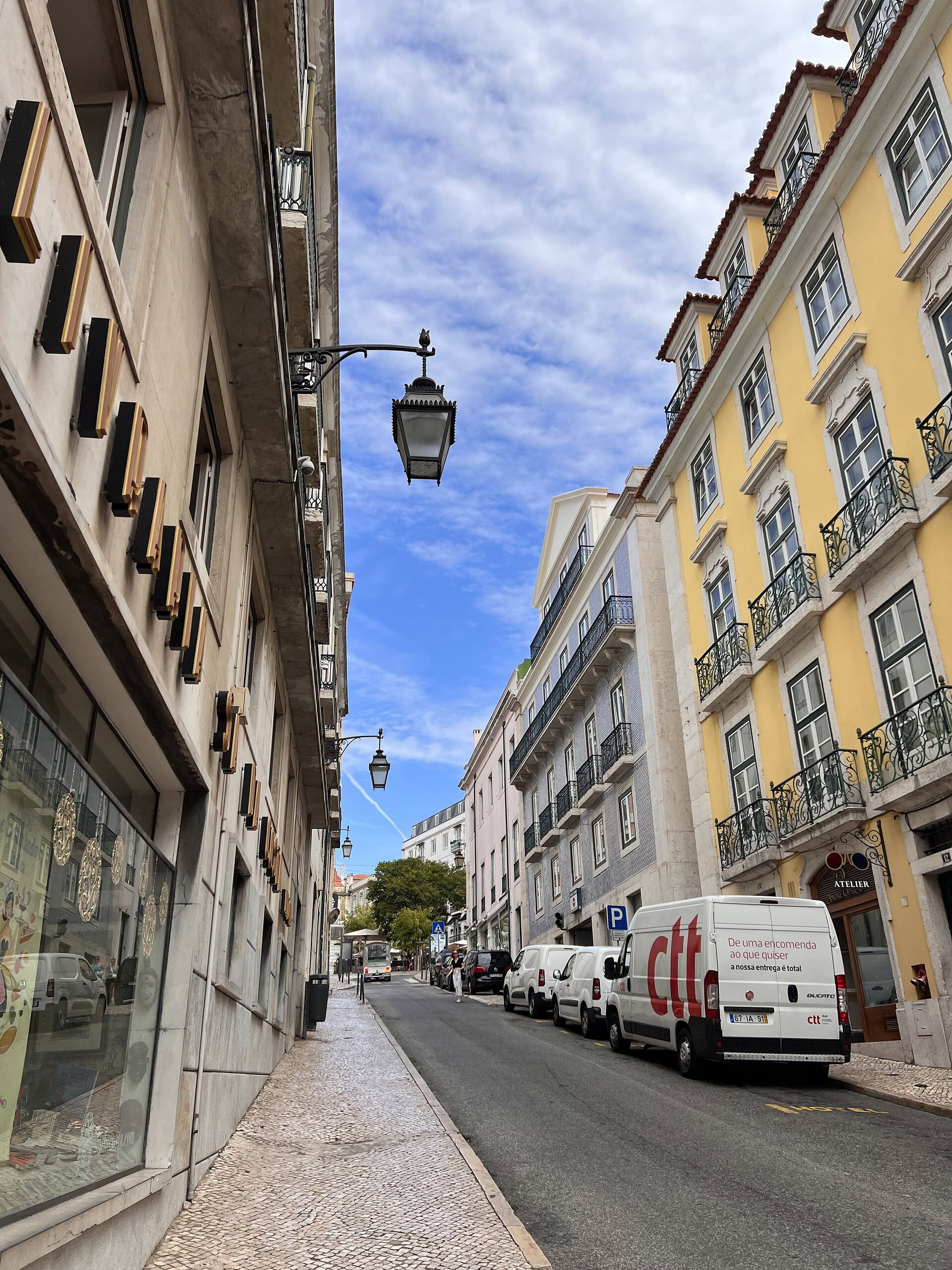
Lisbon has 24 official neighborhoods (bairros), each with its own personality, vibe, and ideal visitor type, and I’ve explored them all since moving here in 2018.
The real question isn’t which neighborhood is “best”, it’s which one fits your travel style, budget, and what you want from Lisbon.
I’ve lived in and stayed in six different neighborhoods across multiple visits, and I can tell you firsthand that choosing the wrong area can make or break your trip.
Quick Neighborhood Finder
Here’s who each major neighborhood is actually for:
- First-time visitors: Baixa or Chiado – central, flat, easy access to everything
- Romantic getaway: Alfama – cobblestone charm, Fado music, stunning views (if you don’t mind hills)
- Nightlife lovers: Bairro Alto or Cais do Sodré – bars until 3 am, Pink Street, young crowd
- Families: Campo de Ourique or Estrela – quiet, parks, local cafés, away from tourist crowds
- Culture and monuments: Belém – if you want peace and don’t mind commuting 30-40 minutes
- Foodie travelers: Príncipe Real – upscale, amazing food, beautiful gardens, and design shops
- Budget travelers: Graça or Anjos – authentic, cheaper hotels, fewer tourists
- Digital nomads: Príncipe Real or Alcântara – coworking spaces, good WiFi, café culture
| Neighborhood | Best For | Hill Level | Metro? | Avg. Hotel Price | Vibe |
|---|---|---|---|---|---|
| Baixa | First-time visitors | ⭐ | ✅ Blue + Green | €153/night | Tourist-friendly, flat, central |
| Chiado | Culture lovers | ⭐⭐ | ✅ Blue + Green | €153/night | Sophisticated, literary, refined |
| Alfama | Romantic getaway | ⭐⭐⭐⭐⭐ | ❌ Walk/Tram | €100–250/night | Historic, charming, steep |
| Bairro Alto | Nightlife | ⭐⭐⭐ | ❌ Walk/Elevator | €120–180/night | Bohemian, loud at night, young |
| Cais do Sodré | Nightlife + convenience | ⭐ | ✅ Green Line | €130–200/night | Buzzy, foodie, well-connected |
| Príncipe Real | Upscale / Foodie paradise | ⭐⭐⭐ | 🚶 10 min to Rato | €150–300/night | Elegant design shops, gardens |
| Belém | Monuments | ⭐ | ❌ Tram/Bus | €110–160/night | Quiet, monumental, remote |
| Campo de Ourique | Families | ⭐⭐ | ❌ Tram/Bus | €65–95/night | Residential, calm, local |
| Estrela | Peaceful upscale | ⭐⭐ | 🔜 Coming soon | €140–200/night | Refined, gardens, quiet |
| Graça | Budget + authentic | ⭐⭐⭐⭐ | ❌ Tram 28 | €65–95/night | Local, viewpoints, working-class |
| Anjos | Budget digital nomads | ⭐⭐ | ✅ Yellow Line | €65–95/night | Emerging, diverse, affordable |
| Alcântara | Alternative culture | ⭐⭐ | ❌ Train/Bus | €100–150/night | Creative, industrial, LX Factory |
| Mouraria | Multicultural authentic | ⭐⭐⭐⭐ | ✅ Green Line | €70–130/night | Gritty, diverse, real Lisbon |
| Santos | Design lovers | ⭐⭐ | ❌ Walk to Cais | €90–150/night | Quiet, creative, well-located |
Understanding Lisbon’s Geography
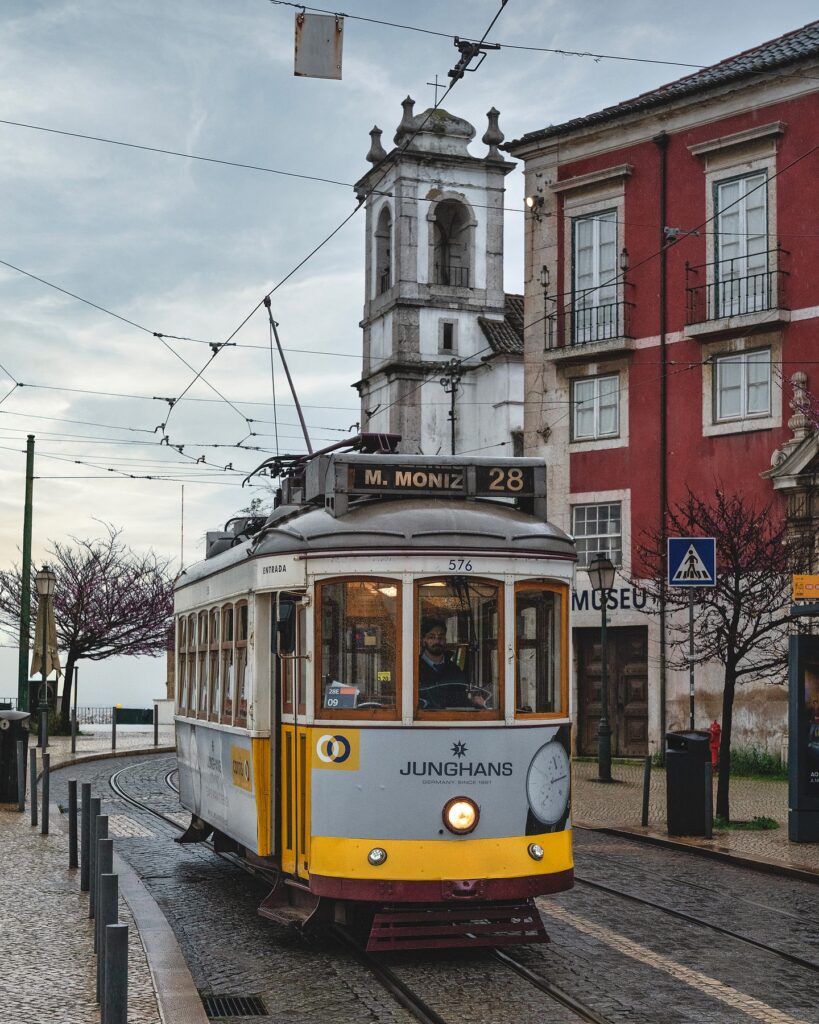
Lisbon spreads across seven hills along the Tagus River.
The historic center sits between the river and the castle hill, with newer neighborhoods radiating west and north.
The metro doesn’t reach Belém, Graça, or the highest parts of Alfama, so these areas rely on trams and buses.
Most first-time visitors stay in the triangle formed by Baixa, Chiado, and Alfama – these are the most central and connected neighborhoods.
Main Neighborhoods in Lisbon
- Baixa is the flat downtown core rebuilt after the 1755 earthquake.
- Chiado is the cultural hub with theaters and cafés.
- Bairro Alto is the bohemian nightlife district.
- Alfama is the oldest neighborhood with cobblestone streets and Fado houses.
- Belém is home to Portugal’s most famous monuments, including Jerónimos Monastery and Belém Tower.
Baixa – Best for First-Time Visitors
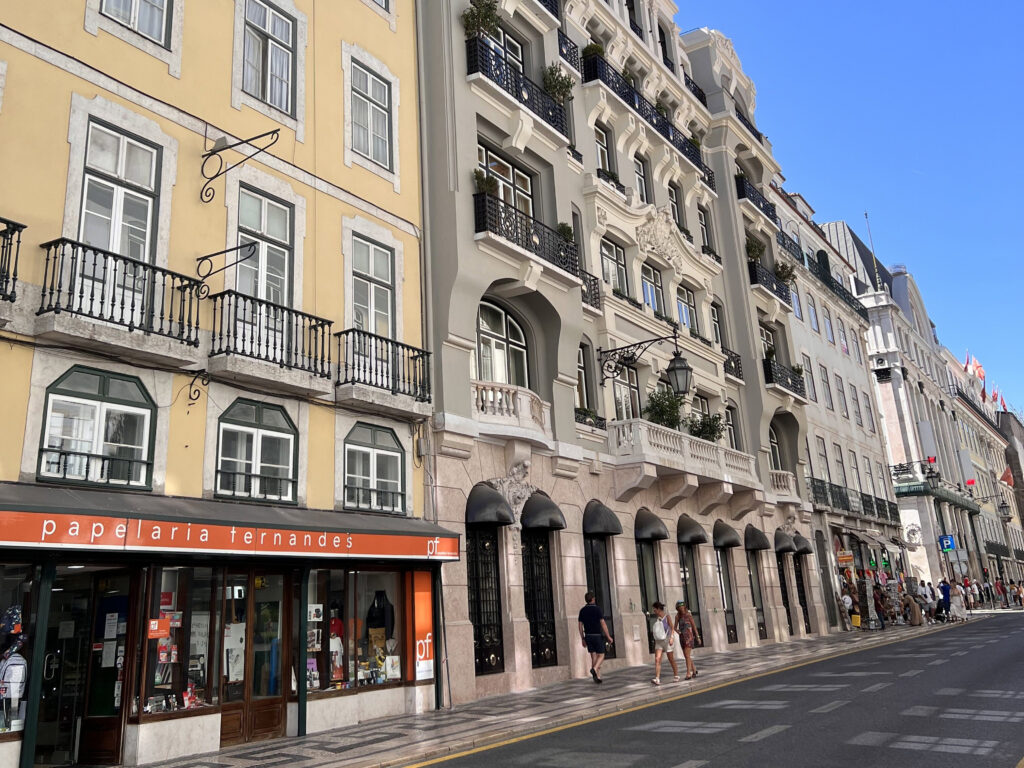
Baixa is Lisbon’s downtown heart, and I recommend it to most first-timers.
The neighborhood is flat (rare in Lisbon), grid-planned, and puts you within walking distance of nearly everything.
Hill Factor: 1/5 – Completely flat, easy walking with luggage.
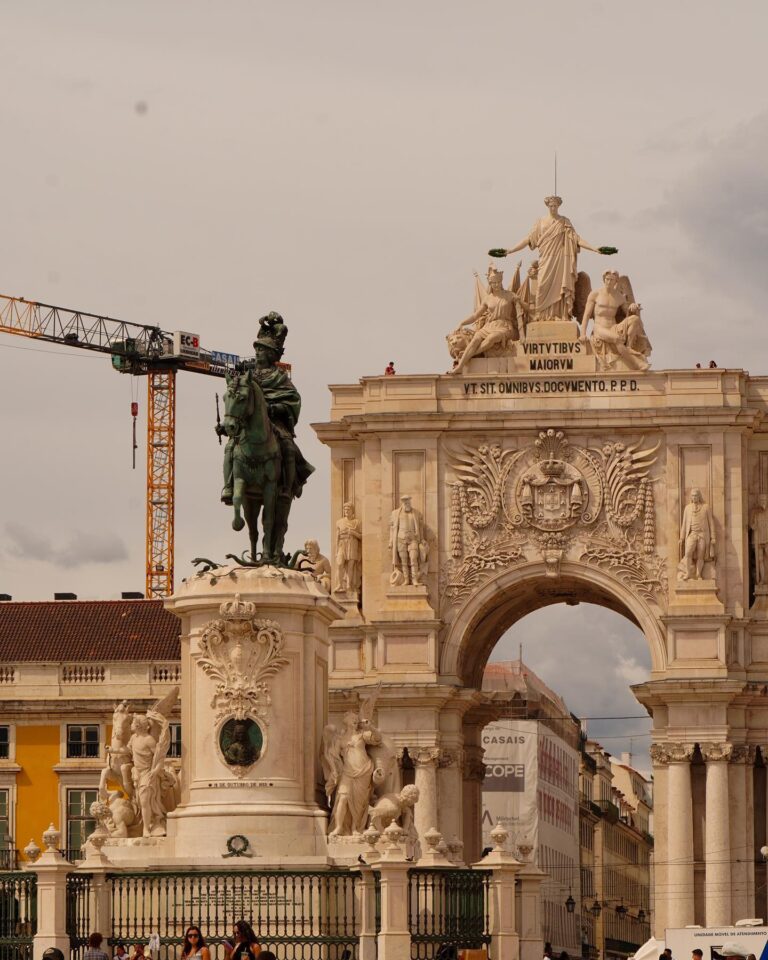
You’re steps from Praça do Comércio, Rossio Square, and the bottom of the Santa Justa Lift.
The Baixa-Chiado metro station connects you to the Blue and Green lines, making it simple to reach the airport or other neighborhoods.
Heads up, many locals call this area “Baixa-Chiado”, but they are in fact two separate neighborhoods.
Hotel prices average €153 per night for a 3-star hotel as of 2026.
You can easily walk to dinner in Chiado, catch Tram 28 to Alfama, or stroll to the waterfront in minutes.
Who it’s for: First-time visitors who want a central location, easy navigation, and don’t want to worry about steep hills.
Who it’s NOT for: Anyone seeking quiet or authentic local life – Baixa is touristy and can feel sterile at night.
Instagram spot: Augusta Street Arch for sunrise views over Praça do Comércio
Metro access: Blue and Green lines at Baixa-Chiado
Chiado – Best for Culture Lovers
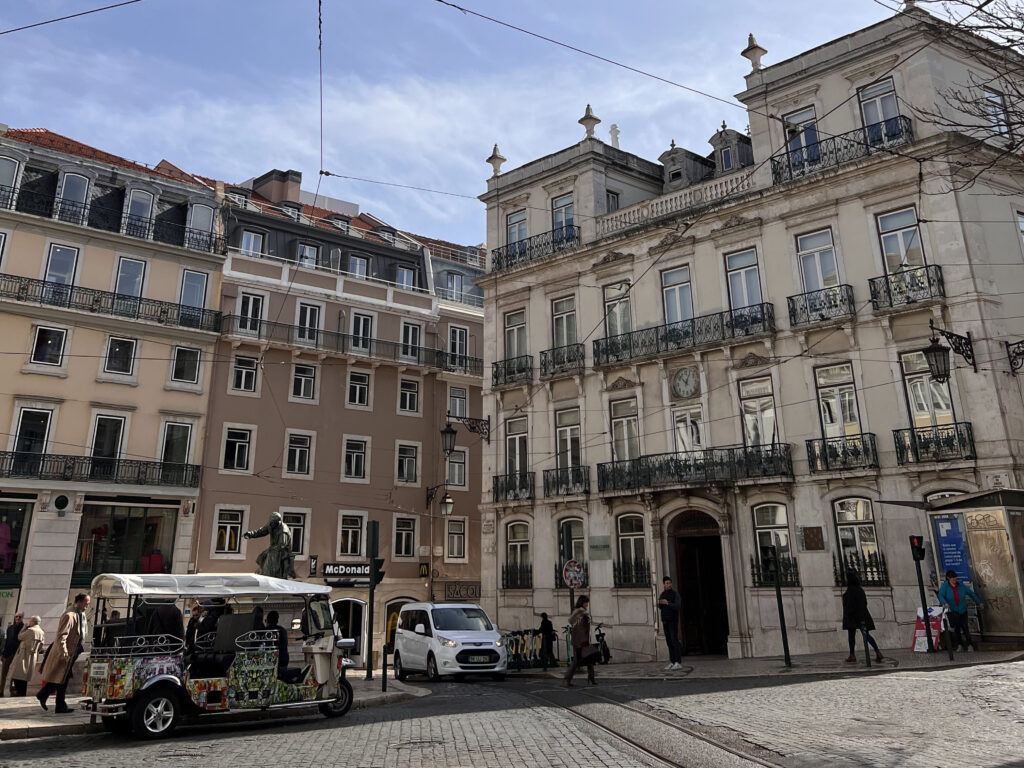
Chiado sits just uphill from Baixa and has more character, better restaurants, and a more sophisticated vibe.
This is Lisbon’s literary and cultural quarter, home to historic bookstores, theaters, and elegant cafés.
Hill Factor: 2/5 – Some slopes, but manageable, Santa Justa Lift helps
I love Chiado for its balance – central enough to reach major sights easily, but with actual personality and great dinner options.
Even though it’s not dinner, you can often find me at the A Padaria Portuguesa for a Croissant Brioche with cheese.
The neighborhood connects to Bairro Alto at the top via steep but short streets, and to Baixa at the bottom via the iconic Santa Justa Lift.
Hotels here also average around €153 per night for mid-range properties.
You’ll find some of Lisbon’s best cafés and restaurants along Rua Garrett and Rua do Carmo.
Who it’s for: Travelers who want a central location plus authentic cafés, bookstores, and a more refined atmosphere.
Who it’s NOT for: Party animals (quiet at night) or tight budgets (pricier than neighboring areas).
Instagram spot: Rua Garrett with the historic A Brasileira café
Metro access: Blue and Green lines at Baixa-Chiado
Alfama – Best for Romantic Atmosphere
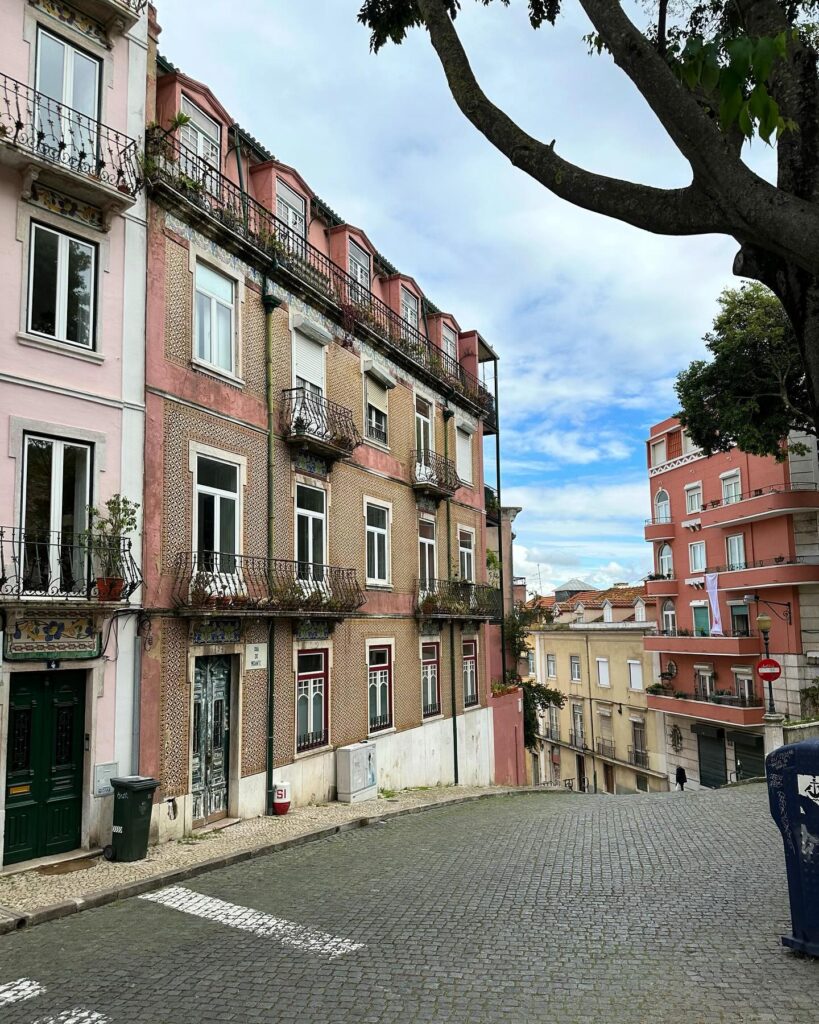
Alfama is Lisbon’s oldest neighborhood, a maze of narrow cobblestone streets climbing the castle hill.
It’s gorgeous, atmospheric, and exhausting.
Hill Factor: 5/5 – Extremely steep, challenging with luggage
I stayed here on my first visit and loved the charm, but hated it when I was running every morning. Those hills took my breath away immediately.
The neighborhood survived the 1755 earthquake, so you’re walking streets that are centuries old, with laundry hanging between buildings and Fado music drifting from tiny restaurants.
But here’s the honest truth:
Alfama is stunning but extremely touristy, and you’ll hear more English than Portuguese in many spots. However, if you find an AirBnB you can still experience the local vibe.
Most visitors stay in Alfama or Baixa, and to reach Alfama by metro, you need to change to the blue or green line.
There’s no metro up the hill, you’ll walk or take Tram 28 (which is always packed with tourists).
Hotels here range widely, from €100 to € 250 per night, depending on the views and location.
Who it’s for: Couples seeking romance, history buffs, photographers, and people who don’t mind stairs.
Who it’s NOT for: Families with strollers, anyone with mobility issues, travelers with heavy luggage.
Mistake I made: Booking an Airbnb here, as all my activities were in Campo de Ourique or Bairro Alto.
Lesson learned: If you stay in Alfama, book near the bottom, close to the river.
Instagram spot: Portas do Sol viewpoint at sunrise
Metro access: None – nearest is Santa Apolónia (Blue Line), then walk or tram
Bairro Alto – Best for Nightlife
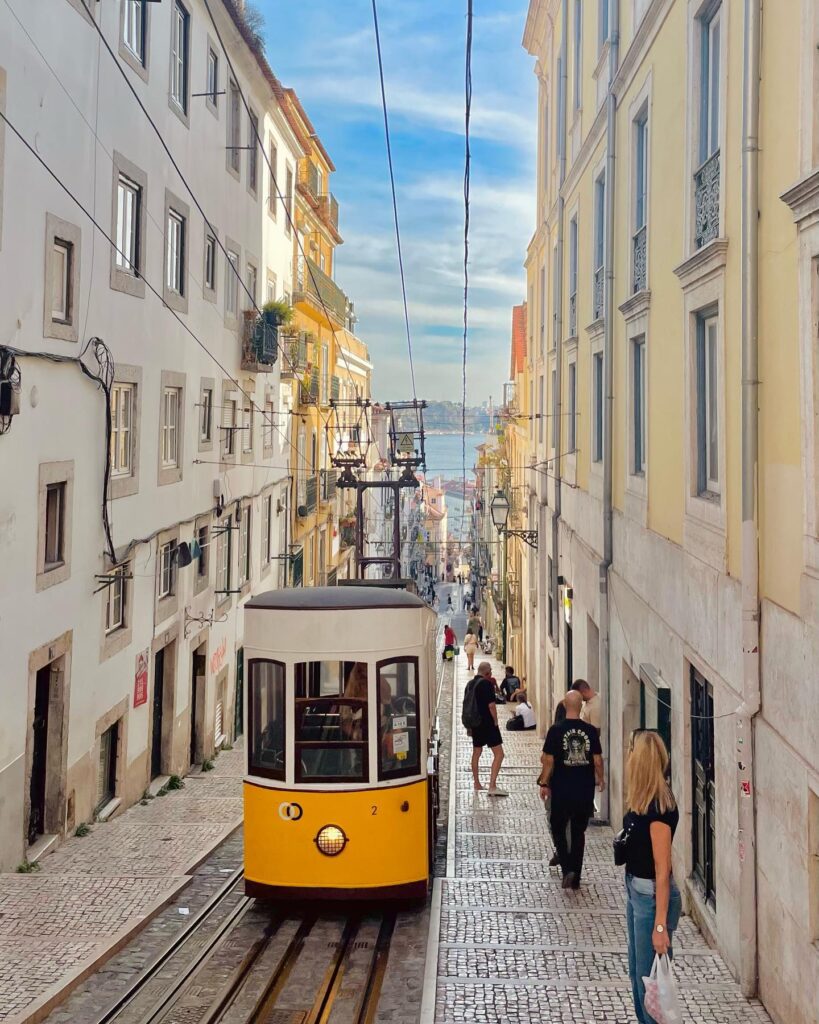
Bairro Alto transforms from a quiet residential neighborhood by day to Lisbon’s party central by night.
Every narrow street fills with bars, and people spill out onto the cobblestones with drinks until 3 am.
I stayed in an amazing Airbnb in this area that was well insulated, so I couldn’t hear much noise, and it was a super fun experience. We lived here for a month, and even though there weren’t many grocery stores, it was amazing.
Hill Factor: 3/5 – Steep climb from Baixa, but Elevador da Bica helps
If you’re under 35 and want to party, this is your neighborhood.
If you’re over 35 or traveling with kids, book literally anywhere else.
I’ve spent a couple of nights here bar-hopping with friends, and it’s electric – but the noise continues until dawn on weekends.
Central areas like Baixa, Chiado, and Alfama tend to be more expensive due to their proximity to tourist attractions and public transport.
Bairro Alto hotels average €120-€180 per night.
Who it’s for: Young travelers, solo travelers meeting people, party groups, anyone who wants to be steps from bars.
Who it’s NOT for: Families, light sleepers, anyone over 40 (unless you’re a party animal).
Honest warning: Even with earplugs, you’ll hear noise until 3 am Thursday-Saturday.
Instagram spot: Miradouro de São Pedro de Alcântara at sunset
Metro access: None directly – Green Line at Baixa-Chiado, then walk uphill or take Elevador da Bica
Cais do Sodré – Best for Nightlife Plus Convenience
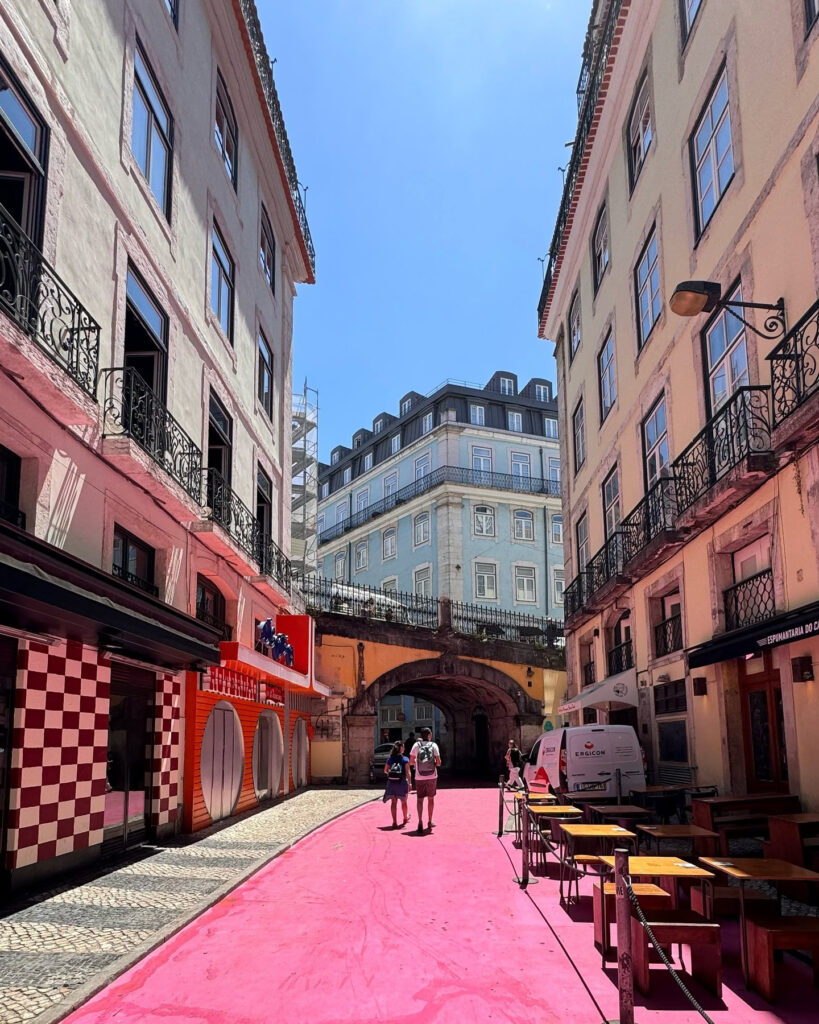
Cais do Sodré is where I’d stay if I were 25 and visiting Lisbon now.
It has Pink Street (Lisbon’s most Instagrammed nightlife spot), Time Out Market (food hall with 26 restaurants), and the Green Line metro terminus.
Hill Factor: 1/5 – Flat waterfront location
Time Out Market Lisboa brings together 26 restaurants from Lisbon’s top chefs under one roof, plus 8 bars and shops.
You can grab dinner at Time Out Market, party on Pink Street, and stumble back to your hotel in 5 minutes.
My favorites are the upscale bifana, francesinha, or a burger at Ground Burger in Time Out Market.
During the day, you’re also perfectly positioned – metro to anywhere, trains to Cascais, ferries across the river.
Hotels here run €130-200 per night, slightly higher than Bairro Alto due to the metro access and waterfront location.
Who it’s for: Young travelers who want nightlife plus daytime convenience, foodies (Time Out Market), and social travelers.
Who it’s NOT for: Quiet seekers, families with young kids.
Instagram spot: Pink Street at night with the colorful pavement
Metro access: Green Line terminus at Cais do Sodré
Príncipe Real – Best for Upscale and Foodie Travelers
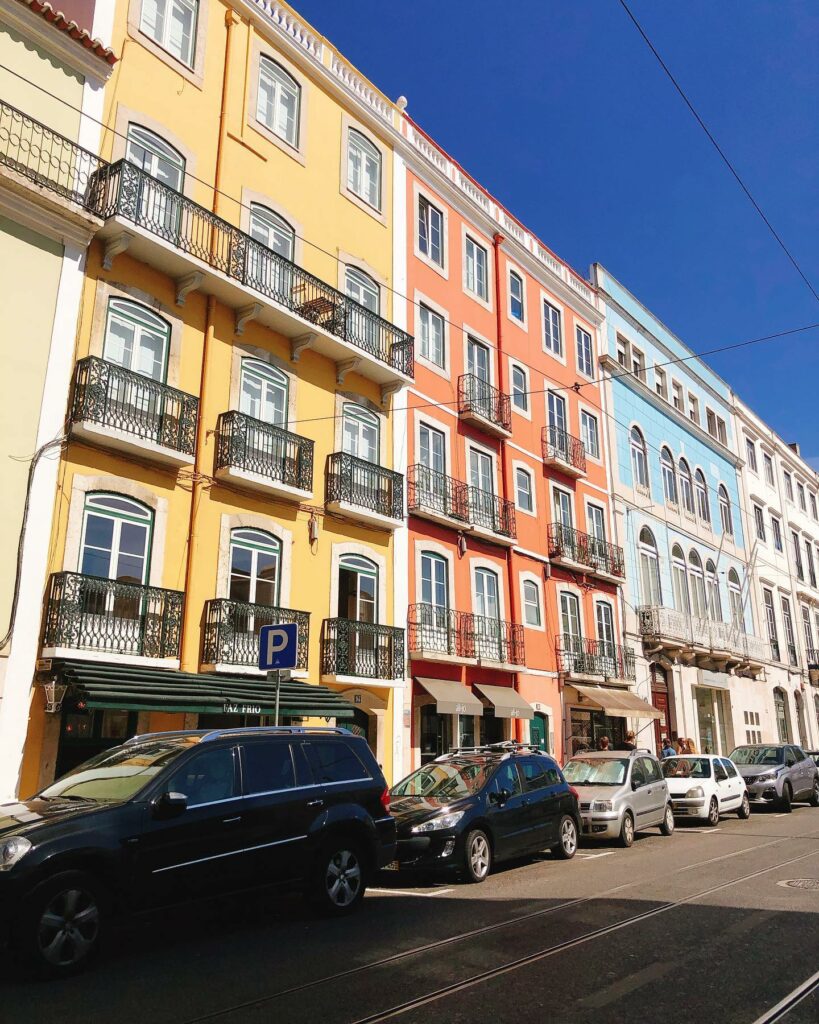
Príncipe Real is my favorite neighborhood – elegant, amazing restaurants, with a beautiful garden at its heart.
I love staying at The Vintage Lisbon, a small boutique hotel, and the area is just amazing, with so many great restaurants.
This is where Lisbon’s design shops, concept stores, and upscale restaurants cluster.
Hill Factor: 3/5 – Hilly but manageable, streets are wider than Alfama
The neighborhood has a sophisticated residential feel while remaining central.
You’re a 10-minute walk from Bairro Alto’s nightlife but without the noise.
My partner (who’s from Lisbon) likes to walk to the Príncipe Real garden for sunset with a bottle of wine.
Hotels here run €150-300 per night for boutique properties.
Príncipe Real also has several coworking spaces and cafés with reliable WiFi, making it popular with digital nomads.
Who it’s for: Foodie travelers, couples seeking upscale but authentic, design lovers, and digital nomads.
Who it’s NOT for: Budget travelers, party animals (it’s sophisticated, not wild).
Instagram spot: The Garden of Príncipe Real with the café under the ancient cedar tree
Metro access: Yellow Line at Rato (10-minute walk)
Belém – Best for Monument Lovers (But Not First-Timers)
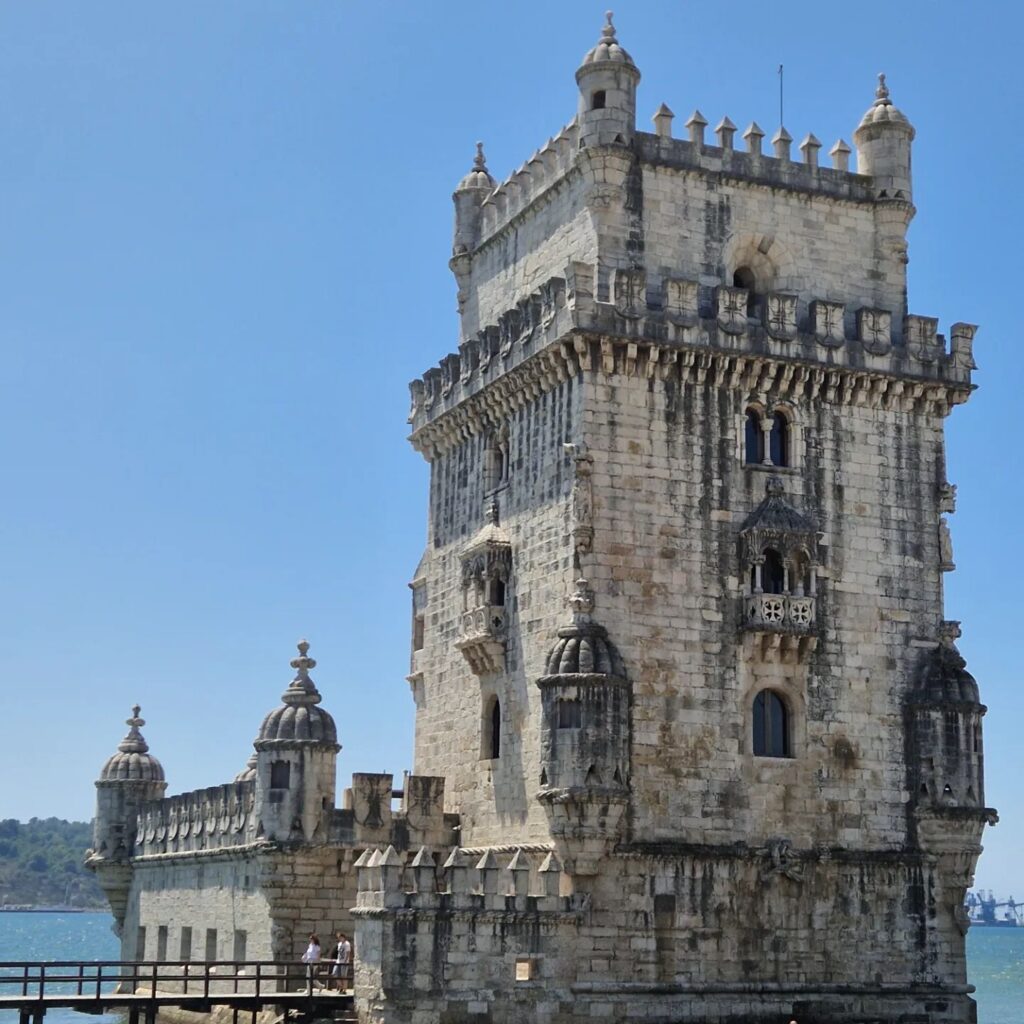
Belém holds Portugal’s most iconic monuments – Jerónimos Monastery, Belém Tower, and the Monument to the Discoveries.
It’s beautiful, historic, and far from everything else.
Hill Factor: 1/5 – Flat riverside area
Mistake I made (and you shouldn’t repeat): I went here with a friend around midday the day, and all we did was stand in lines.
Lesson learned: You need to come early if it’s high season, and preferably on weekdays.
Be aware that you’ll spend hours commuting if you stay here, if your plans are in central Lisbon.
The metro doesn’t reach Belém.
Buses complement the metro in areas without underground access, such as Belém.
Visit Belém as a half-day trip; don’t stay here unless you specifically want peace and quiet over convenience.
Hotels average €110-160 per night – cheaper than central areas, but you’ll spend those savings on transport time.
Who it’s for: Travelers who want a quiet residential area, retirees, and people visiting Lisbon for weeks (not days).
Who it’s NOT for: First-time visitors, anyone with limited time, people who want walkable nightlife and restaurants.
Instagram spot: Belém Tower from the waterfront
Metro access: None – Tram 15 or bus from Cais do Sodré (20-30 minutes)
Campo de Ourique – Best for Families
Campo de Ourique is a quiet, residential neighborhood popular with Portuguese families.
It has parks, local cafés, a traditional market, and zero tourist crowds.
Hill Factor: 2/5 – Some hills but manageable
I’ve lived here for almost a year, and it’s an absolutely amazing area. There are no clubs or parties or anything, but you’re close to an amazing food market(Mercado Campo de Ourique) and the Amoreiras Shopping Center.
I don’t have kids myself, but I’ve explored this neighborhood with friends’ kids, and it’s ideal, safe, calm, with playgrounds and family-friendly restaurants.
The downside? You’re not walking to major sights from here.
A metro expansion to Campo de Ourique, with four new stations, is planned but not yet completed.
For now, you’ll rely on Tram 28 or buses to reach downtown (15-20 minutes). However, taking Tram 28 from Campo de Ourique is a cheatcode; it’s almost always empty from here, so you can get a seat.
Budget hotels here cost €65-95 per night for doubles during shoulder season.
Who it’s for: Families with kids, travelers wanting authentic local life, and people staying a week or more.
Who it’s NOT for: First-time visitors who want to be in the action, or anyone without kids seeking a central location.
Metro access: None currently – Tram 28 or buses
Estrela – Best for Peaceful Upscale Stay
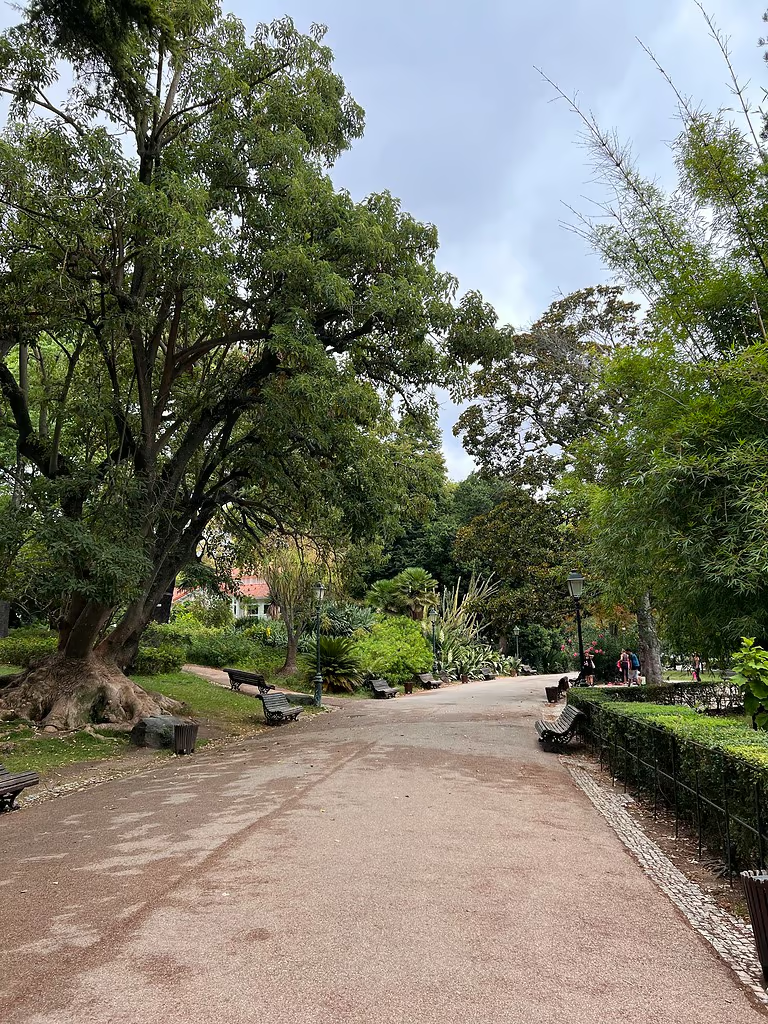
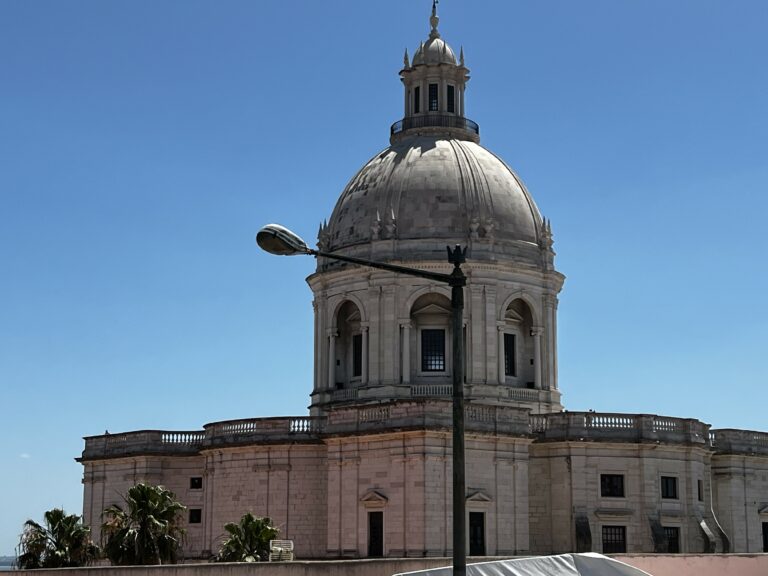
Estrela centers around the beautiful Estrela Basilica and gardens.
It’s refined, quiet, and increasingly popular with travelers who’ve already “done” Lisbon.
Hill Factor: 2/5 – Gentle slopes
A new metro station at Estrela is under construction, connecting Rato to Cais do Sodré via two new stations.
My partner has lived here for most of her life, so I’ve been in this area a lot, and it’s absolutely beautiful and very local.
Hotels here average €140-200 per night.
You get residential calm, beautiful parks, and traditional Portuguese cafés – but you’re a 15-20 minute tram ride from downtown.
Who it’s for: Repeat visitors, couples seeking quiet elegance, people who prioritize gardens and local cafés over nightlife.
Who it’s NOT for: First-time visitors, young travelers looking for action, or anyone on a tight budget.
Instagram spot: Estrela Basilica and gardens
Metro access: Future station planned at Estrela (currently use Tram 28 or buses)
Graça – Best for Budget Travelers Seeking Authentic Vibes
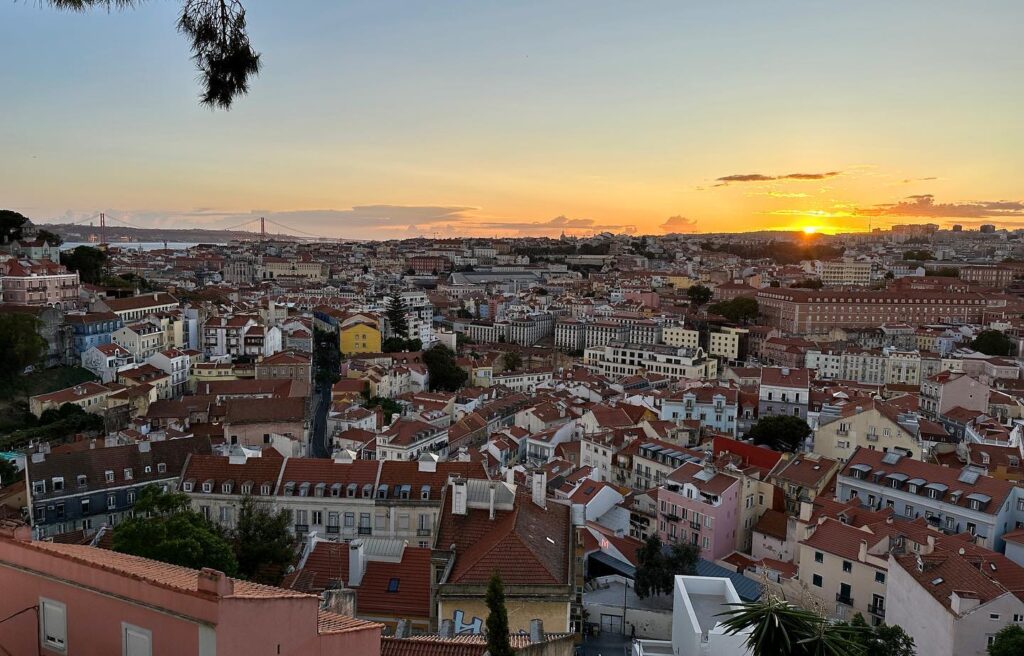
Graça sits on a hill north of Alfama, with incredible viewpoints and a working-class Portuguese character.
Graça is a quieter, less touristy neighborhood that’s a lively working-class area full of character.
Hill Factor: 4/5 – Steep climbs, but Tram 28 helps
This is where actual Lisboetas live; you’ll hear Portuguese in cafés, see locals shopping at small markets, and pay 30% less for hotels than in the city center.
Budget hotels in emerging neighborhoods cost €65-95 per night.
The trade-off? Walking to Baixa from here is a long walk, but I still prefer it to taking Tram 28. It’s an exhausting walk, but absolutely amazing.
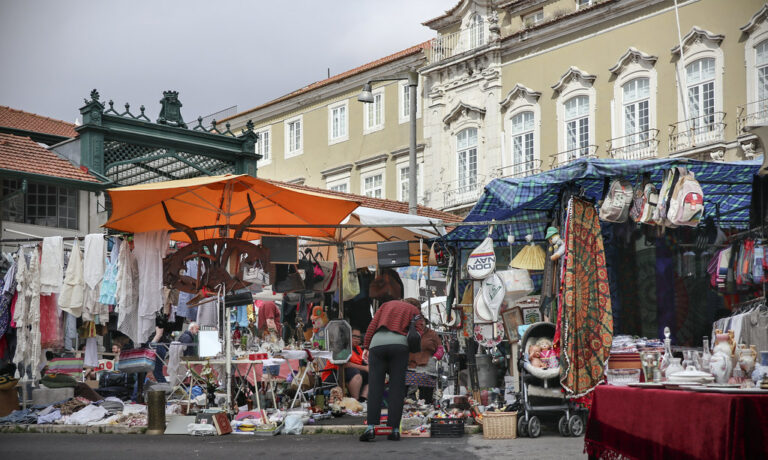
My favorite thing in Graça is Feira da Ladra, a massive flea market held every Tuesday and Saturday. It’s a must-experience.
I love Graça for its authenticity and the incredible Miradouro da Graça viewpoint, but I wouldn’t stay here on a first visit.
Who it’s for: Budget travelers, repeat visitors seeking an authentic Lisbon experience, and photographers (amazing viewpoints).
Who it’s NOT for: First-time visitors, families with strollers, and anyone with mobility concerns.
Instagram spot: Miradouro da Graça at sunset
Metro access: None – Tram 28 or steep walk
Anjos – Best for Budget Digital Nomads
Anjos is an emerging neighborhood northeast of downtown, popular with young Portuguese and international remote workers.
Hill Factor: 2/5 – Some slopes, but mostly manageable
Budget properties in Anjos and similar neighborhoods cost €65-95 for doubles with private bathrooms during shoulder seasons, rising to €85-120 in summer.
Anjos has affordable Airbnbs, good Wi-Fi in cafés, and a growing food scene, but limited tourist infrastructure.
The Yellow Line connects neighborhoods like Anjos with the city center, serving local residential areas with shopping and dining spots.
Who it’s for: Digital nomads on a budget, young travelers, people staying 2+ weeks.
Who it’s NOT for: First-time visitors, families, anyone wanting easy access to major sights.
Metro access: Yellow Line at Anjos
Alcântara – Best for Alternative Lisbon
Alcântara is an industrial-turned-creative neighborhood west of downtown, home to LX Factory (a hipster market in converted warehouses).
Hill Factor: 2/5 – Mostly flat near the river, hills inland
This isn’t a traditional “tourist” neighborhood, but if you’re into street art and alternative culture and don’t need to be in the center, Alcântara offers good value.
I stayed here once in an AirBnB, and I don’t see myself doing it again. It feels very far from the center, and even though you’re close to LxFactory and some good restaurants by the Tagus River, it just feels too far from the center.
The riverside area near Alcântara now has new walking paths and bike lanes, along with outdoor seating zones.
Hotels run €100-150 per night, and you’re on train lines to Cascais and buses to Belém.
Who it’s for: Alternative travelers, street art lovers, digital nomads, people visiting for a week+.
Who it’s NOT for: First-time visitors who want a classic Lisbon experience, or families with young kids.
Instagram spot: LX Factory’s Ler Devagar bookstore
Metro access: None – trains and buses
Santos – Best for Design Lovers and Quiet Convenience
Santos is one of those neighborhoods that doesn’t appear in any guidebook, and that’s exactly why I like it.
Sandwiched between Cais do Sodré and Estrela along the river, Santos is officially Lisbon’s “Design District”, home to furniture showrooms, independent galleries, and creative studios.
Hill Factor: 2/5 – Flat near the river, moderate slopes heading uphill toward Estrela
What surprised me about Santos is how well connected it is, yet how completely off the tourist radar it feels.
You’re a 10-minute walk from Time Out Market and Cais do Sodré’s nightlife, 15 minutes from Chiado, and right on the tram and bus routes to Belém.
The neighborhood has a handful of excellent restaurants that locals actually go to, the kind where you’re the only tourist and the menu is handwritten in Portuguese.
There’s no major landmark pulling crowds here, which means quieter streets, lower hotel prices, and a genuine residential feel.
Hotels and guesthouses average €90–150 per night, which is good value given how central you are.
Santos is also becoming a quiet favorite among remote workers. Several cafés have reliable Wi-Fi and a relaxed atmosphere where you can work for hours without feeling rushed.
Who it’s for: Design and architecture enthusiasts, travelers who want a quiet base near the action, digital nomads, and couples seeking something different.
Who it’s NOT for: First-time visitors wanting to be surrounded by sights, anyone who needs metro access (there’s no station), nightlife seekers (it’s calm here after dark).
Instagram spot: The colorful tiled facades along Rua de Santos-o-Velho
Metro access: None – walk to Cais do Sodré (10 min) or use tram/bus
Mouraria – Best for Authentic Multicultural Lisbon
Mouraria is the neighborhood most tourists walk right past, and that’s exactly what makes it special.
Tucked between Alfama and Graça at the foot of the castle hill, this is the birthplace of Fado music and Lisbon’s most multicultural neighborhood.
Hill Factor: 4/5 – Steep in parts, especially climbing toward the castle
I’ll be honest: Mouraria doesn’t look pretty at first glance. It’s rough around the edges, with peeling facades and narrow streets that feel a world away from polished Chiado.
But that’s the point.
This is where you’ll find Chinese grocery stores next to Bangladeshi restaurants next to tiny Portuguese tascas serving €8 lunch menus to a room full of locals. It’s messy, loud, and completely real.
The neighborhood has been slowly gentrifying, and a few trendy cafés and boutique guesthouses have opened, but it still feels like Lisbon authentically in a way that Alfama hasn’t for years.
I come here specifically for the vibe. Mouraria has some of the cheapest and most diverse dining in the city, from traditional Portuguese to Indian, African, and Chinese cuisines, all within a few blocks.
Hotels here cost €70–130 per night, significantly cheaper than those in neighboring Alfama despite being just as central.
Who it’s for: Travelers who want raw authenticity over Instagram polish, food lovers, culture seekers, people who’ve already “done” the tourist neighborhoods.
Who it’s NOT for: First-time visitors expecting picture-perfect streets, families with strollers (steep and narrow), and anyone uncomfortable with gritty urban neighborhoods.
Instagram spot: The street art murals along Rua dos Lagares and the Escadinhas de São Cristóvão
Metro access: Green Line at Martim Moniz (right at the neighborhood’s edge)
Where Should You Actually Stay?
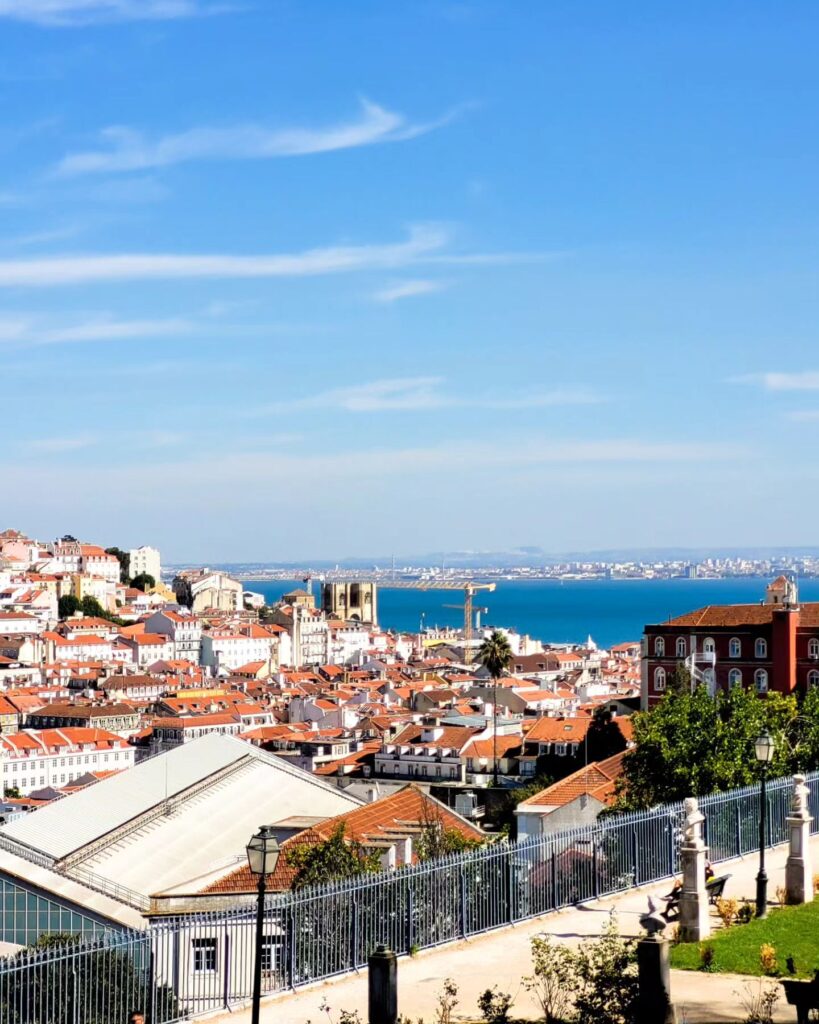
2-3 days, first visit: Baixa or Chiado – maximize your limited time with a central location
4-5 days: Start in Chiado (3 nights) + move to Alfama (2 nights) for romantic evenings
Week or more: Split between Príncipe Real (upscale, central) + Campo de Ourique or Graça (authentic, local)
Budget-conscious: Graça, Anjos, or budget hotels in Baixa
Partying: Bairro Alto or Cais do Sodré
Families: Campo de Ourique or Estrela
For more detailed advice on choosing accommodation, check out my complete guide on where to stay in Lisbon.
Practical Neighborhood Tips
Transportation reality check:
The Lisbon Metro operates daily from 6:30 AM to 1:00 AM, including weekends and public holidays.
A single metro fare costs €1.90 as of 2026.
If you stay outside the metro network (Belém, Alfama, Graça), plan for 20-40-minute commutes by tram or bus.
Hill reality: Lisbon has seven hills, and they’re steep.
If you have mobility issues, heavy luggage, or just hate climbing, stick to Baixa, Cais do Sodré, or Belém.
Safety: All these neighborhoods are safe, day and night.
I’ve walked through every one of them in the middle of the night without concern.
Use common sense about pickpockets in touristy areas, but violent crime is extremely rare.
Seasonal pricing:
Hotel prices can vary dramatically by season: a €200 room in February might cost €360 in August, with February consistently offering the year’s lowest rates at around €135-140.
Book early for summer or shoulder season (April-May, September-October).
Here are the best things to do in Lisbon in March 2026
I’ll send you a list of the best things to do in March and every month thereafter.
It’s based on my personal experience of living and traveling around Lisbon for years. I’m sharing many hidden gems.
Looking for weekly Lisbon tips? Check out my Lisbon Newsletter.
FAQ
Planning On Going To Lisbon?
I’ve created a trip planner where you enter the number of days you’re going and what activities you want to do.
Based on your input, you then get an entire vacation planned with ideas.